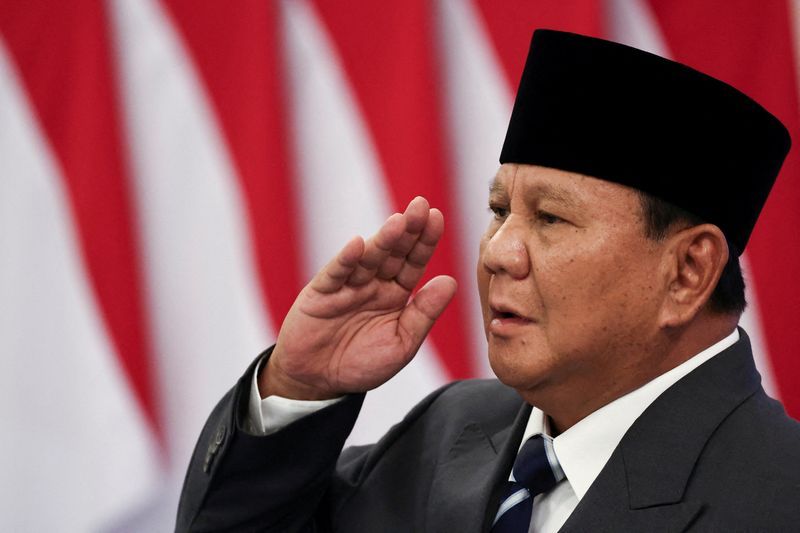
Indonesia is on the cusp of a significant shift in how it deploys technology across public services, with plans to embed artificial intelligence throughout key government programmes including the country's ambitious free-meal initiative. A draft presidential regulation currently awaiting President Prabowo Subianto's signature outlines a comprehensive AI adoption roadmap spanning 2026 to 2029, positioning the technology as central to achieving what officials claim could be substantial economic gains of up to 12 percent in gross domestic product by 2030—equivalent to approximately $366 billion.
The regulatory framework represents Jakarta's attempt to leapfrog rivals in Southeast Asia that have already established themselves as regional development hubs for artificial intelligence and cloud computing infrastructure. Singapore and Malaysia have pulled ahead in attracting major technology investment, securing billions of dollars from global firms seeking to build critical data centres and AI facilities to service the region's expanding demand for these services. Indonesia's delayed entry into this competitive landscape reflects structural challenges in infrastructure, workforce skills, and institutional readiness that have impeded rapid progress compared to its neighbours.
At the heart of this initiative lies an ambitious plan to harness AI capabilities within Prabowo's signature free-meal programme, which represents one of the world's largest universal food assistance schemes at $15 billion. The presidential regulation outlines how artificial intelligence would enable far more granular programme management: AI systems would design menus tailored to specific regions, monitor hygiene standards across kitchen facilities, forecast food demand with greater accuracy, identify operational irregularities, and integrate health data to provide early warnings of potential emergency situations. This technological layer addresses longstanding vulnerabilities that have plagued the programme since its inception.
The free-meal initiative has faced substantial scrutiny and operational challenges that underscore why technological oversight has become necessary. Earlier this month, the head of the programme was dismissed and arrested amid investigations into irregularities discovered during kitchen establishment and management. The scheme confronted a significant public health crisis last year when tens of thousands of children suffered food poisoning, raising serious questions about food safety protocols and emergency response procedures. Beyond health concerns, the programme has drawn criticism over transparency deficits and the risk of wasteful expenditure during a period when Indonesia faces fiscal constraints. AI-powered monitoring systems could theoretically address these gaps by providing real-time visibility into operations and flagging deviations from standards before they escalate into crises.
Beyond the meal programme, the regulation prescribes artificial intelligence applications across health sector initiatives, including free health screening services and tuberculosis testing programmes. These applications would leverage machine learning to analyse screening results more efficiently and identify at-risk populations requiring targeted intervention. The broader vision articulated in the draft emphasises how AI-driven automation could enable government organisations to achieve significant operational efficiencies while simultaneously reducing costs—a particularly appealing proposition given Indonesia's budgetary limitations.
The regulatory framework builds upon groundwork established through a white paper issued in the previous year and reflects input from major technology corporations including Meta Platforms, IBM, and Microsoft. According to Wahyudi Djafar, a technology analyst who contributed to drafting sections of the regulation and serves on the government's AI task force, these international companies participated in shaping Indonesia's AI strategy. Microsoft has already signalled its commitment to the Indonesian market, announcing a $1.7 billion investment over several years to expand cloud services and artificial intelligence infrastructure within the country. However, none of the major technology firms have provided detailed responses regarding their specific involvement or future plans.
Despite these strategic ambitions and international support, serious scepticism persists within Indonesia's technology community regarding the country's readiness to meaningfully lead in artificial intelligence development. Derwin Suhartono, professor of artificial intelligence at Bina Nusantara University in Jakarta, contends that Indonesia currently lacks the foundational capabilities to position itself as an AI developer rather than a consumer of foreign technology solutions. The country confronts significant infrastructure deficits, including the absence of domestic semiconductor production capacity and insufficient domestic expertise to build advanced AI systems from the ground up. Critical human capital gaps further constrain prospects for rapid progress, with insufficient numbers of researchers and engineers specialising in artificial intelligence fields.
Suhartono's assessment presents a sobering counterpoint to government rhetoric, arguing that while a structured and organised roadmap could enable effective AI deployment within existing government programmes, current implementation efforts remain more aspirational than concrete. The gap between announced policy and operational reality represents a persistent challenge across Indonesian governance, where grand strategic declarations often outpace institutional capacity and resource allocation necessary for execution. Building genuine AI capabilities requires sustained investment in human development, research institutions, and technological infrastructure—commitments that extend well beyond the current regulatory framework.
The draft regulation accompanying the AI adoption strategy introduces risk management provisions requiring government bodies to formally report artificial intelligence-related hazards. These potential dangers include misuse of biometric systems, violations of intellectual property rights, generation and dissemination of deepfake content, and other harms inherent to AI deployment without adequate safeguards. This regulatory attention reflects growing global consciousness regarding the darker applications of artificial intelligence technologies and acknowledgment that integrating AI into public systems requires parallel development of protective frameworks.
Central to Indonesia's AI funding strategy is a proposed "sovereign AI fund" that would operate primarily through Danantara Indonesia, the country's recently established wealth fund. The regulation also suggests implementing fiscal incentives designed to attract artificial intelligence researchers and developing talent pipelines to address current workforce shortages. These financial mechanisms represent attempts to accelerate capability-building within Indonesia's technology ecosystem, though questions persist regarding whether fiscal measures alone can overcome more fundamental structural barriers.
The timing and mechanics of Prabowo's approval of the regulation remain uncertain, with his office declining to provide immediate comment on the matter. Nevertheless, this policy initiative signals that Indonesia's leadership recognises the strategic importance of artificial intelligence adoption and intends to position the technology as a cornerstone of economic and administrative modernisation. Whether the country can successfully transition from policy pronouncements to sustained implementation, while simultaneously addressing persistent infrastructure and human capital deficits that constrain AI development, remains an open question that will substantially shape Indonesia's technological trajectory through the current decade.