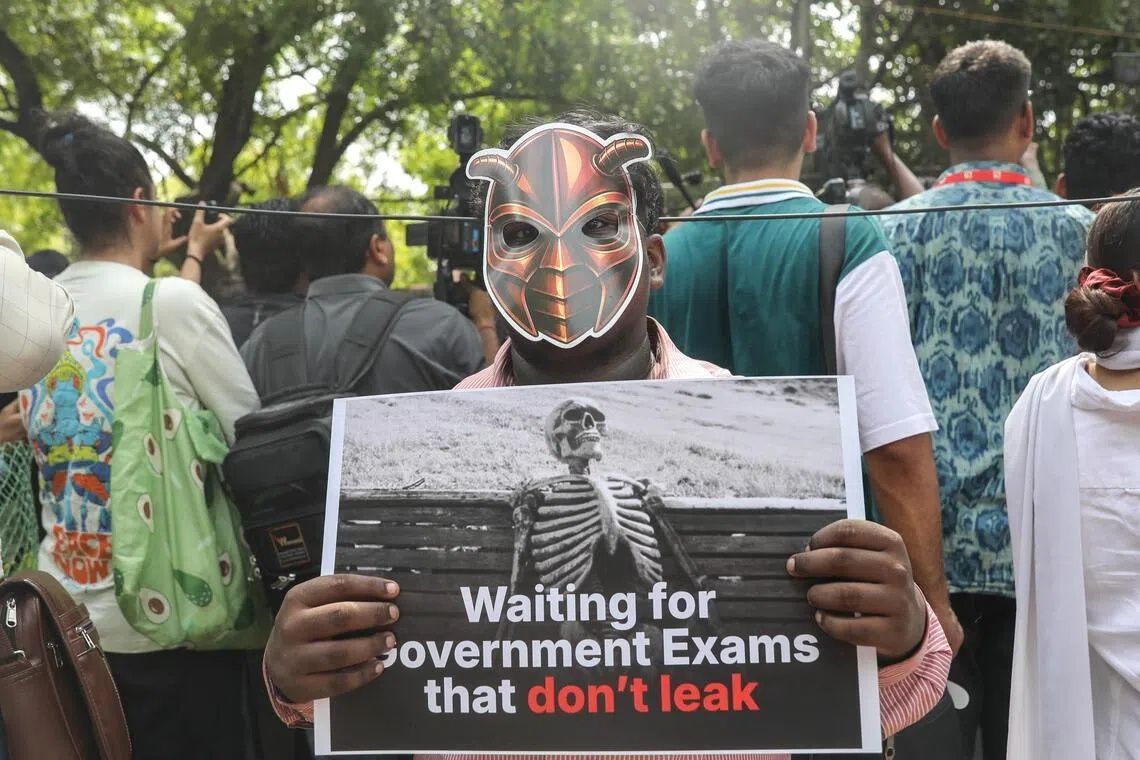
India's attempt to salvage credibility in its medical education system reached a critical juncture on Sunday, June 21, when 2.2 million aspiring doctors sat for a retaken entrance examination under the most stringent security conditions the country's testing authorities have ever implemented. The retest became necessary after the original examination in May unravelled in chaos when question papers leaked into the public domain, forcing authorities to scrap the entire test and triggering a cascade of social unrest that exposed deeper systemic vulnerabilities in India's high-stakes examination apparatus.
The National Eligibility cum Entrance Test, commonly known as NEET, functions as the singular gateway determining which candidates gain access to India's medical colleges, with only marginally more than 100,000 undergraduate positions available to compete for annually. This extreme scarcity relative to demand has transformed the examination into perhaps the world's most pressurised educational filter, creating an ecosystem where millions of teenagers stake their futures on a single testing day. The National Testing Agency, which administers NEET, responded to the May debacle by implementing what it characterised as a "multi-layered security framework" incorporating sophisticated technological safeguards including biometric identification systems, artificial intelligence-powered camera monitoring networks, and GPS tracking mechanisms affixed to examination question papers throughout the distribution and administration process.
The security mobilisation reflected the magnitude of institutional embarrassment surrounding the earlier leak. Authorities deployed more than 200,000 officials across examination centres nationwide, encompassing police personnel and civilian administrators tasked with monitoring candidate conduct and preventing unauthorised communication or material from entering test venues. Internet regulators imposed a temporary ban on the Telegram messaging application, which the NTA identified as a primary conduit through which organised cheating syndicates had circulated leaked questions to candidates willing to pay for advance access. This extraordinary step—restricting access to a major digital communications platform across an entire nation—underscored governmental desperation to prevent repeat failures, though the ban's effectiveness remained questionable given the existence of alternative encrypted messaging services.
Pavel Durov, founder and chief executive of Telegram, publicly questioned the utility of the week-long application restriction, contending that message-based leaks represented merely symptomatic manifestations of deeper institutional corruption. Durov argued that examination fraud networks would simply pivot to competing applications, and that the genuine vulnerability lay with insiders willing to betray their professional obligations by trafficking in confidential examination materials in exchange for financial remuneration. His assessment aligned with findings by India's Central Bureau of Investigation, which identified and arrested an individual it characterised as the alleged mastermind orchestrating the leakage scheme—a chemistry lecturer positioned within the educational system itself, illustrating how compromise of authorised personnel had facilitated access to secure examination content.
The May examination failure and subsequent retest cascaded into a much broader crisis of confidence in India's educational examination infrastructure. Contemporaneously with the NEET scandal, authorities acknowledged a separate catastrophe affecting nearly two million high school students who had completed standardised assessments using a newly implemented computerised marking methodology. Thousands of candidates and their families alleged that the automated grading system had either assigned fundamentally incorrect scores or, in some instances, attributed results belonging to other students to their own examination records. This dual failure within weeks suggested systemic institutional dysfunction extending beyond isolated operational lapses, raising questions about whether India's educational testing agencies possessed adequate technical capacity and quality assurance protocols to administer examinations affecting millions of teenagers' educational trajectories.
Public outrage crystallised demands for ministerial accountability, with mounting calls for the resignation of Education Minister Dharmendra Pradhan, who bore responsibility for overseeing the regulatory framework governing both NEET administration and high school examinations. Youth protest movements mobilised across Indian cities and social media platforms, articulating grievances that extended beyond immediate examination failures to encompass perceived structural inequities within India's competitive educational system. The intensity and duration of demonstrations reflected accumulated frustration among students and parents who viewed the examination apparatus as increasingly vulnerable to manipulation and administrative incompetence.
The controversy generated unexpected cultural commentary through the emergence of the "Cockroach People's Party," a satirical political entity that had accumulated millions of social media followers since its formal launch in May. Deploying humour and irony to critique governmental failures, the movement channelled youthful alienation and demanded Pradhan's removal, demonstrating how serious institutional failures could catalyse unconventional forms of political engagement among India's digital-native demographic.
The examination commencement at 2:00 PM local time on June 21 represented not merely an administrative rescheduling but rather a test of whether India's testing institutions could restore operational legitimacy following catastrophic public failures. The extraordinary security apparatus deployed—representing an investment of considerable governmental resources and coordination across multiple agencies—signalled official recognition that permitting another examination collapse would trigger consequences extending beyond institutional embarrassment to potential political ramifications for the ruling establishment.
For Southeast Asian observers, India's NEET crisis illustrated broader challenges confronting large-scale examination systems operating within countries characterised by acute competition for limited educational opportunities and, in some cases, institutional vulnerabilities to corruption. Malaysia, which administers the Unified Examination Certificate system and Sijil Pelajaran Malaysia assessments to similarly vast candidate populations, maintains institutional mechanisms designed to prevent comparable breaches, yet the Indian experience offered sobering lessons regarding security vigilance requirements and contingency planning for examination administration crises that might emerge despite careful preventive measures.