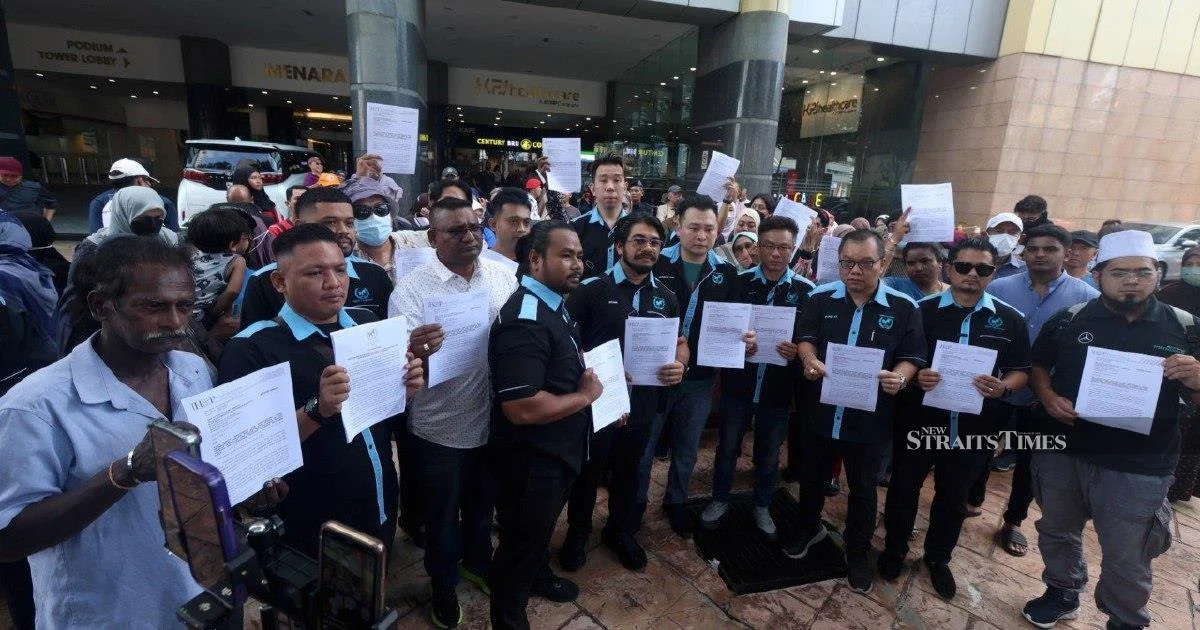
More than 100 victims of investment fraud have joined forces with the Malaysia International Humanitarian Organisation to pressure authorities into accelerating their investigations of 18 companies and platforms accused of operating coordinated scam networks. The push reflects growing frustration among duped investors who have lost significant sums to what appears to be a sophisticated, interconnected scheme spanning multiple operators and investment vehicles across Malaysia.
The coordination of such a large victim group signals the scale of potential fraud being perpetrated through these entities. Investment scams have become increasingly complex in Malaysia, often leveraging digital platforms and social media to reach victims, with fraudsters employing professional-looking websites, fake credentials, and misleading testimonials to build credibility. Many victims report being promised unrealistic returns on cryptocurrency investments, forex trading platforms, or dubious wealth-creation schemes that eventually collapse once funds are transferred.
The Malaysia International Humanitarian Organisation's involvement underscores how investment fraud has evolved from isolated cases into a systemic problem requiring coordinated intervention. When charitable or humanitarian organisations begin mobilising around financial crime, it typically indicates that victims have exhausted conventional complaint channels and view the situation as urgent enough to warrant public pressure campaigns. This escalation often promels authorities to allocate additional resources to investigations that might otherwise progress slowly through standard procedural channels.
Investigation delays into financial crime have been a persistent challenge for Malaysian law enforcement. The complexity of tracing digital financial transactions across borders, combined with the sheer volume of cases flooding police units, often results in backlogged probes that can take years to conclude. Victims meanwhile face mounting losses as suspects remain at large and assets continue to be diverted. Expediting these investigations serves not only the immediate victims but also broader public interest in deterring future fraudsters who calculate that Malaysian authorities move slowly enough to allow them safe passage.
The involvement of 18 separate entities raises questions about whether these companies operate independently or form part of a larger criminal ecosystem. Some may be legitimate businesses that have been compromised or infiltrated by fraudsters, while others could be shell companies created specifically to facilitate theft. Understanding the connections between these operators becomes crucial for authorities seeking to dismantle entire networks rather than simply prosecuting individual actors. A holistic investigation approach could potentially reveal funding sources, money laundering routes, and recruitment mechanisms used to enlist new perpetrators into these schemes.
Social engineering plays a critical role in contemporary investment scams targeting Malaysians. Fraudsters often build relationships with victims over weeks or months through messaging apps and social media, establishing trust before introducing investment opportunities. Once victims commit initial funds and see fabricated returns displayed on fake trading platforms, psychological commitment deepens and victims become reluctant to accept they have been deceived. This vulnerability creates an opportunity for scammers to extract additional payments by claiming that technical fees, regulatory charges, or tax obligations must be settled before withdrawals can be processed.
The financial impact on individual victims frequently extends beyond lost capital. Many report psychological distress, strained family relationships, and secondary financial problems resulting from the fraud. Some have borrowed money to invest, compounding their difficulties after discovering the deception. These human consequences sometimes motivate victims to band together for advocacy, as appears to be happening through the Malaysia International Humanitarian Organisation's campaign. Public testimony from multiple victims also generates media attention that can spur investigators to move with greater urgency.
Malaysia's regulatory framework for investment platforms has tightened considerably in recent years, with the Securities Commission and Bank Negara Malaysia implementing stricter licensing requirements. However, fraudsters frequently operate through unlicensed platforms or falsely claim regulatory approval, making it difficult for ordinary investors to verify legitimacy. Enhanced public awareness campaigns explaining how to verify investment platform credentials could help prevent future victims, though pursuing existing cases remains equally important for delivering justice and demonstrating consequences.
The geographic distribution of these 18 entities across Malaysia, if confirmed, suggests the scam network has achieved significant reach and coordination capabilities. Criminal networks of this sophistication typically involve specialised roles including recruiters, social engineers, money handlers, and technical operatives managing fake trading platforms. Dismantling such networks requires investigators to map these organisational structures and identify key figures whose removal would disrupt operations. Police will need to coordinate with financial intelligence units and cybercrime specialists to trace transaction flows and digital communications.
Successful prosecution of investment fraud cases depends heavily on digital evidence preservation and blockchain analysis for cryptocurrency-based schemes. Malaysian authorities have gradually strengthened capabilities in these areas, but demand still outpaces resources. The Malaysia International Humanitarian Organisation's public campaign may effectively demonstrate sufficient community demand to justify expanding specialised financial crime units within police forces. International cooperation becomes essential when suspects have fled Malaysia or when stolen funds have been transferred across borders through cryptocurrency exchanges or informal money transfer networks.
Victims who have already endured significant losses understandably feel additional frustration when investigations proceed slowly. Beyond the practical goal of recovering funds or securing convictions, expedited investigations also validate victims' experiences and acknowledge the harm caused by these criminals. This therapeutic dimension matters for communities recovering from mass fraud incidents. The Malaysia International Humanitarian Organisation's advocacy thus serves multiple purposes: practical pressure for faster investigations, amplification of victim voices, and demonstration of solidarity with those damaged by sophisticated financial crime.