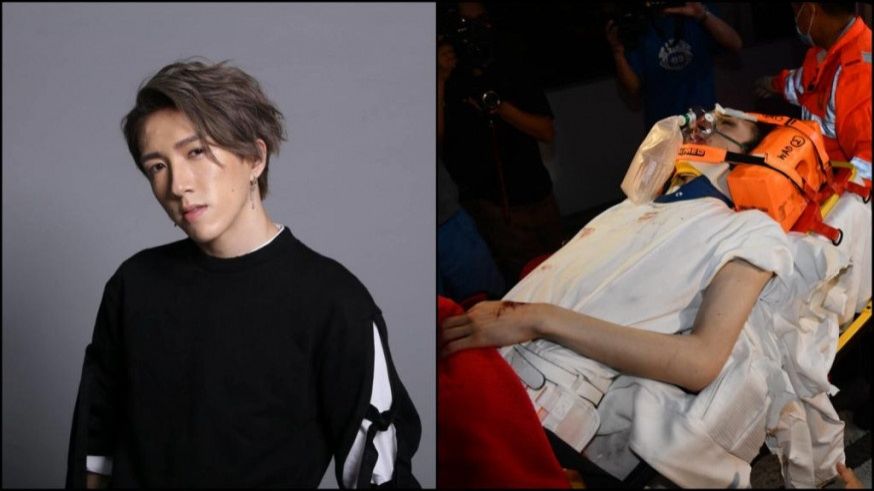
A Hong Kong dancer who suffered severe spinal injuries when a massive LED panel crashed down on him during a concert performance in 2022 has been awarded HK$6.29 million (approximately RM3.32 million) in damages by the District Court. The ruling on June 15 represents a significant legal victory for Mo Li Kai-yin, now 31, whose life was irrevocably altered in seconds during what should have been a routine professional engagement at Hong Kong Coliseum.
The accident occurred on July 28, 2022, during the fourth show of a planned 12-concert residency by popular Cantopop boy band Mirror. A four-by-four-meter LED screen dislodged from the ceiling and struck Mo, causing immediate and catastrophic damage to his cervical spine. Emergency medical response was swift, with Mo rushed to Queen Elizabeth Hospital where he underwent surgery to address the spinal dislocation. Despite intensive care and emergency intervention, the damage proved irreversible—Mo was left completely paralysed from the neck downward, a condition that fundamentally transformed every aspect of his existence.
The court's decision found that Mo's former employer, Studiodanz, bore responsibility for the incident. The District Court delivered a scathing assessment of the injuries, describing them as "catastrophic" and determining that Mo was entitled to the maximum available compensation across multiple categories. These included awards for permanent total incapacity, round-the-clock caregiving costs, ongoing medical expenses, and structured periodic payments designed to ensure financial security throughout his lifetime. The judgment acknowledged the permanent nature of Mo's condition and the extraordinary care requirements that would follow him for the rest of his life.
The scale of Mo's dependency underscores the severity of his condition. The court heard evidence that he now requires three full-time caregivers to provide constant assistance with every aspect of personal care and daily living. Tasks that able-bodied individuals perform without thought—bathing, dressing, toileting, eating—now demand professional intervention 24 hours a day. The court's written decision contained particularly poignant language, noting that Mo "has suffered catastrophic disabilities and permanent total incapacity, and will require lifetime constant care and attention. He is incapable of ever leading or appreciating an independent adult life." This stark statement encapsulated the finality of his condition and justified the substantial financial award.
Mo's medical journey following the accident has been extensive and ongoing. Beyond his initial emergency surgery and intensive care at Queen Elizabeth Hospital, he was subsequently transferred to private medical institutions both within Hong Kong and internationally, where he has continued undergoing surgical procedures and rehabilitation programmes. His treatment regimen has incorporated cutting-edge technologies aimed at maximising functional recovery, including regenerative medicine approaches and an implantable microstimulator designed to stimulate nerve pathways. These interventions, though expensive, have achieved modest but meaningful improvements—Mo has regained some movement in his right arm and has recovered sensation in his bladder and bowel functions, representing small victories in what remains a profound disability.
Prior to the accident, Mo had established himself as an active performer and educator within Hong Kong's dance community. He first developed interest in dance while attending university between 2015 and 2019, eventually transitioning to full-time professional status in 2019. His career encompassed diverse performance opportunities including concert appearances, television programming, commercial advertisements, and music video productions. Simultaneously, he maintained an instructional presence, teaching at four different dance studios including Studiodanz, the company that would later face court action over the accident. This dual role as performer and instructor demonstrated professional commitment and suggested a career trajectory that appeared promising before the incident derailed it entirely.
The tragedy extended beyond Mo's own suffering to profoundly impact his immediate family. His father, Reverend Derek Li Shing-lam, made the extraordinary decision to abandon his pastoral position and relocate from Canada to Hong Kong specifically to become his son's full-time caregiver. This sacrifice continued until Reverend Li's death on April 25, underscoring both the emotional toll and practical demands the accident imposed on family members. The loss of his father while in such a vulnerable state adds another layer of tragedy to Mo's circumstances, leaving him dependent on professional carers for the foreseeable future.
Strikingly, Studiodanz, the employer found liable for damages, did not participate in the trial itself. This absence from proceedings did not shield the company from consequences—beyond the HK$6.29 million compensation award, Studiodanz was ordered to pay interest on the damages and cover Mo's legal costs, a significant financial liability. The company had previously been separately fined HK$132,000 for violations of occupational safety regulations, suggesting systemic failures in workplace safety protocols at the venue or among contractors responsible for equipment installation and security.
Despite permanent paralysis from the neck down, Mo has demonstrated remarkable resilience in his rehabilitation efforts. Recent progress has been documented through his social media presence—a video posted on his Instagram account in March showed him operating an electric wheelchair using only his right hand, demonstrating that targeted rehabilitation and technological adaptation can enable limited independence in specific domains. These incremental improvements, while modest in absolute terms, represent significant achievements given the severity of his initial injury and underscore the value of ongoing therapeutic intervention even in apparently hopeless circumstances.
The case carries broader implications for entertainment industry safety standards across Asia, particularly given the high-profile nature of the Mirror concert series and the sophisticated technology involved in modern concert productions. The accident exposed vulnerabilities in equipment installation, maintenance protocols, and safety verification procedures that likely extend beyond this single incident. For performers and their families across Hong Kong and the broader Southeast Asian region, the ruling provides both validation that employers bear responsibility for workplace injuries and a stark reminder of the physical risks inherent in entertainment industry work. The substantial compensation award, while substantial in monetary terms, can never restore Mo's mobility or independence—it remains fundamentally a recognition of what has been irretrievably lost.