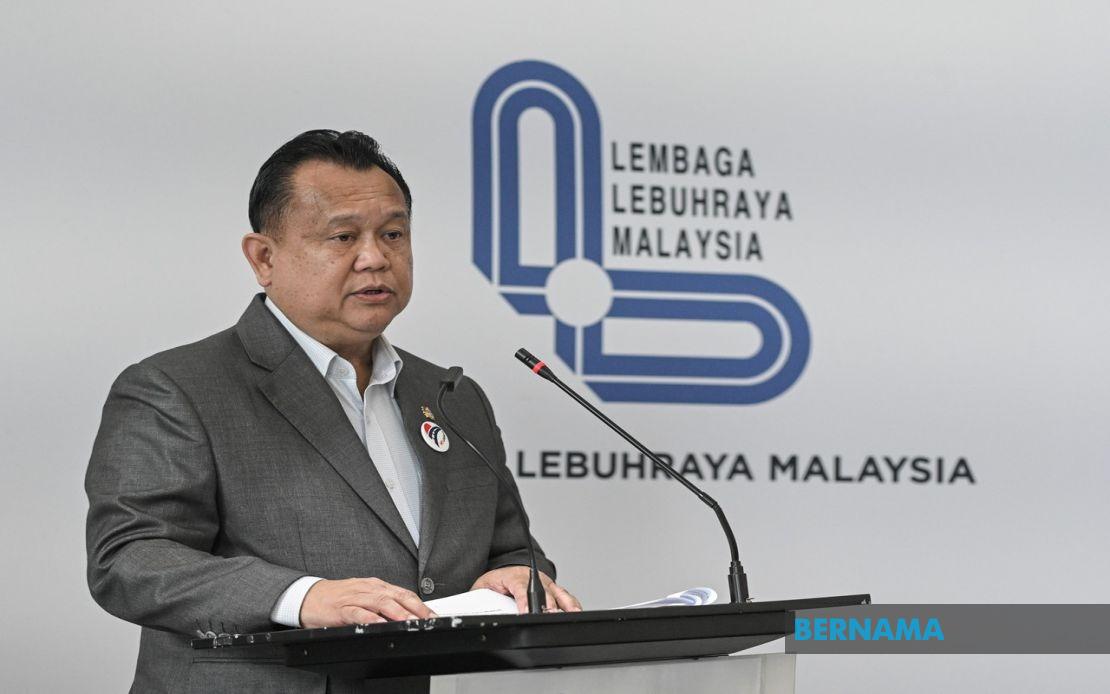
Malaysia is taking a significant step towards reducing highway accidents by investing RM25.2 million in an ambitious lighting initiative. Works Minister Datuk Seri Alexander Nanta Linggi announced that the government will install solar-powered LED street lights across 32 accident-prone locations on highway networks throughout the country. This intervention reflects a growing recognition that inadequate lighting at dangerous stretches has contributed to preventable collisions and fatalities on Malaysian roads.
The installation programme falls under the MADANI Monitoring initiative and will see 3,000 light poles deployed across the identified high-risk zones. The project represents the first phase of a broader safety enhancement scheme that Prime Minister Datuk Seri Anwar Ibrahim initially proposed with a RM30 million allocation announced in the 2026 Budget last October. By starting with RM25.2 million and retaining reserve funds for future phases, the government has structured the rollout strategically, allowing for adjustments based on performance assessments and emerging needs.
The choice of solar-powered LED technology demonstrates Malaysia's commitment to both safety and sustainability. Unlike conventional street lighting systems that require extensive electrical infrastructure and incur ongoing operational costs, solar LEDs offer a self-sufficient solution particularly valuable for remote or underdeveloped highway sections where traditional power supply may be limited or expensive to extend. The technology also aligns with Malaysia's broader environmental goals and reduces long-term maintenance expenses, freeing up public funds for other critical safety interventions.
Road safety remains a pressing concern across Southeast Asia, with Malaysia experiencing significant annual accident rates on its expanding highway network. The 32 locations selected for this initial phase represent areas where accident statistics have been notably high, suggesting that inadequate visibility during night hours has played a factor in collision patterns. By targeting these specific danger zones, the government is applying data-driven decision-making to infrastructure investment, a approach that could serve as a model for other regional nations facing similar road safety challenges.
The Malaysian Highway Authority (LLM) has partnered with the Works Ministry and Finance Ministry to execute this project, ensuring coordination across agencies responsible for highway maintenance and financial oversight. The Letter of Acceptance has already been handed to the selected contractor, enabling immediate commencement of installation work. This swift administrative action suggests bureaucratic efficiency in translating budgetary allocations into tangible infrastructure improvements, a critical factor in maintaining public confidence in government projects.
The November 2024 completion deadline is ambitious but achievable given the straightforward nature of installing light poles. However, the success of this initiative will ultimately depend on whether the LED systems perform reliably in Malaysia's tropical climate, which features high humidity, intense rainfall, and salt spray in coastal areas. These environmental factors can accelerate corrosion and electrical degradation, making equipment durability a key consideration for long-term project sustainability.
Beyond immediate safety benefits, this investment carries broader implications for highway traffic flow and economic productivity. Well-lit highways reduce driver fatigue and improve visibility during adverse weather conditions, potentially decreasing congestion caused by accidents and enabling smoother freight movement. For a nation heavily dependent on highway commerce, such improvements translate into economic efficiency gains that extend beyond casualty reduction.
The Malaysian government's emphasis on road safety reflects international best practices. Many developed nations have implemented similar programmes recognising that environmental design—including adequate lighting—is a cost-effective accident prevention strategy. By adopting this approach, Malaysia demonstrates alignment with global road safety standards and signals its commitment to protecting the growing number of motorists using highways daily.
The phased funding approach, where RM25.2 million is allocated initially with remaining funds available subject to assessment, provides flexibility for programme expansion. Should the current installation prove effective in reducing accidents at the 32 locations, the government could justify scaling up the initiative to cover additional dangerous stretches identified through traffic safety data. This pragmatic structure allows learning from the pilot phase before committing the full RM30 million allocation.
Stakeholders including insurance companies, vehicle manufacturers, and road user associations have long advocated for infrastructure-based safety improvements. This project directly addresses industry calls for investment in environmental safety measures, complementing driver education and vehicle safety feature mandates. The multi-stakeholder approach reflects an understanding that comprehensive road safety requires simultaneous action across multiple intervention points.
For Malaysian highway users, particularly those who regularly travel high-risk routes, the LED installation programme should deliver tangible benefits within months. Night-time visibility improvements can be immediately noticed and may subtly influence driver behaviour, encouraging slightly reduced speeds and increased attentiveness in previously dark sections. While monitoring data collection will be essential to quantify accident reduction, the initiative represents genuine progress in translating road safety commitments into physical infrastructure improvements that affect daily travel experiences.