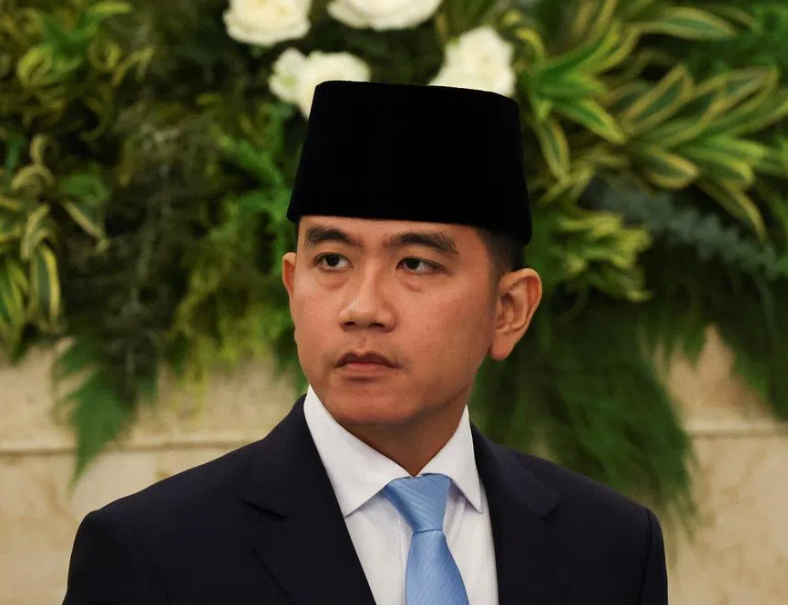
Vice-President Gibran Rakabuming Raka has moved quickly to position himself at the centre of public discourse surrounding Indonesia's most contentious government programmes, inviting student protesters to the palace and embarking on high-profile visits to eastern Indonesia in what analysts describe as a carefully orchestrated effort to raise his political profile. The engagement, which saw five university students board a government aircraft with the 38-year-old vice-president in mid-June, represents a notable shift in how he has approached his still-undefined role within President Prabowo Subianto's administration since taking office in October 2024.
The outreach followed three days after Gibran held a closed-door meeting with student representatives who had been demonstrating against two of the government's flagship initiatives: the free meals programme and the Red and White Cooperative scheme, which aims to establish thousands of village-operated enterprises across the archipelago. According to statements from the Vice-President's Office, Gibran demonstrated openness to the students' research and concerns, pledging to audit their findings and relay them to President Prabowo. This receptiveness contrasted sharply with the government's typical response to street protests, lending credibility to suggestions that something more deliberate was underway.
However, the engagement immediately drew scrutiny from observers who questioned both its authenticity and the calculus behind it. Social media users highlighted that the students invited represented smaller, less prominent universities rather than Indonesia's largest campuses, suggesting the selection was designed to ensure a receptive audience rather than genuine dialogue with the broader student movement. Commenters on Gibran's Instagram account questioned whether the encounter constituted meaningful engagement or mere political theatre, with one describing it as a "show" rather than substantive policy consultation. The questions intensified when reporting emerged that participating students had received financial payments ranging from 2 million to 20 million rupiah immediately following the meeting, with the Presidential Palace subsequently announcing an investigation into the source and purpose of these transfers.
Analysts from Jakarta's Center for Strategic and International Studies view Gibran's manoeuvre through a distinctly political lens. The vice-president appears to be cultivating a public persona as a communicative government official willing to hear citizen concerns, a positioning that observers say directly targets the 2029 presidential election cycle. By engaging with critics and demonstrating responsiveness to public anger over controversial programmes, Gibran is attempting to establish himself as a bridge between government policy and popular sentiment—a reputation that could prove valuable should he seek higher office, though he has made no public commitment to running. The strategy capitalises on the current momentum of student-led demonstrations while establishing a narrative of his relevance within an administration where his actual authority remains murky.
The paradox at the heart of Gibran's outreach, however, is that his genuine influence over either the free meals programme or the Red and White Cooperative initiative appears substantially limited. The free meals scheme operates under the National Nutrition Agency, which reports directly to President Prabowo, while the cooperative initiative functions as a presidential priority programme coordinated across multiple ministries and agencies. Unlike some previous vice-presidents who held defined policy portfolios, Gibran has been assigned no major executive responsibility since taking office. Despite his nominal links to high-profile projects such as Papua's development and the new capital Nusantara, he has largely remained peripheral to major decision-making, particularly regarding the programmes now consuming his public attention.
This structural reality fundamentally shapes the limitations of Gibran's engagement strategy. Scholars at Padjadjaran University and other institutions note that all available evidence suggests the vice-president played no substantive role in designing either the free meals or cooperative programmes, both of which appear primarily controlled by military and police entities operating within the presidential orbit. His recent visibility around these initiatives therefore represents not evidence of growing influence but rather an attempt to demonstrate relevance by associating himself with matters already dominating public discourse. In essence, Gibran is inserting himself into conversations about programmes he did not create and cannot meaningfully alter, raising fundamental questions about whether his meeting with students constitutes genuine problem-solving or merely political positioning.
The free meals programme had become particularly contentious following corruption allegations that engulfed the National Nutrition Agency in early June. The agency's chief, Dadan Hindayana, was replaced and subsequently arrested alongside two former deputies as authorities investigated alleged irregularities in procurement processes. This scandal created an opening for Gibran to position himself as attentive to public concerns and responsive to demonstrable failures in government administration. During his four-day visit to eastern Indonesia, he visited primary schools implementing the meals scheme, acknowledged shortcomings in programme governance, and promised improvements—actions that allowed him to appear engaged with urgent national problems without assuming responsibility for fixing them.
Examining Gibran's behaviour from a broader political perspective reveals a vice-president attempting to navigate an awkward institutional position by employing what researchers characterise as low-cost visibility strategies. With limited formal authority within the executive structure, he is relying on media-friendly engagement with student groups, symbolic visits to affected communities, and public acknowledgment of administrative failures to maintain political relevance. This approach requires minimal capital, generates positive press coverage, and allows him to address public anger without directly challenging the president or the powerful military-aligned figures who actually control major policy initiatives. For a vice-president operating in the shadows of major decisions, such performative acts offer a pathway to staying visible and memorable before the 2029 election cycle.
The financial payments to participating students, though modest by wealthy nation standards, underscore the orchestrated nature of Gibran's student engagement. The revelation that attendees received monetary transfers ranging up to 20 million rupiah suggests the vice-president's team carefully curated the meeting to ensure sympathetic participants and positive optics. This discovery aligns with observations that the students selected represented smaller universities unlikely to subject government claims to rigorous public scrutiny. Combined with the absence of truly prominent campus leaders and the immediate financial transfers, the engagement appears less a genuine consultation with student voices and more a constructed media event designed to demonstrate openness while managing potential criticism.
For Malaysian and broader Southeast Asian observers, Gibran's manoeuvres reveal the complex dynamics within Indonesia's political system as it prepares for its next presidential succession. The vice-presidency, traditionally an undefined and often powerless position, becomes a platform from which ambitious politicians can build visibility and credibility ahead of future races. Gibran's efforts to engage with student protesters, while lacking substantive policy authority, illustrate how contemporary Asian politicians navigate public scrutiny by projecting responsiveness even when their actual ability to effect change remains severely constrained. His strategy of riding public discontent over visible policy failures while avoiding responsibility for addressing them represents a calculated approach to political survival and advancement in an institutional environment dominated by entrenched executive power.
Looking forward, the broader implications of Gibran's outreach extend beyond his personal political trajectory. His engagement with student protesters, even if strategically motivated and cosmetic in actual policy impact, signals that even limited acknowledgment of public concerns can help defuse political tension. The students who attended the palace meeting gained an audience with the country's second-highest official, regardless of whether substantive policy changes follow. Meanwhile, Gibran has positioned himself as the government face most willing to listen, a distinction that may prove valuable as he builds a political brand for future electoral contests. The vice-president's performance thus reveals both the limitations of informal political authority within Indonesia's executive system and the creative strategies ambitious politicians employ to transcend those constraints through public visibility and perceived accessibility.