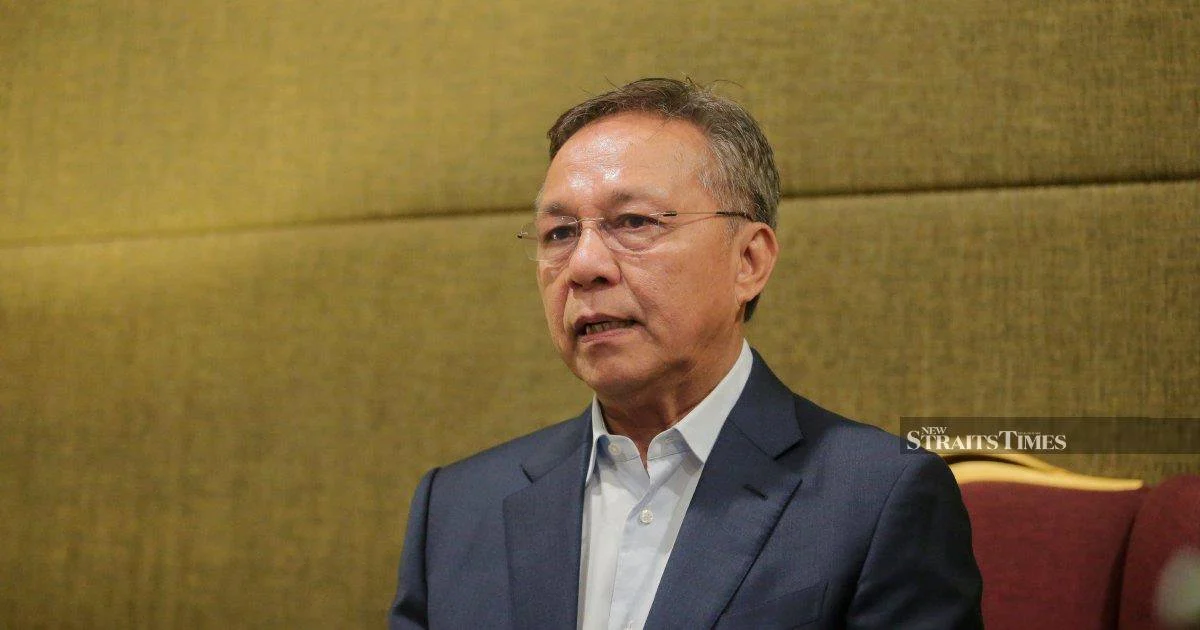
Datuk Seri Hasni Mohammad, who previously served as Johor's chief minister, will not be contesting in the upcoming state elections after his name was notably absent from the Johor Barisan Nasional candidate list released this week. The exclusion of the veteran politician from the state-level race has triggered widespread speculation within political circles about his next move, with observers suggesting he may pivot towards pursuing a parliamentary seat instead.
The decision to drop Hasni from the state election slate marks a significant development in Johor's political landscape, particularly given his previous standing within the BN machinery. His removal from contention for a state seat represents a notable shift in the coalition's electoral strategy for the sultanate, and observers are closely monitoring what this signals about his role in the party's broader political architecture.
Insiders suggest that Hasni's exclusion from the state polls does not necessarily indicate a diminished political profile within BN. Rather, the move may reflect a strategic recalibration where the party identifies him as better positioned to contest a federal parliament seat in the next general election. This interpretation gains credence given that experienced state-level operators sometimes transition to Dewan Rakyat representation, leveraging their established networks and political capital at the national level.
Johor's electoral dynamics have shifted considerably in recent years, with renewed competition between rival BN factions and internal jostling over candidate selection. The composition of this candidate list therefore carries weight beyond mere administrative significance, often revealing underlying party priorities and power consolidations. The exclusion of a figure with Hasni's stature would not occur without deliberation from BN's upper echelons.
For Malaysian political observers, the development underscores the fluid nature of electoral positioning in the post-2018 period. Political figures who held office during certain eras sometimes face recalibrated roles in subsequent contest cycles, as parties adjust their slate to reflect new demographic realities, evolving voter preferences, and shifting internal power dynamics. Hasni's situation exemplifies this broader pattern of repositioning.
The implications extend beyond Hasni's personal political trajectory. BN's approach to candidate selection in Johor carries consequences for how the coalition consolidates support in a state that remains electorally significant despite demographic shifts. The party's willingness to move experienced operators into different electoral configurations suggests confidence in its institutional depth, though it also invites questions about continuity and the party's ability to retain traditional support bases.
Parliamentary representation offers different advantages than state assembly seats. Federal office carries greater visibility and access to national policy apparatus, potentially suiting someone with Hasni's experience. A shift towards Dewan Rakyat politics would allow him to operate at a broader stage while potentially freeing him from the granular state-level contests that dominate state election cycles.
The timing of this candidate list release coincides with broader speculation about when Malaysia's next general election might occur. Current political conditions suggest electoral contests could emerge within the coming years, making candidate positioning a matter of active consideration across all major parties. BN's choices now will influence how effectively it can mobilise support when elections do materialise.
Johor itself remains a crucial electoral battleground for BN, given the state's traditional strength for the coalition and its substantial number of parliamentary seats. Any strategic decisions about candidate deployment in the state therefore warrant careful attention from those tracking Malaysian electoral trends. The positioning of experienced figures like Hasni forms part of this broader calculus.
Internal party discussions surrounding candidate selection often remain opaque to public view, with final determinations announced without extensive explanation of reasoning. Hasni's exclusion from the state list will likely be explained in straightforward terms by BN officialdom, though the underlying calculations involve assessments of electoral viability, internal party equations, and judgements about where particular figures can best serve the coalition's interests.
Looking ahead, observers will watch for clarification regarding Hasni's political status. Confirmation of a parliamentary candidacy in the coming general election would validate speculation about his repositioning. Alternatively, any withdrawal from electoral politics would suggest a different career trajectory altogether. His next public statement or party assignment will provide crucial guidance about the direction of his political future.
The broader significance of this development lies in what it reveals about BN's internal deliberations and strategic planning for forthcoming electoral contests. How effectively the coalition manages transitions like Hasni's across different electoral tiers will influence its competitive positioning in the years ahead, particularly in states like Johor where BN's electoral performance remains consequential for its national standing.