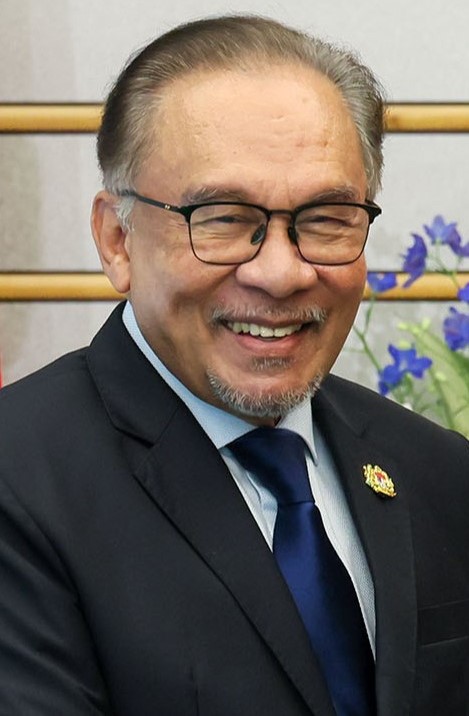
Datuk Seri Anwar Ibrahim has delivered a direct message to Pakatan Harapan's election apparatus in Johor: concentrate on strengthening grassroots support and abandon the temptation to engage in public disputes with parties currently holding federal office. Speaking during an address in Tangkak, the Pakatan Harapan chairman emphasised that productive energy would be better spent on voter outreach and ground-level organising rather than on adversarial exchanges that might alienate potential supporters or distract from core campaign messaging.
The directive reflects a strategic recalibration within the opposition coalition as it prepares for future electoral contests. By discouraging visible conflict with federal government partners, Anwar appears to be signalling that Pakatan intends to present a unified, disciplined image to voters—one focused on policy platforms and governance alternatives rather than personality clashes or institutional rivalries. This approach suggests the coalition is mindful that public bickering can erode voter confidence and overshadow substantive political offerings.
Johor represents particularly fertile ground for such messaging. As Malaysia's second-largest state by population and a traditional political battleground, Johor has witnessed intense electoral competition across multiple cycles. The state's diverse electorate—spanning urban professionals, rural communities, and industrial workers—demands that opposition parties maintain coherent narratives and avoid the appearance of internal dysfunction. For Pakatan, which has governed several states and held federal office, maintaining organisational discipline is essential to credibility.
Anwar's emphasis on avoiding bickering carries additional weight given the complex political architecture at both state and federal levels. The ruling coalition includes multiple partners with sometimes divergent interests, and Pakatan's various component parties—each with distinct constituencies and policy priorities—require constant coordination. When local operatives engage in public disputes with federal government figures, the resulting friction can complicate coalition management and muddy messaging in crucial swing areas.
The chairman's instruction also addresses a persistent challenge facing opposition movements across the region: the tendency for coalition partners to compete with each other as vigorously as they contest the ruling government. Such internal competition, while reflecting democratic pluralism, can exhaust resources and confuse voters about the coalition's unified vision. By directing Johor machinery toward disciplined ground operations, Anwar is attempting to channel competitive energy into productive channels that serve the broader coalition interest.
Johor's political significance extends beyond state boundaries. The state serves as a testing ground for national strategies and a crucial base for mobilising support ahead of federal elections. Senior opposition figures regularly visit to assess grassroots sentiment and calibrate messaging for different voter segments. Anwar's visit to Tangkak and his detailed guidance to party machinery underscores how closely central leadership monitors regional operations and how seriously party management is taken at the highest levels.
The call for focused, disciplined work also implicitly acknowledges that opposition success depends less on attacking the government directly than on demonstrating superior capability and vision at community level. This reflects lessons from regional politics elsewhere in Southeast Asia, where voters increasingly judge opposition parties on their tangible contributions to local concerns—infrastructure maintenance, service delivery, representative accessibility—rather than on their rhetorical assaults on ruling figures. Ground-level effectiveness builds credibility that translates into electoral support.
Anwar's directive comes at a time when Johor's political landscape continues evolving following the 2022 general election and subsequent state-level changes. The state has experienced shifting alignments and competing claims to legitimacy among various political actors. In this fluid environment, Pakatan's ability to maintain internal cohesion and present consistent messaging becomes even more critical. Disciplined machinery that stays focused on voter engagement rather than factional disputes offers the opposition its best prospect of consolidating support and expanding its appeal.
The emphasis on avoiding bickering also carries implications for how opposition parties relate to Islamist and non-Islamist components of the ruling government, particularly in a state like Johor where religious and communal sensitivities intersect with electoral politics. By instructing party machinery to refrain from inflammatory exchanges, Anwar is implicitly setting boundaries for political discourse that respect both competitive democracy and Malaysia's plural society. This measured approach contrasts with more combustible forms of opposition politics and may reflect Anwar's understanding that sustainable political movement requires building trust across different communities.
For Malaysian observers and regional analysts tracking opposition politics, Anwar's guidance signals that Pakatan is prioritising long-term institutional development over short-term point-scoring. This strategic choice reflects confidence that disciplined, community-focused organising will yield electoral dividends and that maintaining coalition unity matters more than individual parties seeking to outflank competitors through aggressive rhetoric. Whether this measured approach translates into tangible electoral gains will likely become apparent in forthcoming state or federal elections, with Johor potentially serving as a bellwether for the coalition's broader political prospects.