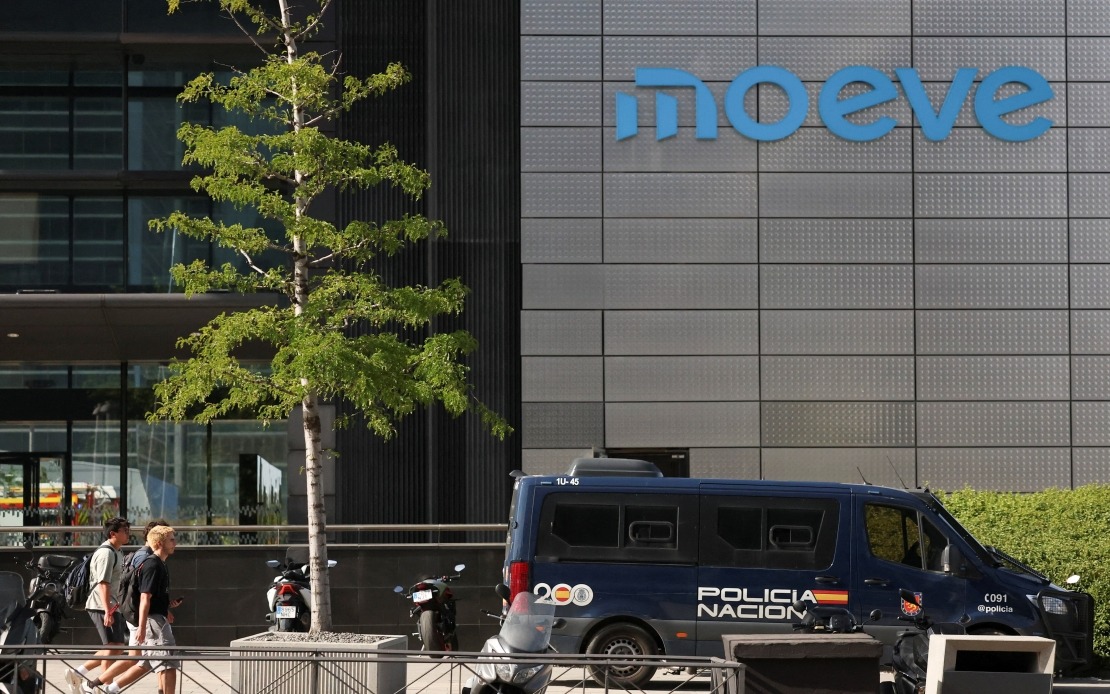
A substantial fire engulfed Torre Moeve, Madrid's second-tallest skyscraper, on Tuesday afternoon, triggering a dramatic evacuation and drawing emergency response from across the Spanish capital. The incident unfolded around 5.00 pm local time when an explosion detonated inside the tower, sending thick plumes of smoke billowing into the sky that were visible throughout the city. The National Police confirmed the blast preceded the main fire outbreak, marking an unusually serious structural emergency in one of Spain's most prominent buildings.
Authorities moved swiftly to secure the premises, evacuating the entire tower as a protective measure while firefighting operations commenced. The emergency response demonstrated the established protocols for high-rise incidents in major European cities, with coordinated action between multiple municipal services. Spanish national broadcaster RTVE provided real-time coverage of the unfolding situation, which captured public attention given the building's prominence on Madrid's skyline and its role as a landmark for both residents and visitors.
Investigations by the Spanish government delegation in Madrid pinpointed the 25th floor as the origin of the blaze. This level houses critical technical infrastructure and mechanical systems essential to the building's operations, suggesting the fire may have originated in equipment housing or electrical installations rather than in occupied office spaces. The location of the fire represented a significant consideration for emergency responders, as fires originating in technical zones can spread rapidly through ventilation systems and utility shafts that traverse entire structures.
Firefighters deployed from the Madrid City Council worked systematically to contain and extinguish the flames. Their efforts proved effective, with the delegation confirming that the fire had been completely extinguished within a reasonable timeframe. Following suppression, firefighters undertook a thorough inspection of the building's interior to assess structural integrity, identify any hidden pockets of fire, and evaluate whether the tower remained safe for re-entry or would require extended closure for repairs.
The incident resulted in remarkably few casualties considering the scale of the emergency. Two workers received treatment for mild smoke inhalation, while a bystander suffered an anxiety attack in response to the dramatic scene unfolding around the building. All three individuals were evaluated and discharged at the scene, with no hospitalizations required. This outcome reflects both the effectiveness of the evacuation procedures and the fortunate circumstance that the fire did not occur during peak business hours when occupancy would have been significantly higher.
Torre Moeve holds considerable importance within Madrid's architectural and commercial landscape as Spain's second-tallest building. The structure serves as a symbol of the country's modern skyline and houses numerous corporate offices and business operations. The fire incident raises broader questions about fire safety protocols in ultra-high-rise buildings, a concern increasingly relevant throughout Europe as cities develop more ambitious vertical architecture. Building codes and safety systems in such structures undergo regular scrutiny following major incidents to identify potential improvements.
The episode underscores the critical importance of maintaining technical infrastructure in large commercial buildings. Mechanical rooms, electrical systems, and HVAC equipment represent potential fire sources that require continuous monitoring and regular maintenance. For building managers and owners across Southeast Asia and internationally, the Torre Moeve incident serves as a reminder that even modern, well-maintained structures face inherent risks requiring constant vigilance and investment in preventive measures.
Spanish emergency services' response reflected well-rehearsed procedures for metropolitan fire emergencies. The coordination between police, municipal firefighters, and government authorities demonstrated the importance of established protocols and regular training. For other major cities considering their own emergency preparedness frameworks, the Madrid response provides a practical model of effective crisis management in high-density urban environments where large populations work in proximity to potential fire hazards.
The incident occurred at a time when European cities have witnessed increased attention to building safety following several major fires in other countries. Regulators and building operators have become increasingly conscious of the need for robust fire prevention systems, regular inspections, and comprehensive evacuation procedures. Torre Moeve's status as a prominent commercial structure means the incident will likely trigger internal reviews of fire safety measures at comparable buildings throughout Spain and across Europe, potentially leading to updated safety standards or enhanced maintenance protocols.