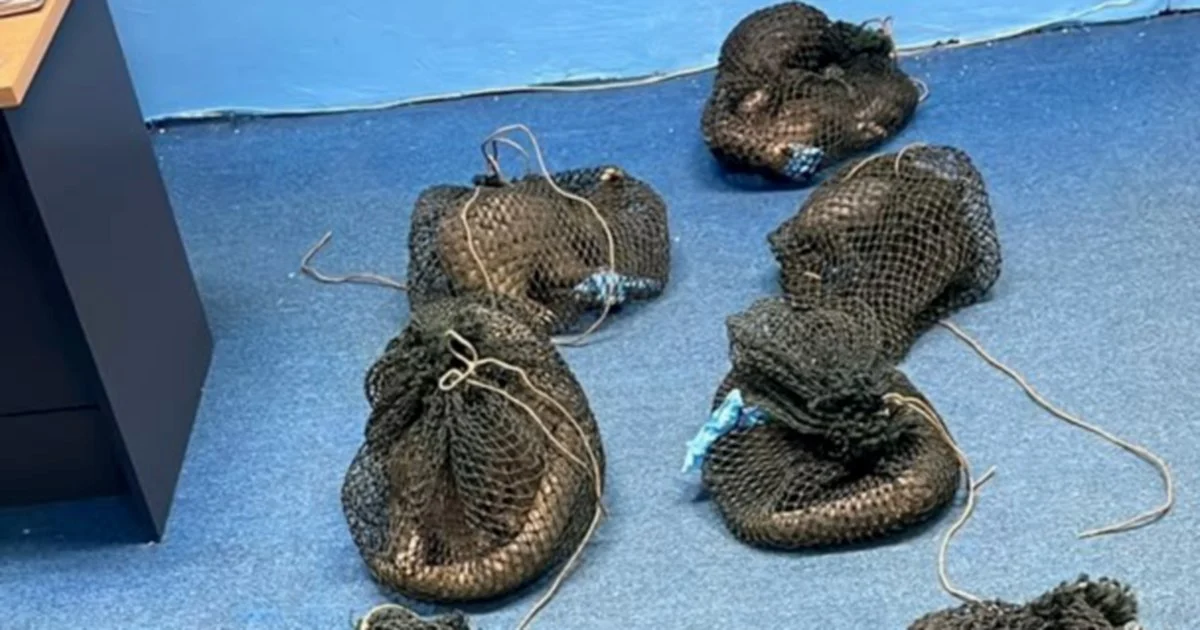
A plantation worker from the Philippines has been apprehended by enforcement officers in Sabah's Kinabatangan district following the discovery of ten live pangolins and an elephant tusk concealed at his residence. The 27-year-old detainee was taken into custody after the raid on properties in Kampung Paris 3 yielded the endangered animals and ivory, adding to a growing roster of wildlife trafficking incidents across the eastern Malaysian state.
The operation demonstrates the persistent problem of illegal wildlife trade in Sabah, a state that sits at the crossroads of significant smuggling corridors linking Southeast Asia with international black markets. Pangolins rank among the world's most trafficked mammals, hunted for their scales, which are valued in traditional medicine markets across East Asia, and for their meat. The confiscation of these ten specimens represents a meaningful intervention that potentially prevents their transportation to processing facilities or overseas buyers.
Kinabatangan, a district in the Sandakan division, has historically served as a hotspot for poaching and smuggling activities due to its geographic position and accessibility to both terrestrial and maritime routes. The plantation setting where the animals were discovered underscores how criminals exploit working environments and agricultural zones as cover for illegal operations. Such locations offer anonymity amid regular workforce movement and commercial activity, making detection challenging for authorities who must balance enforcement with the needs of legitimate agricultural operations.
The presence of an elephant tusk alongside the pangolins points to a broader trafficking ecosystem where multiple endangered species are handled by the same networks. Elephant ivory continues to command premium prices in markets despite international prohibitions, particularly in China and Vietnam where it retains cultural and ornamental value despite decades of advocacy against poaching. The seizure suggests either that this particular operation dealt across species lines or that transshipment and consolidation of contraband occurred at this location.
Enforcement actions such as this raid rely heavily on intelligence-gathering and community cooperation. Authorities must identify suspicious activities amid legitimate business operations, requiring coordination between wildlife agencies, immigration officials, plantation management, and sometimes local informants. The successful apprehension indicates that intelligence networks in Sabah have become increasingly effective, though the sheer volume of illicit trafficking suggests that many operations continue undetected.
The suspect's nationality raises questions about cross-border trafficking networks. The Philippines has itself struggled with poaching within its borders and has been identified as both a source and transit point for wildlife trafficking destined for regional and international markets. The presence of a Filipino national in Sabah engaged in such activities reflects how porous borders and regional demand create opportunities for syndicates that recruit workers from neighbouring countries to undertake high-risk operations.
Malaysia has strengthened its wildlife protection framework in recent years, including through the Convention on International Trade in Endangered Species of Wild Fauna and Flora (CITES), which both Malaysia and the Philippines have ratified. However, enforcement remains inconsistent, and penalties, while existing on paper, are sometimes insufficient to deter determined trafficking networks. Rehabilitation of seized pangolins presents additional challenges, as these solitary, stress-sensitive animals often do not survive prolonged captivity, making their confiscation ultimately a rescue operation rather than a transfer to long-term sanctuaries.
The economic drivers behind such trafficking remain formidable. Pangolin scales fetch high prices in wholesale markets, offering traffickers substantial profit margins relative to the risks they face in jurisdictions where law enforcement capacity is limited. For a worker earning modest plantation wages, involvement in wildlife trafficking can represent a significant income opportunity, particularly if coordinated through organised networks that provide protection and logistics.
This seizure highlights ongoing demand pressures from consumer markets in East Asia that sustain the trafficking chain. Regional demand reduction campaigns have made modest progress but face entrenched cultural beliefs about traditional medicine efficacy. As long as markets remain active, traffickers will continue to target Southeast Asian wildlife, particularly species like pangolins that are abundant in forested regions but vulnerable to unregulated hunting.
Sabah's role as a wildlife trafficking hub extends beyond pangolins and ivory to include rhinoceros horns, tiger parts, and rare birds. The cumulative impact of trafficking across multiple species threatens ecosystem stability in one of Southeast Asia's most biodiverse regions. Continued coordination between Malaysian authorities and neighbouring countries remains essential to disrupting supply chains at source, in transit, and at destinations.
The investigation into this case will likely reveal information about the broader network through which these animals were being managed. Authorities will seek to identify buyers, intermediaries, and other members of the trafficking chain, potentially leading to additional arrests and seizures. Successful prosecution of cases like this strengthens deterrence, though only if penalties approach the profitability calculations of traffickers, something that remains a persistent challenge across Southeast Asia.