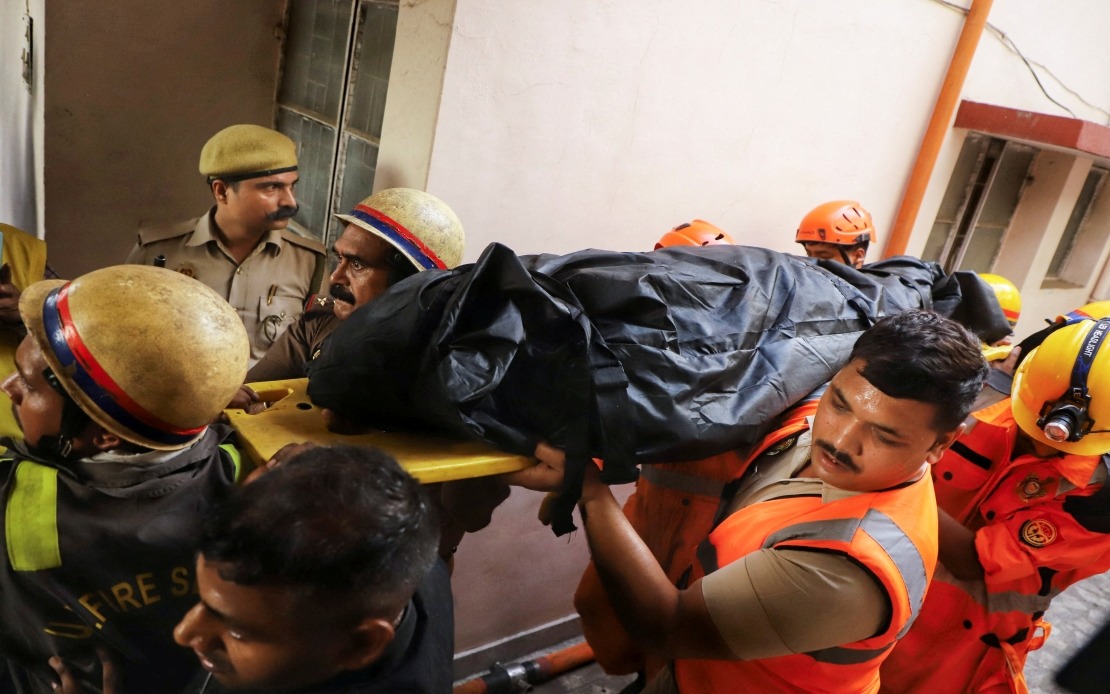
A catastrophic fire swept through a three-storey commercial building in Lucknow's Aliganj district on Monday, claiming the lives of at least 15 people, predominantly young students attending training programmes at the facility. The blaze, which engulfed the structure housing an animation training centre alongside various retail establishments, has triggered fresh concerns about building safety standards and emergency response protocols across India's urban centres, with particular implications for Southeast Asian nations grappling with similar infrastructure challenges.
The intensity of the fire forced desperate measures among those trapped inside. Eyewitnesses reported that children trapped on upper floors resorted to jumping from the smoke-filled building as panicked onlookers scrambled to contact emergency services. Social media footage circulated by bystanders captured the harrowing scenes, documenting both the ferocity of the blaze and the chaotic evacuation attempts. The rapid spread of the fire through the three storeys left little time for orderly evacuation, transforming what should have been a routine Monday into a catastrophe that would reverberate through families and the broader community.
Uttax Pradesh Chief Minister Yogi Adityanath released a statement acknowledging the tragedy's human toll. Speaking at a political rally in another city, he expressed condolences to bereaved families, describing the incident as "extremely tragic and heart-rending." The official response, however, came only after the fact—highlighting the broader question of how preventive measures might have averted such loss of life in the first place. The statement's distance from the scene underscored the administrative challenges in responding to emergencies in India's densely populated urban areas.
Emergency responders transported more than 20 victims to the trauma centre of King George's Medical University, the region's principal medical facility for critical casualties. Of those admitted, five individuals received treatment for injuries sustained in the fire or evacuation attempts. Tragically, 15 others were pronounced dead upon arrival at the hospital, indicating the severity of the injuries sustained and the fire's lethality. The fatality rate suggests that many victims suffered severe burns or smoke inhalation injuries incompatible with immediate survival.
The Lucknow fire represents the second major building conflagration to strike northern India within weeks. Earlier in June, a catastrophic fire at a hotel in Delhi claimed at least 22 lives, many of them foreign medical tourists visiting the capital for healthcare services. That incident similarly exposed critical gaps in fire safety enforcement and emergency preparedness. The clustering of such disasters within a short timeframe has intensified scrutiny of building code compliance across Indian cities, raising questions about whether regulations exist on paper only or are actively enforced.
For Malaysian and Southeast Asian observers, the Lucknow tragedy carries particular relevance. Many of the region's nations host similar commercial and educational facilities with comparable infrastructure vulnerabilities. The incident serves as a stark reminder that rapid urbanisation across South and Southeast Asia, while economically necessary, frequently outpaces the development of adequate safety infrastructure. Animation and IT training centres, which have proliferated across the region as the digital economy expands, often operate in converted commercial spaces with potentially inadequate fire suppression systems and emergency exits.
The concentration of young students in the Lucknow facility compounds the tragedy's human dimension. Training centres catering to youth represent investment in future human capital; their loss represents not merely immediate fatalities but interrupted educational trajectories and diminished economic prospects for survivors and families. The prevalence of such facilities in converted buildings across Asia suggests that many may harbour similar risks, operating within structures never designed for their current occupancy density or function.
Investigative attention will likely focus on whether the building possessed proper fire safety certifications, adequate fire suppression equipment, and clearly marked emergency exits. The presence of multiple retail establishments alongside the training centre raises questions about how occupancy loads were managed and whether structural modifications to accommodate diverse tenants compromised evacuation routes. The animation training centre itself, likely operating on tight margins typical of vocational education providers, may have lacked resources to implement premium safety measures.
The incident underscores the tension between economic growth and safety compliance in rapidly developing nations. Lucknow, as Uttar Pradesh's capital and a major commercial hub, attracts numerous small and medium enterprises seeking affordable office and training space. Older commercial buildings, converted to house multiple tenants, offer cost advantages but frequently lack modern fire safety infrastructure. Building owners face minimal incentive to invest in upgrades if enforcement remains sporadic and penalties insufficient to deter non-compliance.
For Malaysian policymakers and urban planners, the Lucknow fire provides a cautionary case study. Malaysia's own rapid expansion of training centres, co-working spaces, and educational facilities in commercial buildings warrants scrutiny through this tragic lens. Regular safety audits, stringent enforcement of building codes, and mandatory fire safety training for occupants could help prevent similar tragedies locally. The incident also highlights the importance of accessible emergency services; response times and medical facility capacity directly influence survival outcomes.
The broader regional context matters as well. Across Southeast Asia, informal sectors and small enterprises frequently operate in substandard premises due to cost pressures and limited regulatory oversight. Migration of workers to urban centres for employment and training intensifies occupancy densities in aging buildings. Without proactive intervention, the Lucknow incident risks becoming a harbinger rather than an anomaly.
As investigations into the Lucknow fire proceed, the focus must extend beyond determining immediate causes to examining systemic vulnerabilities in building safety governance. The families of the 15 deceased, predominantly young individuals pursuing education and self-improvement, deserve more than condolences—they deserve assurance that such preventable tragedies will not recur. For the wider region, the incident serves as an urgent prompt for comprehensive reassessment of fire safety standards, enforcement mechanisms, and emergency preparedness across commercial and educational facilities housing vulnerable populations.