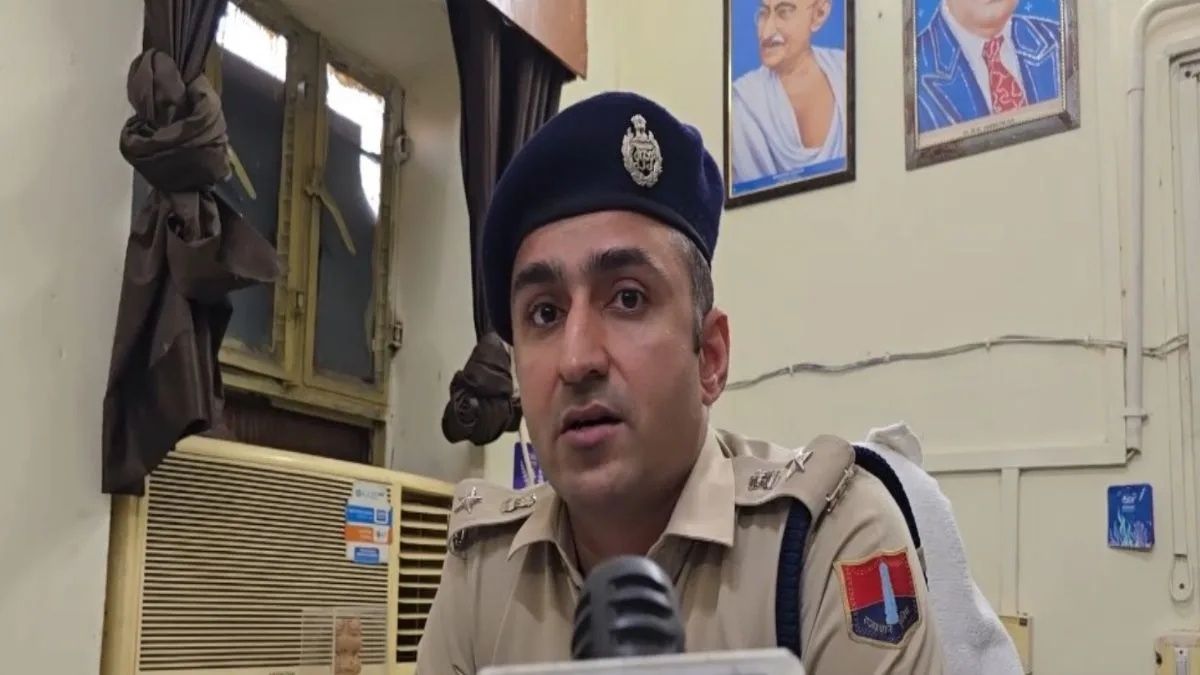
Police in Rajasthan's Dholpur district are investigating what authorities believe may be an honour killing after two young women were allegedly thrown into a river by members of their immediate family. The incident, which occurred near Sagarpada Bridge in Pharakpur village, has prompted investigators to examine whether the deaths were motivated by the victims' romantic relationships that their family had reportedly rejected.
According to Superintendent of Police Vikas Sangwan, officers received information on Friday indicating that Bharat Lodha, a resident of Pharakpur village and father of four, had allegedly killed two of his daughters. The allegations centre on an incident occurring around 9 to 10 in the evening on June 11. Police immediately mobilized teams to the location and began a comprehensive examination of the scene and surrounding circumstances that led to the deaths.
The preliminary investigation has established that the two victims were targeted over their involvement in romantic relationships that did not have their family's approval. This detail has led investigators to classify the deaths as a suspected honour killing, a crime that continues to be a serious concern across certain communities in India. The fact that the victims were allegedly pushed from a bridge into the river represents a particularly brutal execution of what authorities suspect was a premeditated plan involving multiple family members.
Sangwan outlined the investigative challenges ahead, emphasizing that police are working to reconstruct the sequence of events leading up to the alleged crime. Authorities are particularly focused on understanding how the two women were transported to Sagarpada Bridge, which individuals accompanied them, and what vehicle was used in the process. These logistical details are crucial in establishing the involvement of specific family members and determining whether the incident was genuinely spontaneous or involved careful planning.
The investigation has not yet yielded complete clarity on every aspect of the case. Police have stressed that while initial evidence points toward family involvement and a motive connected to disapproved relationships, several critical facts remain under verification. The difficulty of investigating cases involving multiple family members is well documented, as investigators must navigate complex family dynamics while gathering evidence that can withstand legal scrutiny. In this instance, authorities are simultaneously questioning individuals linked to the case while continuing to gather physical evidence from the site.
Honour killing cases in India typically involve multiple perpetrators and layers of family complicity, making investigations protracted and complex. The involvement of Bharat Lodha's relatives alongside him in this case suggests a coordinated action rather than an impulsive incident. This pattern is consistent with previous honour killing cases that have emerged from rural Rajasthan, where family councils sometimes collectively decide to eliminate members they believe have brought shame through unauthorized romantic choices.
For Malaysian readers familiar with news from South Asia, such cases highlight the persistent vulnerability of young women in certain communities where traditional family structures prioritize collective reputation over individual safety and autonomy. While Malaysia has its own challenges with gender-based violence and family crimes, the scale and cultural dimensions of honour killings in parts of India represent a distinct phenomenon rooted in particular interpretations of family honour and social standing.
Sangwan indicated that the investigation is ongoing and that authorities will continue examining all dimensions of what occurred that evening. Police are also verifying the precise timeline of events, as initial estimates placing the incident between 9 and 10 in the evening remain subject to confirmation through witness statements and other evidence. The officer confirmed that legal action will follow once the investigative process reaches a conclusion, though he declined to specify what charges might ultimately be filed.
The Sadar Police's handling of this case reflects broader efforts within Indian law enforcement to take honour killing allegations seriously and pursue comprehensive investigations rather than accepting initial family narratives about the deaths. The decision to immediately name suspects and launch a formal inquiry demonstrates a shift toward greater accountability, though critics have long argued that investigating agencies must work harder to prevent such crimes rather than simply pursuing cases after deaths occur.
For the broader context of Southeast Asia, this case underscores ongoing concerns about women's safety in the region and the ways that family structure, romantic autonomy, and concepts of honour interact across different communities. While the legal and social frameworks governing these issues differ significantly between Malaysia and Rajasthan, the underlying tension between individual choice and family authority remains relevant across multiple South Asian and Southeast Asian contexts.
The investigation in Dholpur represents the kind of difficult casework that requires sustained engagement with evidence, witnesses, and legal standards. Authorities indicated that full details would be released once the inquiry reaches more conclusive stages, suggesting that the public narrative of what occurred remains subject to evolution as investigators gather additional evidence and verify preliminary findings.