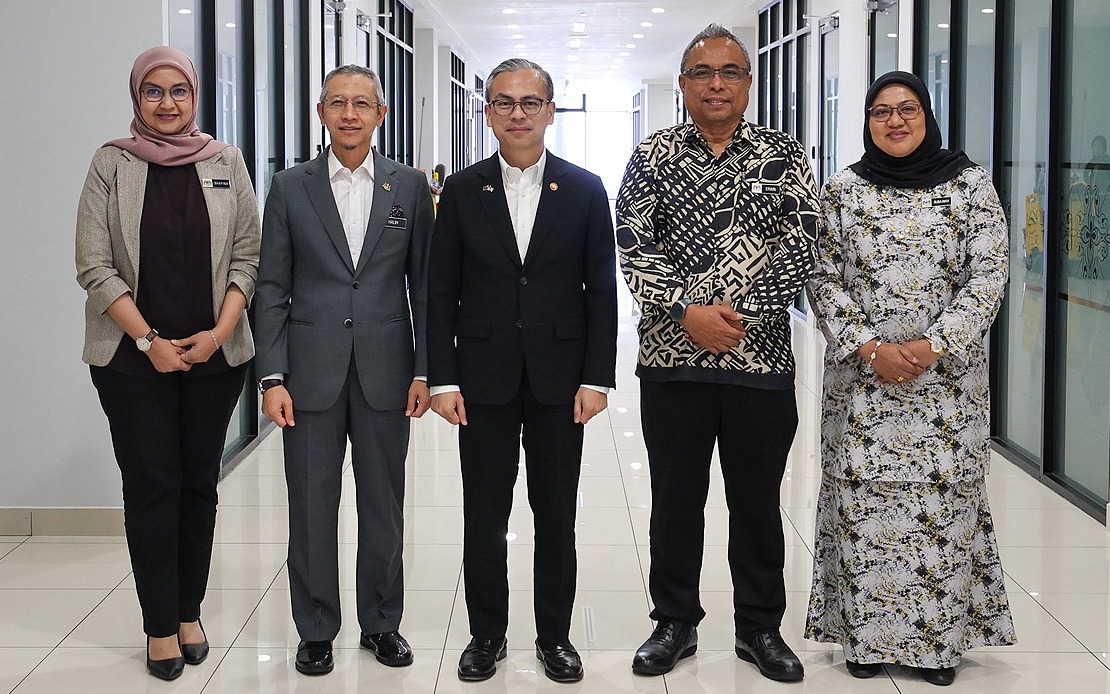
Communications Minister Datuk Fahmi Fadzil has formally welcomed the newly appointed leadership of the Information Department (Jabatan Penerangan or JaPen) following announcements by the Public Service Department on June 22. Erwin Khairul Ahmad takes the helm as director-general, while Wan Saidatul Shafina Mohd Amin assumes the role of deputy director-general responsible for digital content operations. The appointments represent significant changes in stewardship of an institution tasked with keeping the Malaysian public informed on government initiatives and national affairs.
Fahmi's words of encouragement to both officials set the tone for their tenure, emphasising that their leadership should embody qualities essential for public service success. He called upon them to demonstrate commitment to their roles while exercising sound judgement in guiding the department forward. The minister's remarks also stressed the broader institutional mission—positioning JaPen as a trusted channel through which government information reaches citizens effectively and transparently. This framing highlights the ongoing importance of information management in Malaysia's governance landscape, particularly in an era when public communication strategies face mounting scrutiny from multiple stakeholder groups.
The appointment of Wan Saidatul Shafina to oversee digital content carries particular significance for Malaysia's information apparatus. As nations across Southeast Asia grapple with rapidly evolving media consumption patterns, the designation of a deputy director-general specifically focused on digital platforms reflects official recognition that traditional broadcasting and print channels no longer monopolise public discourse. This structural adjustment suggests the department intends to strengthen its presence on online platforms where younger Malaysians increasingly source their news and government updates. The elevation of digital content to deputy director-general level signals institutional commitment to matching the sophistication of digital communication strategies deployed by private-sector competitors.
The Public Service Department facilitated the formal handover process through director-general Tan Sri Wan Ahmad Dahlan Abdul Aziz, who presented appointment letters to both officials. This ceremonial aspect underscores the institutional weight carried by such transitions within Malaysia's public sector hierarchy. The involvement of the PSC's top official in the presentation ceremony reflects standard protocol for senior government appointments and lends formal legitimacy to the new appointees' authority. Such procedures, though sometimes perceived as mere formalities, serve important symbolic functions in establishing leadership credibility within bureaucratic structures that value hierarchical recognition.
Fahmi also extended formal gratitude to Julina Johan, the outgoing director-general, acknowledging her stewardship of the institution. Such recognition of predecessor contributions has become standard practice in Malaysian government transitions, reflecting cultural emphasis on maintaining collegial relationships across career transitions. Julina Johan's tenure saw the department navigate evolving challenges in information dissemination during a period of significant political change in Malaysia. Her departure marks the end of a chapter during which JaPen adapted to shifting expectations about government transparency and public engagement in the post-2018 political landscape.
The appointment carries implications extending beyond the department itself into Malaysia's broader information ecosystem. JaPen operates at the intersection of government communications strategy and media relations, positioning it as an influential entity in shaping how officials engage with journalists, social media communities, and the general public. The new leadership team's vision and approach could influence how government announcements receive framing and distribution across multiple channels. This institutional influence makes the calibre and orientation of departmental leadership matters of more than routine administrative interest.
For regional observers monitoring developments in Southeast Asian governance, leadership changes at information departments warrant attention. Malaysia's approach to government communications influences broader regional patterns in how ASEAN nations manage public information flow. The emphasis placed on digital content capabilities, as evidenced by the appointment structure, reflects continental trends toward recognising digital platforms as indispensable components of official communication infrastructure. Nations throughout Southeast Asia are similarly recalibrating their information departments to address digital-first audiences and the challenges posed by rapid information dissemination beyond government control.
The department's role in delivering timely, accurate information to the public takes on heightened importance given Malaysia's diverse, digitally-engaged population. With multiple ethnic communities, religious groups, and political constituencies all monitoring government actions and statements, the institutional capacity to communicate clearly and comprehensively becomes strategically significant. Leadership changes provide opportunities to reassess departmental priorities, resource allocation, and strategic approaches to information management. The incoming director-general and digital content deputy will have latitude to shape how their teams approach these multifaceted challenges.
Looking forward, stakeholders will likely observe how Erwin Khairul and Wan Saidatul Shafina establish their leadership priorities during their initial months in office. Early decisions regarding staffing, budget allocation, and digital platform strategy will signal their strategic vision. The appointment of a dedicated deputy director-general for digital content suggests these leaders may pursue more aggressive efforts to populate government social media channels, develop multimedia content, and engage directly with online communities. Such approaches, if implemented thoughtfully, could improve government accessibility and transparency while expanding JaPen's relevance in Malaysia's modern media environment.