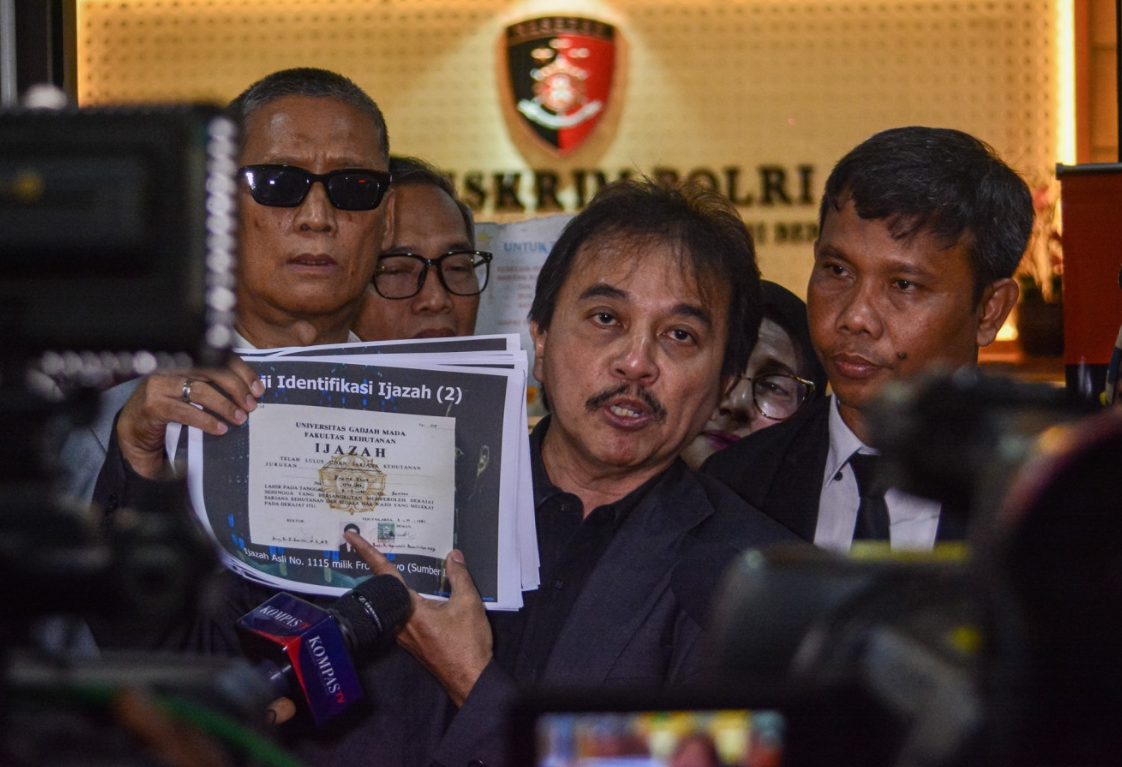
The arrest of former youth and sports minister Roy Suryo and health activist Tifauzia 'Tifa' Tyassuma by Jakarta Police on Friday morning represents a watershed moment in Indonesia's most contentious political dispute over academic credentials. Both individuals were apprehended at their homes following allegations that they defamed former president Joko 'Jokowi' Widodo by questioning the authenticity of his university diploma. The detention signals that authorities are pursuing the case with considerably greater intensity, moving beyond investigation and toward prosecution, with the case now being transferred to the Jakarta Prosecutor's Office.
The controversy surrounding Jokowi's academic qualifications first emerged publicly in 2019 when claims about the legitimacy of his diploma circulated widely across Indonesian social media platforms. What began as unsubstantiated allegations eventually morphed into a protracted legal battle involving multiple investigations, civil lawsuits, and competing claims about institutional authenticity. Over six years, the dispute has consumed significant governmental resources and generated considerable public debate about transparency, institutional credibility, and the limits of political accountability in Indonesia's democracy.
According to Ahmad Khozinudin, Roy's legal representative, the detention was executed as part of standard procedures preceding the second stage of investigation. The Jakarta Police's General Crimes Directorate confirmed that the arrests followed the completion of initial police investigations and were designed to facilitate the transfer of suspects and evidence to prosecutors. Sr Comr Iman Imanuddin, the investigation director, explained that the procedure aimed to prevent administrative delays and ensure completion of procedural requirements including medical examinations and evidence verification, suggesting the police view this as a routine procedural step rather than punitive detention.
Beyond the defamation allegations, Roy and Tifa face additional accusations of manipulating electronic documents to substantiate their claims about the diploma's authenticity. These charges fall under the Electronic Information and Transactions Law, which carries a maximum penalty of six years imprisonment, significantly increasing the potential consequences of conviction. The involvement of electronic document manipulation charges indicates prosecutors believe the individuals engaged in deliberate falsification rather than simply expressing controversial opinions, a distinction that carries substantial legal weight in Indonesian courts.
The National Police determined in May 2025 that Jokowi's diploma was authentic and subsequently closed an earlier investigation into forgery allegations. However, this official finding failed to end the controversy. During a case review conducted in July 2025, Roy and other critics maintained their objections to the police's conclusions, indicating that the institutional resolution of the question did not satisfy skeptics who questioned the investigation's thoroughness or impartiality. This persistent challenge to official findings appears to have prompted the decision to pursue defamation charges, effectively attempting to criminalize continued questioning of the police's institutional judgment.
The detention decision has drawn sharp criticism from defense counsel. Refly Harun, representing both suspects, contested the necessity of holding his clients in custody, noting that they had consistently appeared for all police summonses and complied with reporting requirements. He questioned the proportionality of detention when the case's transfer to prosecutors was not scheduled until Monday, suggesting that the measure exceeded what was procedurally required. This legal challenge raises important questions about bail practices and detention standards in Indonesian criminal procedure, particularly in cases involving political figures or matters touching upon sensitive national leadership questions.
The broader legal framework surrounding the case extends beyond the two detained individuals. Police previously identified six additional suspects in the defamation investigation under the same Electronic Information and Transactions Law provisions. However, the trajectory of these cases demonstrates considerable variation in how authorities pursued different actors. Three suspects—Eggi Sudjana, Damai Hari Lubis, and Rismon Sianipar—had charges dropped following mediation processes, suggesting that law enforcement possessed some discretion in determining which individuals to prosecute aggressively and which to allow to exit the legal process through settlement mechanisms.
For Malaysian observers, this case illuminates important patterns in Indonesian institutional politics and the methods through which governments address reputational challenges to senior leaders. The decision to pursue criminal defamation charges against those questioning official narratives represents an approach that contrasts with Malaysia's own complicated relationship with such prosecutions. It demonstrates how countries with significant political polarization may increasingly deploy legal mechanisms to suppress dissenting voices, particularly those challenging official government investigations or findings about matters involving high-ranking officials.
The implications extend beyond individual criminal liability. The case reflects broader tensions between governmental authority and public scrutiny in Indonesia's post-democratic period. By criminalizing sustained questioning of an official police finding, authorities appear to be prioritizing institutional reputation over open debate about factual matters. This approach may inadvertently reinforce public skepticism about official investigations, particularly among populations predisposed to view government institutions with suspicion. The demonstration that persistent questioning can result in detention and prosecution may chill broader public discourse about institutional transparency and accountability.
Regionally, Indonesia's handling of this case sends signals about how ASEAN nations approach leadership accountability and institutional credibility. While the United States and European systems typically address such disputes through civil litigation and public debate rather than criminal prosecution, Indonesia's trajectory suggests a preference for administrative authority and criminal law as tools for managing reputation. For Southeast Asian democracies wrestling with similar tensions between protecting institutional authority and preserving space for critical discourse, Indonesia's experience offers instructive—if concerning—lessons about the potential consequences of criminalizing political skepticism.
The detention also raises questions about the investigation's selectivity and underlying motivations. The fact that some suspects faced dropped charges while others proceeded to detention suggests investigative discretion based on factors beyond the evidence itself. Understanding what distinguished Roy and Tifa's cases from those of other suspects may illuminate whether prosecutorial decisions reflected evidentiary strength or other considerations related to the political prominence and media influence of the detained individuals. These questions about prosecutorial motivation will likely feature prominently in both public discourse and any eventual court proceedings.