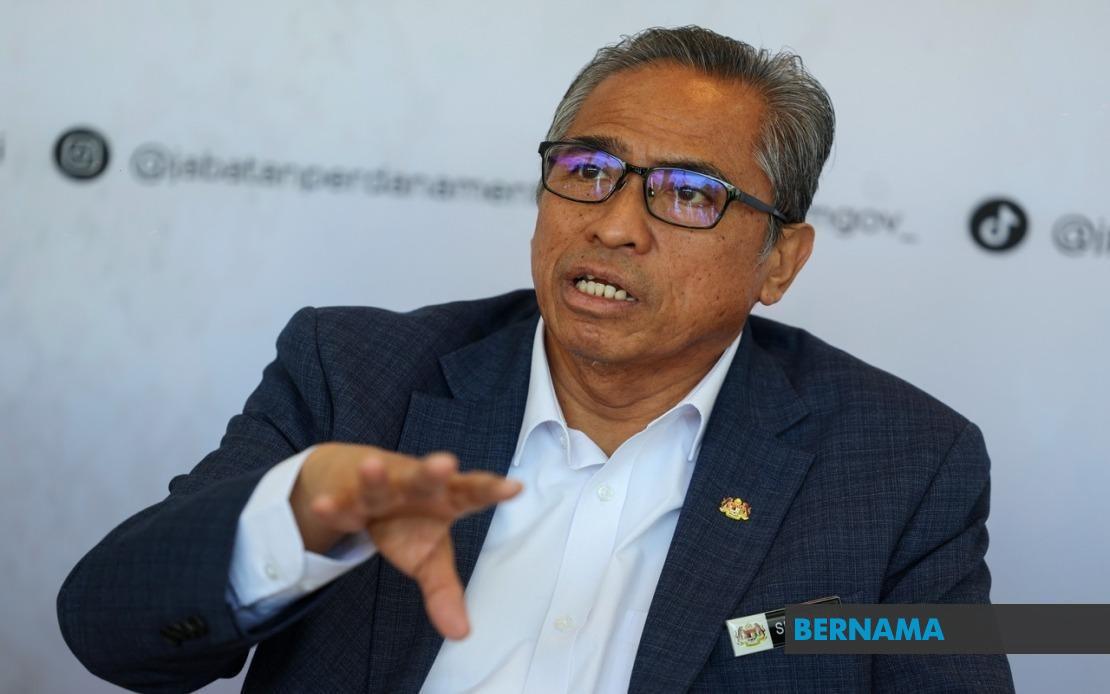
The machinery of Malaysia's public sector has been given a clear mandate: to transform recent high-level diplomatic engagements into measurable economic benefits for the nation. Tan Sri Shamsul Azri Abu Bakar, the Chief Secretary to the Government, emphasised that the civil service must actively undergird the Prime Minister's international endeavours, particularly Prime Minister Datuk Seri Anwar Ibrahim's recent working visits to Russia and Turkmenistan, by ensuring swift domestic implementation of the agreements and partnerships forged abroad.
The Chief Secretary's remarks underscore a broader strategic imperative facing Malaysia's bureaucracy. The successful completion of diplomatic missions abroad represents only half the equation; the other half requires government agencies—especially those overseeing trade, investment, and economic regulation—to move with speed and purpose to capitalise on newly opened doors. Shamsul Azri stressed that without robust domestic execution, even the most carefully crafted international agreements risk becoming mere ceremonial gestures rather than drivers of national prosperity.
At the heart of this push lies what the government terms MADANI Diplomacy, a framework intended to position Malaysia as a strategic player in reshaping global economic relationships. The recent visits to Russia and Turkmenistan exemplify this approach, positioning Malaysia to access new markets, diversify trading partnerships, and reduce economic dependencies that have historically constrained the nation's development options. However, realising these benefits demands that government officials operating at home demonstrate the same level of sophistication and agility that diplomats bring to international negotiations.
The Chief Secretary articulated a vision of a transformed civil service characterised by what he called a "global mindset." This encompasses more than simply understanding international protocols; it requires government workers, particularly senior officials and departmental heads, to internalise the strategic logic underpinning MADANI Diplomacy and apply it to their daily decision-making. This includes adopting what officials term a "Whole-of-Government" approach, whereby separate agencies coordinate seamlessly rather than operating in isolation, thereby eliminating bureaucratic friction that might otherwise delay the conversion of diplomatic opportunities into investment flows.
A central focus of this effort concerns enhancing Malaysia's Ease of Doing Business framework. International investors evaluating Malaysia do not assess the nation based solely on what its diplomats promise; they assess it based on the efficiency, transparency, and predictability of dealings with its government institutions. Shamsul Azri indicated that a primary responsibility of the civil service is to function as a world-class investment facilitator, ensuring that the pathway from initial interest through regulatory clearance to operational commencement proceeds without unnecessary delays or complications.
The Public Service Reform Agenda, or ARPA, serves as the structural vehicle for this transformation. Within this framework, an "internationalisation" enabler specifically targets the need to build public sector capacity that aligns with global best practices and enables the civil service to operate effectively in an increasingly integrated world economy. The logic is straightforward: a development agenda rooted in international engagement demands public servants equipped with international-standard capabilities, not merely domestic administrative competence.
For Malaysia, the implications are particularly acute given the nation's position as a middle-income economy seeking to avoid the middle-income trap through higher-value economic activities. The nation's competitiveness depends not only on policy announcements but on the actual experience foreign investors encounter when navigating regulatory systems, applying for approvals, and establishing operations. A sluggish, uncoordinated, or unpredictable bureaucracy can undermine even the most compelling diplomatic overtures, causing prospective investors to redirect capital elsewhere in Southeast Asia where institutional efficiency is more assured.
The Chief Secretary's emphasis on speed and agility also reflects awareness of rapidly shifting global economic patterns. Traditional economic relationships and supply chains face ongoing disruption, and Malaysia's strategic position depends on its capacity to identify and capitalise on emerging opportunities faster than competitors. This requires civil servants who not only understand their immediate portfolio but also maintain broader awareness of geopolitical and economic shifts that might create openings for Malaysian commerce and investment. Building such awareness demands continuous capacity development and exposure to international strategic thinking.
Job creation and domestic prosperity represent the ultimate measure of success. Shamsul Azri framed the civil service's role in terms of translating every international agreement into tangible benefits for ordinary Malaysians—specifically high-income employment opportunities, secure commodity supplies, and sustained competitiveness as an investment destination. This emphasis on concrete outcomes guards against the bureaucratic tendency to treat international engagement as an end in itself rather than as a means to improve living standards.
The security of commodity supplies merits particular attention in the Malaysian context, where the nation depends heavily on imported energy and raw materials. Diversifying trading relationships through new diplomatic channels, particularly with major commodity producers like Russia, potentially strengthens supply security and reduces exposure to price volatility in concentrated markets. The civil service must understand and prioritise such strategic dimensions alongside more conventional trade promotion.
Implementing this vision requires more than exhortation. It demands concrete changes in how the civil service measures performance, allocates resources, and evaluates success. Officials must understand that prompt processing of investment applications or efficient handling of trade documentation represents not mere administrative competence but a contribution to national strategic objectives. This reorientation of bureaucratic culture—from compliance-focused to opportunity-focused—represents perhaps the most demanding aspect of the transformation Shamsul Azri is urging.
The regional context adds further urgency. Across Southeast Asia, nations compete fiercely for investment capital and trade relationships. Thailand, Vietnam, and Indonesia have each undertaken civil service reforms aimed at improving business environments. Malaysia's ability to convert diplomatic momentum into sustained investment flows may ultimately determine whether recent high-level engagements translate into competitive advantage or become diplomatically significant but economically unremarkable episodes.