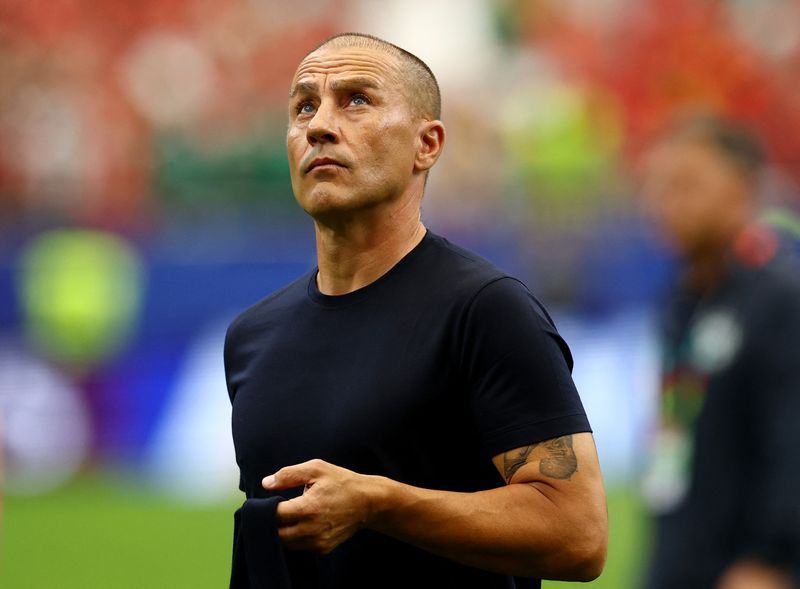
Fabio Cannavaro, the Italian defender who lifted the World Cup trophy with his country in 2006, has taken full responsibility for Uzbekistan's crushing 5-0 defeat at the hands of Portugal in Houston, though he remains determined to foster a learning environment within his squad despite the prospect of early tournament elimination. The veteran coach's unflinching acceptance of accountability represents a marked contrast to the defensive posturing often seen in professional football, signalling his commitment to protecting his players' confidence during their nation's inaugural World Cup appearance.
Uzbekistan's campaign in Group K has unravelled rapidly following consecutive losses that have left their qualification prospects hanging by the thinnest of threads. After succumbing 3-1 to Colombia in their opening match, the Central Asian nation found themselves overwhelmed by the Portuguese, a team ranked considerably higher on the global stage. With only Saturday's final group encounter against the Democratic Republic of Congo remaining, Cannavaro's side must achieve a victory to mathematically preserve any chance of advancing to the round of 32, a scenario that grows increasingly unlikely given their goal differential and the competitive strength of their opponents.
During his post-match media appearance, Cannavaro articulated a nuanced perspective on the defeat, framing it within the broader context of Uzbekistan's developmental journey at football's grandest stage. Rather than dissecting tactical failings or questioning player commitment, he deliberately emphasised the value of adversity in shaping an emerging international team. His statements reflected a coaching philosophy that prioritises long-term development over short-term results, particularly relevant for a nation competing in their first World Cup and facing an extended learning curve against elite opposition.
The coach's assertion that responsibility for the loss rested solely with his decisions rather than with player execution carried particular weight given his illustrious pedigree as a player. Having won the World Cup, earned the prestigious Ballon d'Or award, and competed across Europe's top leagues, Cannavaro possesses the credibility and experience to command respect within professional circles. His willingness to absorb blame rather than deflect it onto his players demonstrated leadership qualities that extend beyond tactical expertise, potentially preserving squad morale during a challenging campaign.
A pivotal moment in the match came when Azizjon Ganiev's goal was ruled out for a foul committed during the build-up play, a decision that Cannavaro identified as psychologically significant. Rather than dismissing the incident, he acknowledged how the disallowed score materially affected his team's psychological state and subsequent performance. This type of emotional resilience and momentum shift represents one of the defining characteristics of World Cup football, where margins between success and failure often hinge on moments of fine judgement rather than sustained superiority.
Cannavaro indicated that prior to the Portuguese encounter, Uzbekistan had begun the match with tactical boldness and purposeful football reminiscent of their approach against Colombia, demonstrating that defensive caution was not endemic to their play style. His explicit instruction to players to embrace courage and avoid fear-based decision-making represented an attempt to foster an attacking mentality even against superior opposition. This emphasis on maintaining expansive football despite the adversity contrasts sharply with the pragmatic, defensive approach some emerging nations adopt when facing established powerhouses.
The coach's perspective on the educational value of World Cup participation, even in defeat, reflects a maturity uncommon in contemporary football management where results often dominate discourse. Cannavaro's framing of losses as learning opportunities rather than purely negative outcomes suggests a longer-term vision for Uzbekistan's football development. For Southeast Asian nations similarly navigating the pathway toward World Cup qualification and eventual participation, Cannavaro's philosophy offers valuable insights into maintaining development-focused thinking when facing established footballing nations.
Uzbekistan's participation in the World Cup represents a significant milestone for Central Asian football, regardless of their group-stage exit. The tournament experience for players, coaching staff, and federation administrators provides invaluable exposure to international competition standards, tactical approaches, and the psychological pressures of elite football. Cannavaro's presence and track record lend credibility to the nation's footballing ambitions, suggesting a commitment to long-term development rather than immediate World Cup success.
The fixture against the Democratic Republic of Congo provides Uzbekistan with a final opportunity to register their maiden World Cup victory and salvage some positive momentum heading into the subsequent qualifying cycle. While mathematical elimination may prove inevitable, the performance in that match and the learning extracted from the campaign could influence the trajectory of Uzbekistan's football development. Cannavaro's insistence on maintaining belief until mathematics precludes advancement reflects a pragmatic assessment that football's unpredictability occasionally produces unexpected outcomes.
For Malaysian and Southeast Asian football observers, Uzbekistan's World Cup journey and Cannavaro's coaching approach offer relevant perspectives on participating in elite international competitions. The Central Asian nation's willingness to employ an experienced European coach demonstrates the cosmopolitan approach many emerging football nations adopt in developing competitive infrastructure. Similarly, the emphasis on maintaining attacking football and player confidence despite facing superior opposition suggests a pathway for regional teams to improve incrementally rather than regressing into purely defensive, risk-averse approaches when confronting stronger opponents.