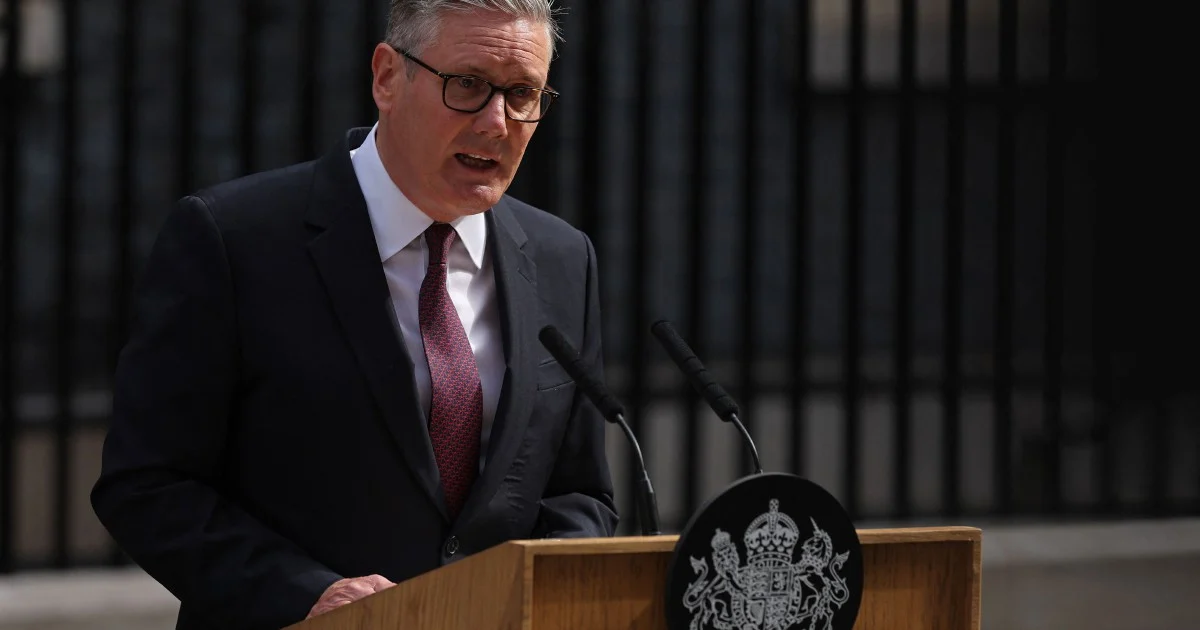
Keir Starmer confirmed on Monday that he would be stepping down as Prime Minister, setting the stage for Britain's political landscape to shift once again. The transition will occur before Parliament's autumn session begins, ensuring continuity in the nation's top office during a period of significant domestic and international challenges. This decision comes after mounting pressure within his own Labour Party, reflecting broader dissatisfaction with his tenure and policies.
Starmer's departure represents a dramatic acceleration of Britain's revolving-door leadership crisis. With his exit, the United Kingdom will have cycled through seven Prime Ministers in the span of just ten years—a rate of turnover that underscores deep instability within the country's political establishment. This pattern began in 2014 and has seen the office pass between the Conservative and Labour parties, with each leader facing similar challenges around public discontent, economic pressures, and fractious parliamentary arithmetic.
The immediate question now centres on the formal mechanics of selecting Starmer's replacement. Labour's constitutional processes require the party membership to elect a new leader following a contest among qualifying candidates. This procedure differs markedly from the automatic succession systems in some other Westminster democracies, as it empowers the broader party base rather than just parliamentary colleagues. The timeline—with selection completed before Parliament reconvenes—will compress the usual campaigning and voting periods into a tight schedule.
Labour leadership elections typically involve two stages: first, Labour Members of Parliament narrow the field of candidates, and second, the broader party membership votes on the finalists. The qualifying threshold for candidates has evolved over recent years, with various minimum endorsement levels intended to ensure serious viability. These internal rules can significantly shape outcomes, as they determine which contenders gain sufficient support to proceed to the membership ballot.
The party's membership base currently numbers in the hundreds of thousands and will play a decisive role in crowning the next leader. These members span diverse constituencies and ideological factions within Labour, from the social democratic left to the centrist right of the party. Their preferences often diverge substantially from those of Labour MPs, creating potential friction between parliamentary pragmatism and grassroots sentiment.
Several figures have already emerged as potential successors, each bringing distinct visions for Labour's direction and policy priorities. The contest will inevitably centre on fundamental questions about how the party should position itself economically, socially, and internationally. Candidates will articulate competing theories about Labour's electoral appeal and whether the party should move further left or consolidate toward the centre.
For Malaysian observers and the broader Commonwealth, Starmer's resignation illuminates the structural vulnerabilities within contemporary British governance. The frequency of prime ministerial changes reflects not merely personal failures but systemic strain points in the Westminster model. Economic stagnation, declining public trust in institutions, fractious media environments, and polarised parliamentary coalitions have all contributed to this instability. These patterns resonate across Westminster democracies, raising questions about whether the system itself requires reform.
The seven-in-ten-years statistic particularly startles when compared internationally. Most established democracies experience significantly greater stability in their executive leadership, suggesting that British political arrangements face distinctive pressures. Whether these stem from constitutional deficiencies, electoral systems, or broader social fragmentation remains vigorously debated among political analysts and constitutional scholars.
Starmer's tenure, though relatively brief, represented an attempt to stabilise Labour after the Jeremy Corbyn years and to position the party as a credible governing alternative. His administration faced immediate headwinds, including public sector strikes, cost-of-living crises inherited from the preceding Conservative government, and restive backbench dynamics. These pressures, combined with apparent frustration within the party about political direction, ultimately proved unsustainable.
The September deadline imposes genuine practical constraints on the leadership selection process. Labour must compress nomination, campaign, and voting phases while managing the political optics of transition and ensuring the new leader has adequate time to establish authority before major parliamentary business resumes. This telescoped schedule contrasts with previous leadership elections, which sometimes unfolded over months, allowing candidates extended platform time.
International dimensions merit consideration as well. Britain's relationship with the European Union, commitments to NATO and Ukraine, and its role within the global trading system will all demand sustained attention from any new Prime Minister. The transition period potentially creates vulnerability to external actors seeking to exploit uncertainty, though institutional continuity in the civil service and military provides stabilising ballast.
Labour's grassroots members will ultimately decide the party's future direction through their leadership choice. The election will signal whether Labour intends to move substantively away from Starmer's centrist positioning or consolidate similar approaches under fresh leadership. Either outcome carries implications not just for British politics but for the broader left-of-centre political project across Europe and the Commonwealth.
The broader implication of Britain's accelerating leadership churn warrants serious contemplation. If Westminster systems cannot generate sufficient stability to sustain prime ministerial tenure, questions inevitably arise about institutional health and public confidence in democratic governance itself. Whether Starmer's successor can reverse these trends or whether Britain will continue its rapid revolving-door pattern will likely shape political discourse for years to come.