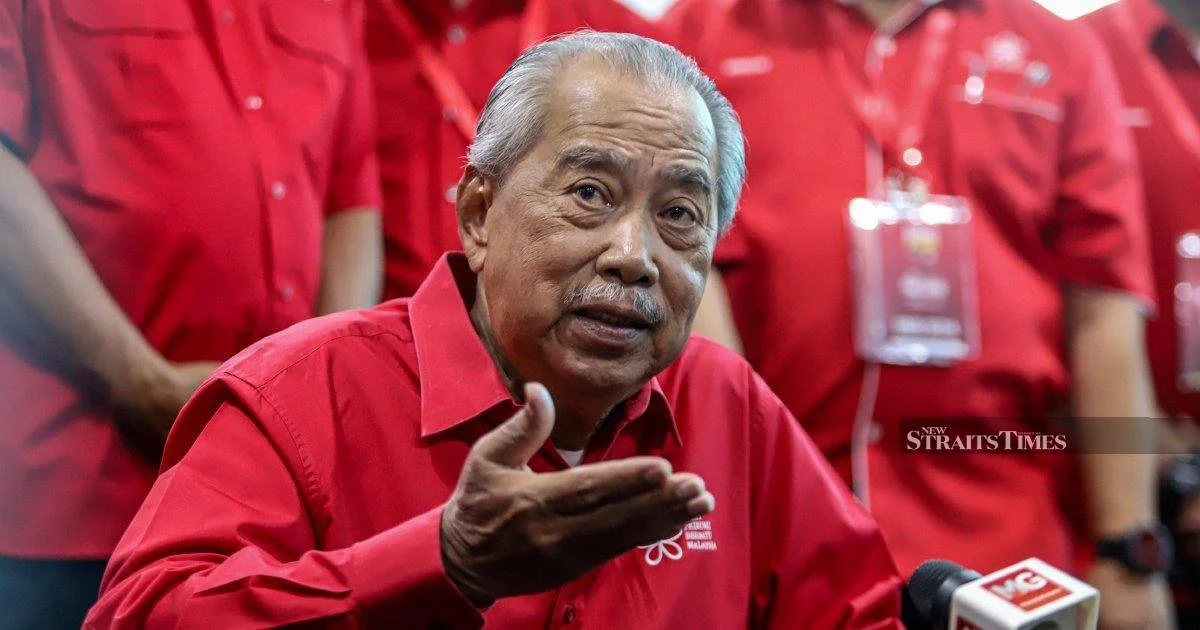
Bersatu has no plans to abandon Perikatan Nasional, despite persistent conjecture about the coalition's structural stability and future direction, according to party president Tan Sri Muhyiddin Yassin. The pledge comes at a time when Malaysian political watchers have been closely monitoring the movements of PN component parties, particularly following various electoral challenges and negotiations within the broader opposition framework.
Muhyiddin's declaration represents an attempt to project unity and cohesion within Perikatan Nasional at a moment when multiple power centres within the coalition have pursued divergent strategic objectives. The timing of his statement is significant given the cyclical nature of Malaysian coalition politics, where party leaders frequently face pressure from both internal factions and external suitors seeking to fracture existing alliances. By characterising Bersatu's membership as permanent—using language that suggests an irreversible commitment—the party president appears intent on anchoring his organisation within the PN framework and discouraging defections among grassroots members who might otherwise consider alternative political arrangements.
Bersatu's position within Perikatan Nasional remains strategically important, as the party controls substantial parliamentary seats and retains significant influence in several state assemblies. The party's leadership, particularly in Pahang and Perlis, provides PN with crucial leverage in both federal and state-level negotiations. This parliamentary arithmetic makes Bersatu indispensable to the coalition's viability, a reality that likely underpins Muhyiddin's confidence in articulating long-term commitment.
The speculation that prompted Muhyiddin's clarification reflects broader anxieties within Malaysian political circles regarding coalition stability. Since its formation, Perikatan Nasional has navigated persistent challenges, including public disagreements over policy direction, competition for ministerial positions, and differing electoral strategies among component parties. These tensions occasionally burst into public view through media commentary and social media discourse, creating an impression of fragility that party leaders find compelled to address.
Bersatu's journey within Perikatan Nasional has been marked by complex relationship dynamics, particularly with PAS, the Islamist party that holds greater parliamentary numbers and has often dominated coalition decision-making. Muhyiddin's insistence on permanent membership can be read partly as a reassertion of Bersatu's independent agency within the coalition structure, ensuring the party maintains an influential voice in collective deliberations rather than becoming marginalised by larger members.
The historical context matters considerably here. Bersatu, born from a 2016 split within UMNO and subsequently becoming the core party around which Perikatan Nasional was constructed for the 2020 general election, has experienced dramatic swings in political fortune. The party's oscillations between government and opposition, alongside its navigation of intra-coalition relationships, have created cycles of optimism and uncertainty that periodically manifest as succession speculation or coalition restructuring rumours.
Muhyiddin's statement also carries implications for Bersatu's grassroots morale and internal cohesion. Party members constantly monitor signals from the leadership regarding long-term viability and electoral prospects. By publicly confirming permanent PN membership, Muhyiddin aims to forestall defections and maintain organisational discipline, particularly among elected representatives who must periodically decide whether their political futures lie with current coalition arrangements or alternative alliances.
The broader Malaysian opposition landscape factors significantly into this equation. Multiple factions—encompassing Perikatan Nasional, the Democratic Action Party, Amanah, and various independent formations—remain in flux regarding potential electoral cooperation frameworks. Muhyiddin's reiteration of Bersatu's PN commitment effectively signals that his party will not participate in broader opposition consolidation efforts that might require dismantling existing coalition structures, even though such consolidation could theoretically strengthen opposition capacity at future elections.
Regional developments within Southeast Asia also contextualise this political positioning. As Malaysia's neighbours experience their own coalition realignments and electoral cycles, domestic political stability becomes increasingly valuable for both national governance and regional standing. Perikatan Nasional's durability—or perceived lack thereof—influences Malaysia's ability to project consistent foreign policy positions and maintain coherent regional engagement strategies.
Moving forward, Muhyiddin's pronouncement will likely provide temporary reassurance to Bersatu members and coalition partners regarding institutional continuity. However, Malaysian political history suggests that explicit commitments to permanent coalition membership frequently face testing when electoral performance, ministerial distribution disputes, or ideological frictions create incentives for realignment. The true durability of Bersatu's PN commitment will ultimately depend less on rhetorical assertions than on tangible benefits the party derives from continued participation, including electoral prospects, ministerial representation, and organisational growth.
Observers of Malaysian politics should view Muhyiddin's declaration as a statement of current intent rather than an immutable guarantee. Coalition politics in Malaysia operates within a landscape of strategic flexibility, where yesterday's permanent commitments sometimes become tomorrow's negotiating positions. Nonetheless, the emphasis placed on this affirmation suggests that Bersatu's leadership recognises the political costs of appearing unstable or opportunistic, making coalition continuity a preferred narrative for at least the immediate future.
%22%2F%3E%3C%2Fpattern%3E%3C%2Fdefs%3E%3Crect%20width%3D%22100%25%22%20height%3D%22100%25%22%20fill%3D%22url(%23ph2eumeg)%22%2F%3E%3Crect%20width%3D%22100%25%22%20height%3D%22100%25%22%20fill%3D%22url(%23ph2eumep)%22%2F%3E%3Ctext%20x%3D%2250%25%22%20y%3D%2250%25%22%20text-anchor%3D%22middle%22%20dominant-baseline%3D%22central%22%20fill%3D%22rgba(255%2C255%2C255%2C0.95)%22%20font-family%3D%22Georgia%2C%20'Times%20New%20Roman'%2C%20serif%22%20font-weight%3D%22700%22%20font-size%3D%22170%22%20letter-spacing%3D%22-0.02em%22%3EMalaysia%3C%2Ftext%3E%3C%2Fsvg%3E)
%22%2F%3E%3C%2Fpattern%3E%3C%2Fdefs%3E%3Crect%20width%3D%22100%25%22%20height%3D%22100%25%22%20fill%3D%22url(%23ph2i5z1g)%22%2F%3E%3Crect%20width%3D%22100%25%22%20height%3D%22100%25%22%20fill%3D%22url(%23ph2i5z1p)%22%2F%3E%3Ctext%20x%3D%2250%25%22%20y%3D%2250%25%22%20text-anchor%3D%22middle%22%20dominant-baseline%3D%22central%22%20fill%3D%22rgba(255%2C255%2C255%2C0.95)%22%20font-family%3D%22Georgia%2C%20'Times%20New%20Roman'%2C%20serif%22%20font-weight%3D%22700%22%20font-size%3D%22272%22%20letter-spacing%3D%22-0.02em%22%3ETEKUN%3C%2Ftext%3E%3C%2Fsvg%3E)
%22%2F%3E%3C%2Fpattern%3E%3C%2Fdefs%3E%3Crect%20width%3D%22100%25%22%20height%3D%22100%25%22%20fill%3D%22url(%23ph1a04ig)%22%2F%3E%3Crect%20width%3D%22100%25%22%20height%3D%22100%25%22%20fill%3D%22url(%23ph1a04ip)%22%2F%3E%3Ctext%20x%3D%2250%25%22%20y%3D%2250%25%22%20text-anchor%3D%22middle%22%20dominant-baseline%3D%22central%22%20fill%3D%22rgba(255%2C255%2C255%2C0.95)%22%20font-family%3D%22Georgia%2C%20'Times%20New%20Roman'%2C%20serif%22%20font-weight%3D%22700%22%20font-size%3D%22151%22%20letter-spacing%3D%22-0.02em%22%3EBezzecchi%3C%2Ftext%3E%3C%2Fsvg%3E)