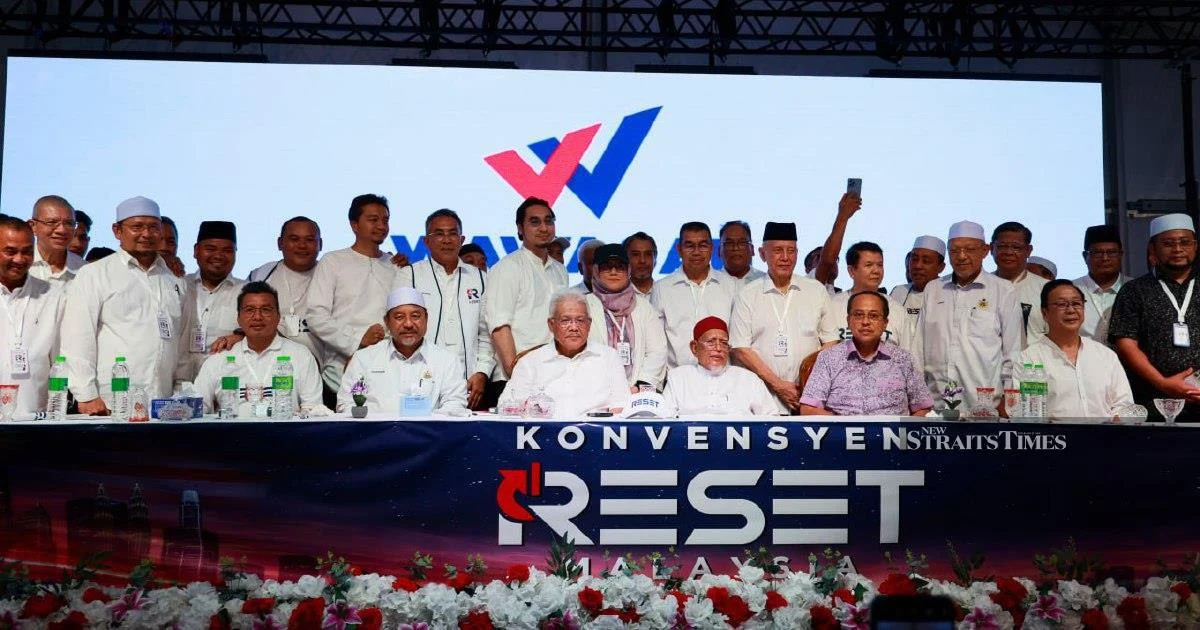
Perikatan Nasional plunged into fresh internal turmoil yesterday when component party Bersatu raised serious questions about the legitimacy of an emergency Supreme Council gathering held Monday evening, during which the coalition apparently accelerated admission procedures for Wawasan Rakyat.
The dispute centred on whether the PN chairman followed proper constitutional procedures when calling the late-notice meeting, highlighting deepening fault lines within the opposition alliance. Bersatu's challenge represents more than a technical procedural objection—it signals growing unease among coalition members about the pace and trajectory of PN expansion, and whether individual parties retain meaningful input over coalition-level decisions that could reshape its political character.
The admission of new members into PN carries significant implications for Malaysian opposition politics. Coalition cohesion depends fundamentally on member parties feeling they have genuine voice in strategic decisions. When the chairman can convene emergency sessions with minimal notice and push through major admissions, smaller coalition components worry they may become sidelined in a structure increasingly dominated by the largest parties. This dynamic has historically destabilised opposition alliances in Malaysia, where member parties constantly assess whether remaining within a coalition serves their electoral and political interests.
Bersatu's intervention also reflects the complex mathematics of opposition coalition management. The party joined PN relatively recently and may fear that successive new admissions dilute its standing and reduce its bargaining power for candidate allocations, ministerial positions, or policy influence in any future government. Each new member means renegotiating internal power-sharing arrangements, a process fraught with tension across parties with competing territorial and demographic interests.
The Monday night meeting appears to have been presented as an emergency requiring immediate action, yet Bersatu's questioning suggests the justification for such urgency remains unclear to coalition members. Emergency procedures exist to handle genuine crises, but their overuse corrodes trust and suggests the chairman may bypass normal deliberative processes whenever convenient. This pattern of governance—if established—creates precedent for circumventing full coalition consultation on future major decisions, potentially marginalising voices that should carry weight in alliance management.
Wawasan Rakyat's status within PN remains relatively nascent, and its integration into coalition structures still developing. The rush to formalise admission without allowing adequate time for member parties to discuss implications raises questions about what benefits Wawasan brings to PN, what demands it makes on existing members, and whether the coalition is expanding for sound strategic reasons or reactive political positioning. In opposition coalitions, every new member reshapes dynamics among existing ones, making thoughtful inclusion processes essential rather than optional.
From a broader Malaysian political perspective, this episode underscores why opposition alliances remain fragile. Unlike governing coalitions sustained by access to state resources and the momentum of holding power, opposition alliances depend entirely on voluntary cooperation among parties with distinct organisations, identities, and territorial bases. Any perception that larger parties dominate decision-making or that procedural norms are disregarded creates centrifugal forces pulling members away. Individual parties can always choose to contest independently or explore alternative alliances if they feel diminished within current arrangements.
The timing also matters. Squabbles over internal procedures can appear petty to external observers but often mask deeper disagreements about coalition direction. Bersatu's public challenge signals that at least some coalition members want to slow the pace of expansion or demand greater transparency about strategic objectives. If Bersatu feels sufficiently marginalised, it possesses options—Umno has intermittently sought to recruit Bersatu members, and fragmenting PN would weaken opposition coordination heading into future electoral contests.
For Malaysian voters and analysts, this fracture suggests PN remains a coalition of convenience rather than a cohesive alliance unified by shared ideology or vision. Its component parties cooperate tactically against the government but retain fundamental tensions regarding territory, resource distribution, and strategic direction. Such coalitions can function adequately for specific electoral cycles but struggle to maintain discipline and purpose over extended periods, particularly when expansion creates redistribution questions that pit existing members against newcomers.
The unresolved question now becomes whether PN can establish procedural norms that satisfy all members' needs for consultation while allowing decisive action. If the PN chairman defaults to emergency procedures to bypass dissent, Bersatu and other parties must decide whether continued membership serves their interests or whether alternative configurations better serve their political futures. Coalition survival often depends less on dramatic ruptures than on gradual erosion of trust through accumulated procedural disrespect, making Bersatu's intervention more significant than headlines might suggest.
Beyond PN's internal management, this episode demonstrates why opposition politics in Malaysia remains challenging terrain. Building lasting coalitions demands negotiating amongst multiple egos, organisations, and constituencies while maintaining sufficient unity to effectively challenge incumbent governments. The Monday night meeting was supposed to strengthen PN's position through expansion, yet it instead exposed vulnerabilities in coalition governance that could ultimately prove more consequential than any benefit Wawasan membership provides.