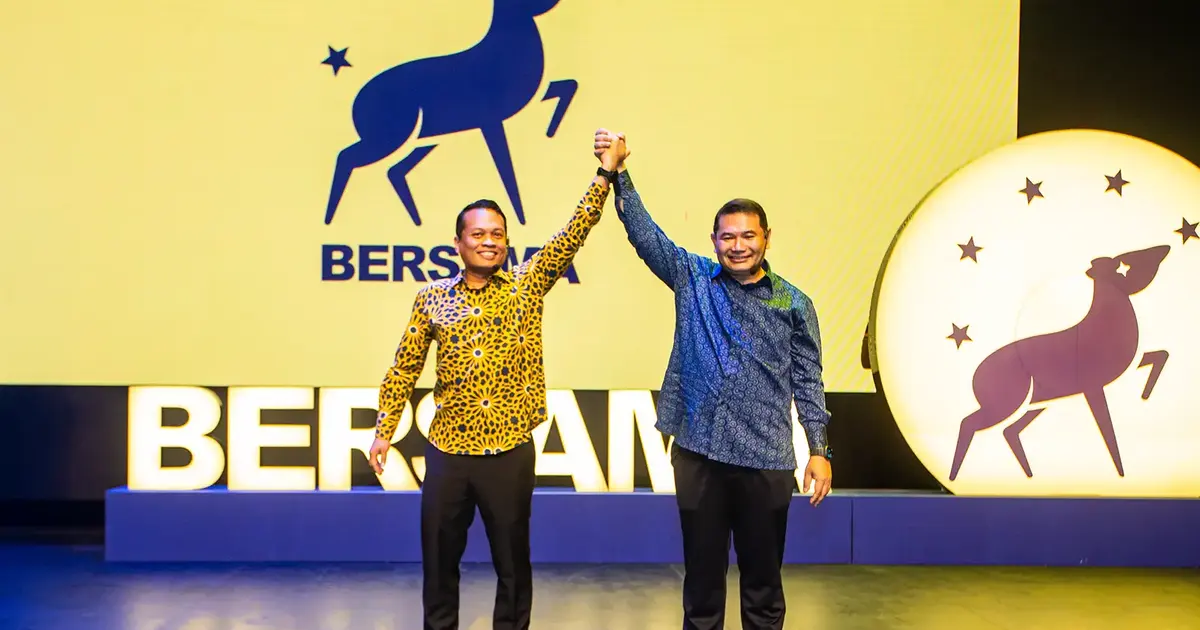
Bersama is experiencing a notable surge in recruitment momentum as the party prepares for the state elections in Johor and Negeri Sembilan, with former senior civil servants expressing strong interest in running as candidates, party figure Rafizi has revealed. The influx of interest from retired bureaucrats represents a strategic windfall for the newer political entity, bringing seasoned administrators with deep institutional knowledge into its electoral machinery.
The arrival of experienced public sector professionals into Bersama's ranks signals a significant shift in how Malaysian political parties are approaching candidate selection. Rather than relying solely on party loyalists or political professionals, Bersama is tapping into a reservoir of administrative expertise accumulated over decades of government service. These former civil servants bring credibility with voters who value competence and familiarity with how government functions, a demographic often skeptical of politicians perceived as lacking practical governance experience.
For Johor, traditionally Malaysia's most electorally significant state outside the Klang Valley, the recruitment drive holds particular weight. The state's diverse economy, sprawling administrative machinery, and large electorate mean that candidates with hands-on experience in managing complex bureaucratic systems can appeal across multiple constituencies. Similar dynamics apply in Negeri Sembilan, where rural and urban constituencies each require nuanced understanding of different community needs that seasoned administrators typically possess.
The timing of this recruitment effort reflects broader political realignment across Malaysia. As younger voters increasingly demand practical solutions to governance problems rather than ideological positioning, parties are discovering that former civil servants offer tangible demonstrations of problem-solving capability. These candidates can credibly discuss infrastructure challenges, administrative efficiency, and public service delivery—topics that resonate powerfully during state campaigns focused on bread-and-butter issues.
Bersama's strategy also addresses a structural weakness many newer political parties face: the perception of lacking institutional depth. By recruiting experienced former bureaucrats, the party signals that it has access to competent governance talent and is building a bench of candidates capable of handling ministerial and administrative positions should they win office. This addresses voter concerns about whether a party can actually govern effectively if elected.
The enthusiasm from retired civil servants themselves reflects their own motivations. Many career bureaucrats reach retirement age with strong desire to remain engaged in public service and nation-building. Electoral politics offers a pathway to continued influence and the ability to implement reforms they may have championed during their official careers. For some, the transition from advising ministers to standing for office represents the culmination of a lifetime's commitment to public administration.
However, the recruitment drive also presents potential challenges. Former civil servants accustomed to hierarchical, consensus-driven bureaucratic cultures may struggle with the more combative dynamics of electoral politics and parliamentary debate. The transition from technocratic problem-solving to political advocacy requires different skill sets. Additionally, voters sometimes view retired government officials skeptically if they are perceived as merely extending their careers rather than pursuing genuine political reform.
The implications for Southeast Asia's broader political landscape deserve consideration. Malaysia's innovation in blending bureaucratic expertise with electoral politics mirrors trends in Singapore, Indonesia, and Thailand, where similar dynamics are unfolding. As technical governance challenges become more complex—climate adaptation, digital infrastructure, pandemic preparedness—political parties across the region are discovering that former civil servants bring concrete value to candidate pools.
For Rafizi and Bersama, the recruitment effort also reflects confidence in the party's electoral prospects. Experienced professionals are more likely to commit their reputational capital to parties they believe can win or perform competitively. The fact that prominent former bureaucrats are willing to contest under the Bersama banner suggests they perceive genuine electoral viability, even if the party remains relatively new to Malaysian politics.
The state elections in Johor and Negeri Sembilan will provide early evidence of whether voters actually reward parties that prioritize bureaucratic expertise in their candidate selection. If Bersama's former civil servants perform well at the ballot box, other Malaysian parties will likely accelerate their own recruitment efforts among the retired bureaucracy. Conversely, if these candidates struggle electorally, it may signal that voters prioritize other candidate qualities—local rootedness, party loyalty, or communication skills—over administrative experience.
Looking ahead, this recruitment pattern suggests that Malaysian electoral politics is gradually evolving beyond the traditional personality-driven or ideology-driven models that dominated earlier decades. The rise of technocratic candidates reflects voter sophistication and growing demands for demonstrable competence. Whether Bersama successfully converts administrative credentials into electoral success will help determine whether this trend accelerates across the country's future electoral cycles.
%22%2F%3E%3C%2Fpattern%3E%3C%2Fdefs%3E%3Crect%20width%3D%22100%25%22%20height%3D%22100%25%22%20fill%3D%22url(%23ph15hisg)%22%2F%3E%3Crect%20width%3D%22100%25%22%20height%3D%22100%25%22%20fill%3D%22url(%23ph15hisp)%22%2F%3E%3Ctext%20x%3D%2250%25%22%20y%3D%2250%25%22%20text-anchor%3D%22middle%22%20dominant-baseline%3D%22central%22%20fill%3D%22rgba(255%2C255%2C255%2C0.95)%22%20font-family%3D%22Georgia%2C%20'Times%20New%20Roman'%2C%20serif%22%20font-weight%3D%22700%22%20font-size%3D%22226%22%20letter-spacing%3D%22-0.02em%22%3EHamzah%3C%2Ftext%3E%3C%2Fsvg%3E)
%22%2F%3E%3C%2Fpattern%3E%3C%2Fdefs%3E%3Crect%20width%3D%22100%25%22%20height%3D%22100%25%22%20fill%3D%22url(%23ph3s8t0g)%22%2F%3E%3Crect%20width%3D%22100%25%22%20height%3D%22100%25%22%20fill%3D%22url(%23ph3s8t0p)%22%2F%3E%3Ctext%20x%3D%2250%25%22%20y%3D%2250%25%22%20text-anchor%3D%22middle%22%20dominant-baseline%3D%22central%22%20fill%3D%22rgba(255%2C255%2C255%2C0.95)%22%20font-family%3D%22Georgia%2C%20'Times%20New%20Roman'%2C%20serif%22%20font-weight%3D%22700%22%20font-size%3D%22170%22%20letter-spacing%3D%22-0.02em%22%3ETambirat%3C%2Ftext%3E%3C%2Fsvg%3E)
%22%2F%3E%3C%2Fpattern%3E%3C%2Fdefs%3E%3Crect%20width%3D%22100%25%22%20height%3D%22100%25%22%20fill%3D%22url(%23phl8txg)%22%2F%3E%3Crect%20width%3D%22100%25%22%20height%3D%22100%25%22%20fill%3D%22url(%23phl8txp)%22%2F%3E%3Ctext%20x%3D%2250%25%22%20y%3D%2250%25%22%20text-anchor%3D%22middle%22%20dominant-baseline%3D%22central%22%20fill%3D%22rgba(255%2C255%2C255%2C0.95)%22%20font-family%3D%22Georgia%2C%20'Times%20New%20Roman'%2C%20serif%22%20font-weight%3D%22700%22%20font-size%3D%22194%22%20letter-spacing%3D%22-0.02em%22%3EBintulu%3C%2Ftext%3E%3C%2Fsvg%3E)