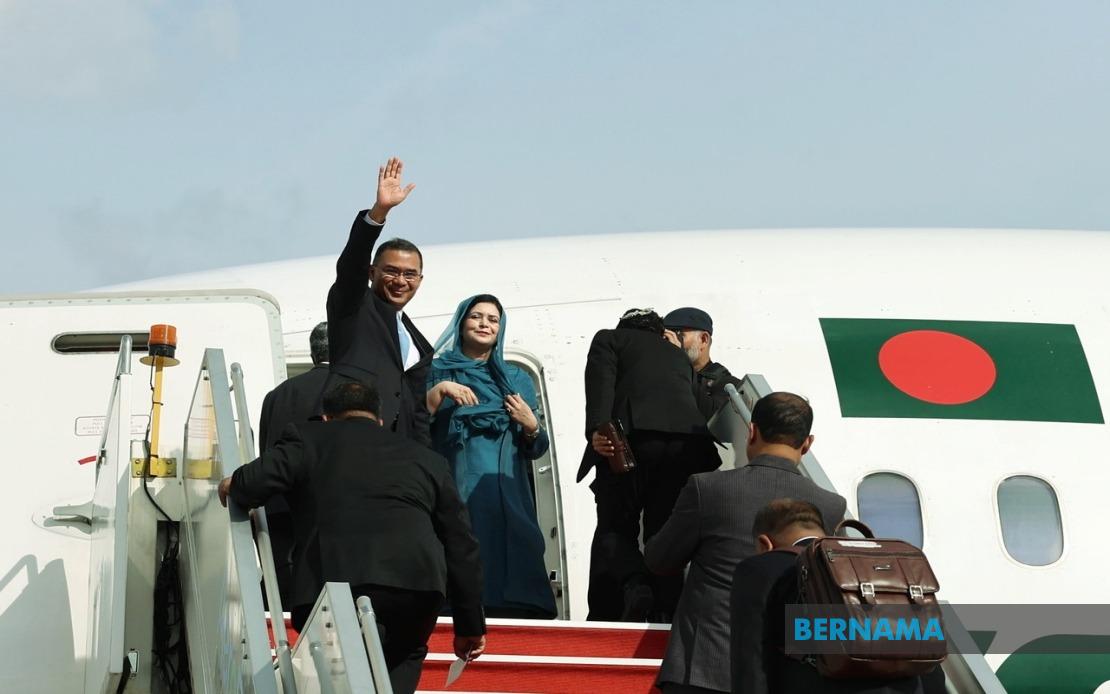
Bangladesh Prime Minister Tarique Rahman departed Malaysia on Saturday afternoon, concluding a two-day official visit that centred on deepening economic and diplomatic ties between Kuala Lumpur and Dhaka. His aircraft lifted off from Kuala Lumpur International Airport at 5 pm, with Tarique and his delegation receiving full ceremonial honours including a 28-member guard of honour from the First Battalion of the Royal Ranger Regiment. The departure marked the end of a strategically significant engagement that signals both nations' commitment to strengthening their relationship amid broader regional shifts in South and Southeast Asian geopolitics.
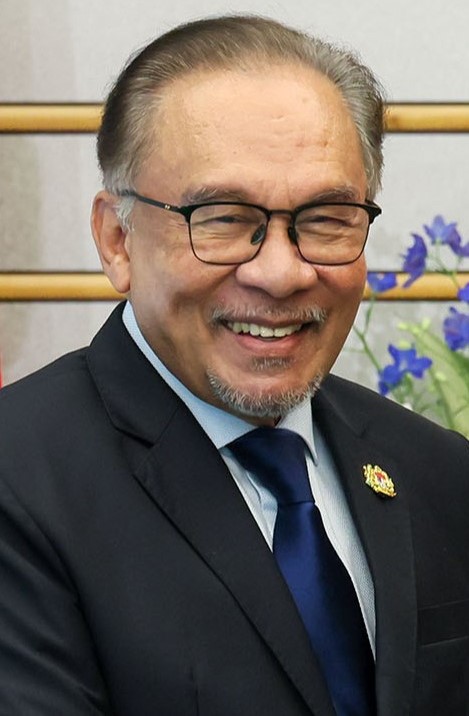
Tarique's visit held particular significance as his first bilateral official trip abroad since assuming office in February 2026, underscoring Bangladesh's priority in Malaysia's foreign policy calculations. Prime Minister Datuk Seri Anwar Ibrahim personally received and bid farewell to the Bangladeshi leader, with Minister in the Prime Minister's Department (Religious Affairs) Dr Zulkifli Hasan present at the ceremonial send-off at the Bunga Raya Complex. This high-level attention reflects Malaysia's recognition of Bangladesh's growing economic and strategic importance, particularly as the South Asian nation positions itself as a potential gateway for Malaysian businesses into the region's burgeoning markets.
During bilateral discussions at the Perdana Putra Complex earlier that day, both leaders extensively reviewed regional and international challenges facing their nations and the broader Asian landscape. The conversation extended beyond narrow commercial interests to encompass shared positions on pressing global issues, demonstrating an effort to build a comprehensive partnership framework rather than a transactional relationship focused solely on trade volumes. This diplomatic breadth suggests both governments view their relationship as integral to addressing regional stability and security concerns that will shape the coming decade.
Cooperation opportunities emerged across multiple strategic sectors critical to both economies' development trajectories. Trade and investment figured prominently, but discussions also incorporated semiconductor manufacturing, energy infrastructure, human resource development, agricultural cooperation, and educational exchanges. The semiconductor sector deserves particular attention given Malaysia's established position in regional electronics manufacturing and Bangladesh's vast pool of skilled workforce—a natural complementarity that remains underexploited. Energy cooperation could prove transformative, as Bangladesh seeks reliable suppliers and Malaysia possesses both production capacity and expertise in petrochemical refining and liquefied natural gas operations.
Three formal agreements were finalised during the visit, institutionalising cooperation across cultural, security, and investment domains. A Memorandum of Understanding on Cultural Cooperation will facilitate people-to-people exchanges and preserve historical and contemporary cultural affinities between the two predominantly Muslim-majority nations. Simultaneously, bilateral counter-terrorism research initiatives were formalised through an Exchange of Notes, addressing security threats that increasingly transcend borders in Southeast Asia. A third agreement targeted investment promotion and facilitation, creating mechanisms to reduce bureaucratic obstacles for entrepreneurs and enterprises seeking to expand operations across the two countries.
Economically, the relationship has grown substantially in recent years, with bilateral trade reaching RM12.18 billion in 2025, representing Malaysia's significant commercial engagement with South Asia. Malaysia exported RM10.08 billion in goods to Bangladesh, with petroleum products dominating the outflow, reflecting Bangladesh's energy-intensive manufacturing sectors. Bangladesh reciprocated with RM2.10 billion in imports, primarily comprising textiles, apparel and footwear—sectors where the country maintains competitive advantages in labour-intensive production. Within South Asia, Bangladesh ranks as Malaysia's second-largest trading partner after India, underscoring the relationship's economic weight in regional commerce.
Both leaders committed to accelerating negotiations on a free trade agreement with fast-track procedures, signalling intent to eliminate tariff barriers and non-tariff obstacles more rapidly than traditional bilateral arrangements typically allow. Such an agreement would lower transaction costs for businesses operating across borders and create supply chain integration opportunities, particularly in sectors like electronics assembly, textiles and automotive components. Enhanced cooperation in the halal industry offers particular promise, given Malaysia's established role as a global halal certification authority and Bangladesh's significant potential as both a consumer and producer of halal-certified products serving South Asian and Middle Eastern markets.
Bangladesh's aspirations to deepen institutional engagement with Southeast Asia featured prominently in discussions. The nation seeks elevation to ASEAN Sectoral Dialogue Partner status, a tier that would grant more structured access to the organisation's frameworks and decision-making processes. Simultaneously, Bangladesh has expressed interest in joining the Regional Comprehensive Economic Partnership, a mega-regional trade bloc encompassing ASEAN members plus China, Japan, South Korea, Australia and New Zealand. Malaysian support for both objectives carries weight within ASEAN corridors, making Anwar's apparent endorsement strategically valuable for Dhaka's regional integration ambitions.
On international affairs, convergence between the two nations proved striking across several contentious issues. Both governments reaffirmed support for the Palestinian cause and expressed alarm at humanitarian dimensions of the Gaza conflict, positioning themselves alongside other Muslim-majority nations advocating for ceasefire mechanisms and international accountability. Regarding the broader Middle East, both leaders underscored commitment to sustainable peace architectures in the Persian Gulf region and stressed the importance of diplomatic resolution to tensions involving Iran. Such alignment on geopolitical matters reflects broader positioning by both countries as stakeholders in global stability rather than as passive observers of international developments.
The Rohingya refugee crisis, affecting both nations acutely, received deliberate attention in bilateral discussions. Malaysia currently hosts approximately one million Rohingya refugees, straining social services and creating long-term integration challenges. Bangladesh, meanwhile, harbours nearly a million Rohingya in sprawling camps, representing an ongoing humanitarian and development burden. Both leaders agreed to strengthen ASEAN-based mechanisms for addressing this protracted displacement, including renewed engagement with Myanmar authorities to create conditions enabling voluntary, safe and dignified repatriation. This commitment suggests patience with ongoing multilateral diplomacy rather than pursuit of unilateral solutions, though concrete progress remains elusive given Myanmar's political complexities.
Tarique's subsequent departure for China underscores Bangladesh's broader diplomatic schedule and its balancing act across major powers. The Beijing leg of his first major international tour signals sustained importance of the China relationship for Bangladesh's infrastructure development and foreign direct investment objectives. Yet the Malaysia visit's emphasis on regional integration mechanisms and ASEAN partnership indicates Dhaka's desire to maintain equidistant relationships across Asia's power centres—a sophisticated approach recognising both China's gravitational pull and Southeast Asia's institutional architecture as essential to Bangladesh's strategic positioning in coming years.