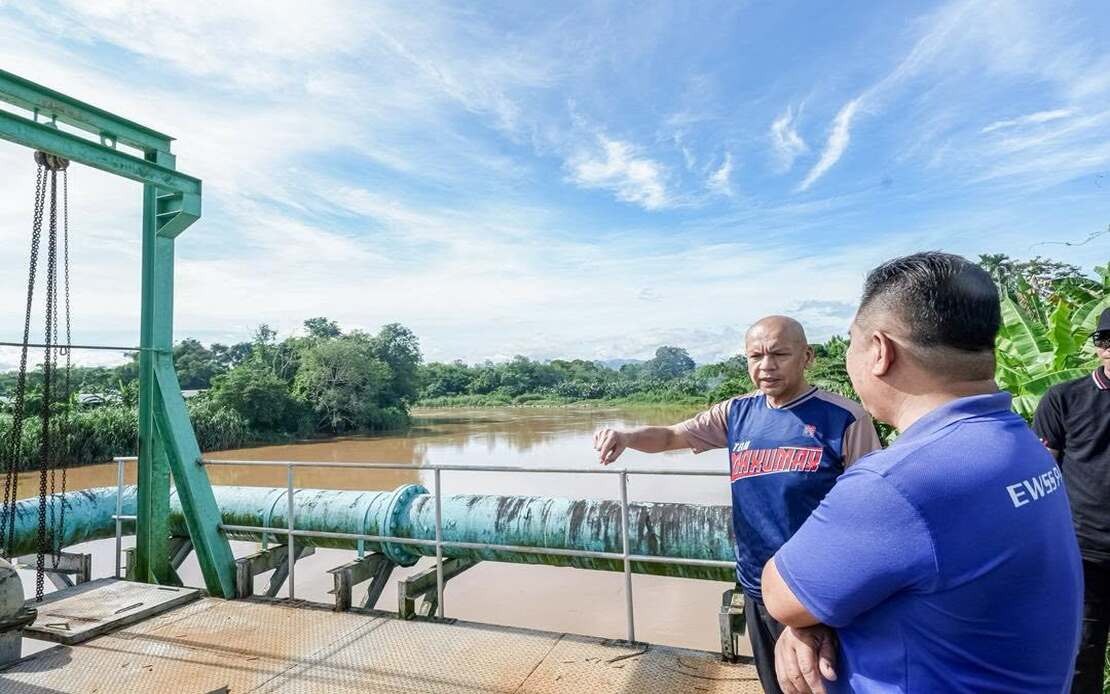
Domestic Trade and Cost of Living Minister Datuk Armizan Mohd Ali has conducted a comprehensive review of water supply infrastructure projects in Papar, the district he represents as Member of Parliament, aiming to verify that ongoing improvements are meeting their timelines and adequately tackling the water challenges confronting residents. The inspection followed a strategic meeting held on June 15 to evaluate progress across multiple water stabilization initiatives, reflecting the heightened scrutiny being applied to what has become a critical infrastructure concern in the district.
Two major projects form the centrepiece of Papar's water security overhaul. The Kogopon Water Treatment Plant is undergoing significant capacity expansion, with plans to double its daily output from 40 million litres to 80 million litres. Simultaneously, authorities are upgrading intake infrastructure at Kampung Kabang, reflecting a dual approach that targets both treatment capacity and raw water sourcing. These improvements represent a considered response to escalating demand patterns as the district experiences demographic and economic growth, making expanded infrastructure essential rather than optional.
The expansion of the Kogopon facility addresses a fundamental bottleneck in Papar's water system. Doubling its treatment capacity would substantially reduce reliance on emergency measures during peak consumption periods and provide buffer capacity during maintenance activities. The Kampung Kabang intake upgrade complements this by enhancing the reliability and volume of raw water available for processing, creating a more resilient supply chain that can better withstand seasonal variations and unexpected disruptions.
However, the visit also exposed immediate operational vulnerabilities that underscore the urgency of these infrastructure improvements. The EWSS Plant and JETAMA Limbahau Plant have recently suffered operational shutdowns triggered by elevated turbidity levels in raw water supplies. Turbidity, measured in nephelometric turbidity units (NTU), reflects the concentration of suspended particles in water and directly impacts treatment efficiency. When NTU values exceed acceptable thresholds at plant inlets, operators must suspend processing until raw water quality stabilizes to treatable standards, creating supply disruptions that ripple through the distribution network.
These recent turbidity incidents highlight vulnerabilities in Papar's current water infrastructure that the planned upgrades are designed to mitigate. Raw water quality fluctuations, likely driven by upstream environmental factors or seasonal weather patterns, have exposed the fragility of existing treatment capacity. When treatment plants cannot operate, backup systems face immediate strain, and consumer access becomes compromised. The frequency and duration of such disruptions have apparently triggered the high-level attention now being devoted to capacity expansion.
Armizan's field-based assessment reflects a strategic shift toward direct ministerial engagement with infrastructure challenges, moving beyond desk-based policy implementation. By personally inspecting treatment plants and intake facilities, he aimed to gain granular understanding of operational constraints and identify where systemic interventions could prove most effective. This hands-on approach facilitates faster problem identification and more informed decision-making regarding resource allocation and implementation priorities.
The minister's emphasis on real-time monitoring as essential to understanding Papar's water challenges carries broader implications for how Malaysian authorities approach infrastructure oversight. Rather than relying solely on routine reports and meetings, his direct field engagement enables identification of implementation gaps and operational bottlenecks that might otherwise remain obscured within administrative channels. This visibility matters particularly in water infrastructure, where consumer impact is immediate and widespread when systems fail.
For Papar residents, these infrastructure developments signal commitment to resolving chronic supply issues, though the timeline for full stabilization remains unclear. The Kogopon expansion and Kampung Kabang intake upgrade represent medium-term solutions requiring substantial capital investment and complex engineering execution. Until these projects reach completion, the district will likely continue experiencing turbidity-related disruptions and related supply interruptions, necessitating continued attention to plant operations and water quality management.
The water challenges in Papar also reflect broader Malaysian infrastructure realities affecting multiple districts and states. Rapid urbanization and population growth frequently outpace water infrastructure expansion, creating bottlenecks that force reactive rather than proactive system management. Papar's experience with turbidity problems and capacity constraints mirrors situations in other fast-developing areas across Malaysia and Southeast Asia, where aging or inadequately scaled treatment facilities struggle with increasing demand and climate-related variations in raw water quality.
The intersection of capacity limitations and raw water quality issues demonstrates that infrastructure solutions must address multiple system vulnerabilities simultaneously. Expanding treatment plant capacity alone cannot resolve problems if raw water quality fluctuations force intermittent shutdowns. Similarly, intake upgrades provide limited benefit if downstream treatment facilities lack capacity to process expanded water volumes. Integrated infrastructure development, as evidenced by the dual focus on Kogopon and Kampung Kabang, offers more resilient outcomes than single-point interventions.
Moving forward, Papar's water sector will require sustained attention to implementation timelines, quality assurance during construction, and post-completion operational optimization. Minister Armizan's continued oversight suggests recognition that infrastructure projects frequently encounter delays and cost pressures requiring high-level problem-solving. The emphasis on regular monitoring and progress verification may help identify and address implementation obstacles before they significantly compromise project schedules.
The minister's visit ultimately underscores that Malaysian water infrastructure, despite being essential to public health and economic development, remains vulnerable to capacity constraints and operational disruptions. Papar's experience, while locally specific, contributes to broader lessons about infrastructure planning, climate resilience, and the importance of matching system capacity to demand realities. As Southeast Asia continues rapid development, the balance between infrastructure expansion and operational efficiency will increasingly determine whether communities like Papar achieve stable, secure water supplies.