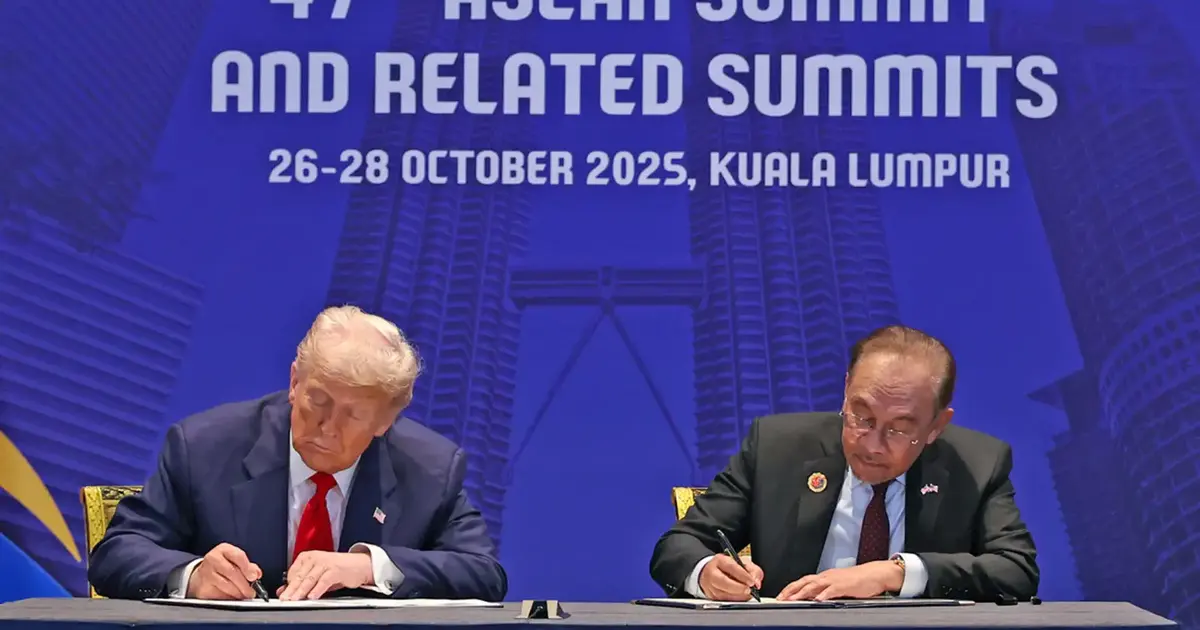
Prime Minister Anwar Ibrahim's administration has formally applied to strike out a lawsuit filed by opposition members of parliament challenging the reciprocal trade agreement between Malaysia and the United States. The legal manoeuvre represents a significant escalation in the dispute over the bilateral trade framework, which has become a flashpoint for political disagreement in the current parliament.
The government's application to dismiss the case signals its confidence in the legal standing of the trade agreement and its determination to move forward with the commercial arrangement without the added complexity of parliamentary litigation. By seeking to strike out the suit, the administration aims to prevent the case from proceeding to full hearing, which would have prolonged the uncertainty surrounding the trade pact's implementation and subjected it to intensive judicial scrutiny.
Concurrently, the opposition MPs have themselves initiated a parallel legal strategy by filing an application requesting that the Federal Court examine specific constitutional questions arising from the trade agreement. This two-pronged legal confrontation illustrates the depth of parliamentary division over Malaysia's commercial relationship with Washington and reflects broader concerns about the scope of executive authority in concluding international agreements without what some lawmakers consider adequate parliamentary oversight.
The constitutional referral sought by opposition members targets fundamental questions about how Malaysia's government can enter into reciprocal trade arrangements and what role parliament should play in ratifying such agreements. These questions strike at the heart of Malaysia's constitutional framework and could have far-reaching implications for how future international commercial negotiations are conducted. The Federal Court's response to such a referral would set important precedent for executive-legislative relations in trade policy.
The Malaysia-US trade relationship has historically been complex, with commercial ties dating back decades. The latest reciprocal trade arrangement represents an attempt to deepen bilateral economic integration and create new market opportunities for Malaysian exporters while potentially opening Malaysia's domestic market to American goods and services. The agreement's details and implementation mechanisms have proven contentious among opposition lawmakers who question both the negotiation process and the substantive terms agreed upon.
Opposition concerns focus partly on the transparency of negotiations and the extent to which parliament was consulted before the agreement reached its current form. Unlike some legislative bodies that require parliamentary approval before international trade agreements take effect, Malaysia's system grants the executive considerable latitude in these matters. This constitutional design has long been a source of tension between those who favour executive flexibility in foreign economic policy and those who advocate for more robust parliamentary involvement in shaping the nation's commercial relationships.
The government's decision to seek dismissal of the case also reflects its broader political strategy of limiting parliamentary obstruction of its policy agenda. With a coalition that has faced significant challenges maintaining legislative majorities on controversial votes, the administration has an incentive to resolve legal and political challenges swiftly rather than allowing them to dominate parliamentary discourse over an extended period. A successful strike-out application would remove the immediate legal threat while the constitutional referral proceeds through more rarefied judicial channels.
For Malaysian businesses and investors, the outcome of these legal proceedings carries considerable weight. Uncertainty about whether the trade agreement will be upheld or enjoined affects planning decisions across various sectors, from agriculture to manufacturing to services. Companies that have begun adapting operations in anticipation of the agreement taking effect face potential disruption if legal challenges prove successful in preventing implementation.
The situation also has regional implications, as other Southeast Asian nations watch how Malaysia navigates both the substantive trade relationship with the United States and the domestic legal and political challenges accompanying it. Countries considering their own enhanced trade arrangements with major economic powers may draw lessons from Malaysia's experience regarding the interplay between executive autonomy, parliamentary oversight, and judicial review in matters of international commercial policy.
Regional trade dynamics have shifted considerably in recent years, with both China and the United States competing for deeper economic engagement with Southeast Asian nations. Malaysia's approach to this latest trade agreement reflects the government's assessment of national economic interests and its strategic calculation about the balance between deepening US ties and maintaining crucial relationships with other major trading partners. The political resistance from opposition lawmakers partly reflects differing views on whether the agreement adequately protects Malaysia's economic sovereignty and development interests.
The Federal Court's handling of any constitutional referral will require careful balancing of multiple considerations including the scope of executive treaty-making power, the constitutional right of parliament to legislate on matters of commerce, and the practical need for efficient governance in an interconnected global economy. The court's reasoning on these matters could reshape the legal framework governing Malaysia's future engagement in international commercial negotiations and establish clearer boundaries between executive and legislative prerogatives in trade policy.
As both applications proceed through Malaysia's legal system, the broader question of how parliamentary democracies in the region balance executive efficiency with legislative accountability in international economic affairs remains unresolved. The outcome in Malaysia's case may influence not only domestic trade policy but also regional conversations about optimal governance structures for managing complex cross-border commercial relationships in an increasingly integrated Asian economy.