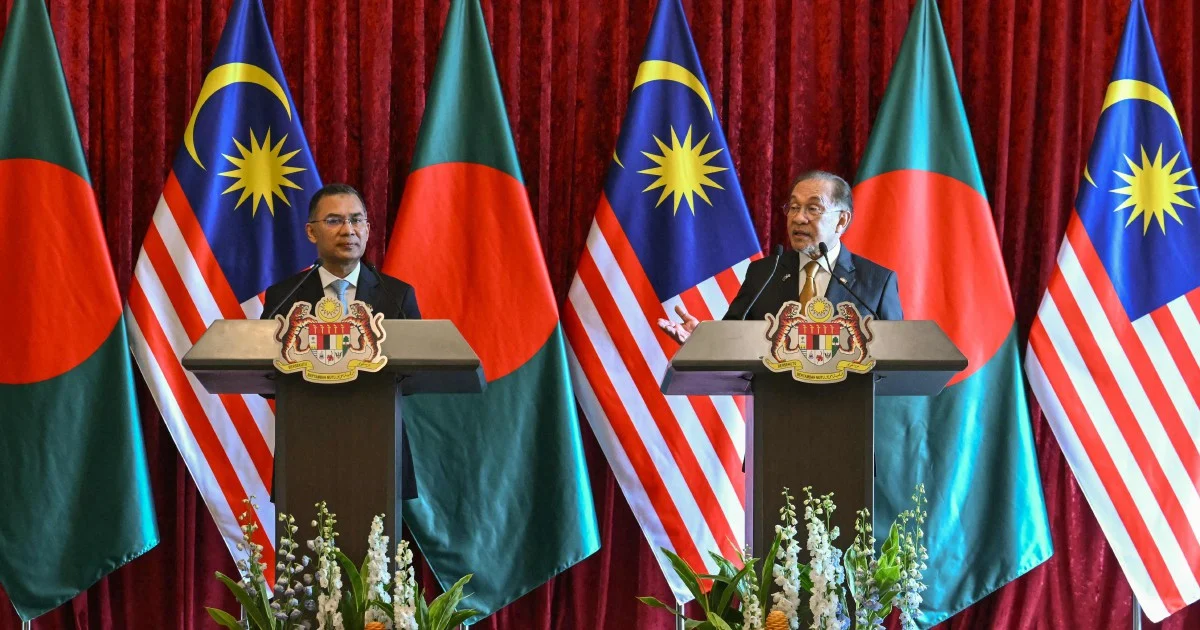
Prime Minister Datuk Seri Anwar Ibrahim has committed to eliminating widespread exploitation of Bangladeshi migrant workers, recognising their indispensable contribution to Malaysia's economic infrastructure and labour force. The pledge signals renewed government focus on protecting vulnerable foreign workers who form a significant portion of Malaysia's migrant population, particularly in construction, manufacturing, and domestic service sectors.
Anwar's statement underscores the precarious situation faced by many Bangladeshi workers operating in Malaysia, where documented cases of wage theft, unsafe working conditions, and contract manipulation remain persistent challenges. The Prime Minister framed the issue not merely as a humanitarian concern but as an economic necessity, arguing that safeguarding worker welfare directly correlates with maintaining Malaysia's competitive advantage in regional markets and sustaining long-term growth trajectories.
Bangladeshi nationals constitute one of the largest foreign worker communities in Malaysia, with estimates suggesting hundreds of thousands employed across multiple sectors. These workers remit substantial sums to their home country, creating bilateral economic ties that benefit both nations. However, inadequate enforcement of labour laws, limited workers' awareness of their rights, and occasional collusion between unscrupulous employers and recruitment agents have created systematic vulnerabilities that successive governments have struggled to address comprehensively.
The Prime Minister's pronouncement arrives amid growing international scrutiny of Malaysia's labour practices. Organisations monitoring human trafficking and worker rights have periodically flagged concerns regarding conditions faced by migrant workers, including allegations of document confiscation, excessive working hours, and wage disputes. Such criticisms carry diplomatic implications, potentially affecting Malaysia's standing in international labour forums and trade relationships with source countries like Bangladesh.
Effective implementation of Anwar's commitment requires coordinated action across multiple government agencies. The Ministry of Human Resources, immigration authorities, and law enforcement bodies must strengthen their capacity to investigate complaints, impose meaningful penalties on violating employers, and ensure rapid restitution for aggrieved workers. Current enforcement mechanisms often lack sufficient resources and political backing to prosecute complex cases involving multiple parties across jurisdictions, creating gaps that unethical operators readily exploit.
Bangladesh's government has increasingly pressured Malaysia regarding worker protection, recognising the economic importance of remittances and the political sensitivity of migrant welfare issues domestically. Diplomatic channels between Dhaka and Kuala Lumpur have witnessed discussions on strengthening bilateral agreements governing worker recruitment, deployment standards, and dispute resolution mechanisms. Malaysia's performance in protecting Bangladeshi workers influences Bangladesh's willingness to continue facilitating labour migration, a crucial consideration for Malaysia's future workforce needs.
The construction sector, where Bangladeshi workers predominate, presents particular challenges for regulatory oversight. Large projects involving multiple subcontractors create opaque supply chains where accountability becomes diffused, enabling exploitation at lower tiers of employment relationships. Reforming this sector requires establishing clearer contractual obligations, implementing robust site monitoring, and creating accessible complaint mechanisms that workers feel empowered to utilise without fear of retaliation or deportation.
Malaysia's broader economic competitiveness depends significantly on accessing affordable, skilled labour from neighbouring countries. However, reputation damage stemming from widespread worker mistreatment risks making Malaysia an unattractive destination compared to competing nations, ultimately constraining economic growth. Countries like Singapore have invested substantially in differentiating themselves through higher labour standards, potentially attracting workers and businesses despite higher operating costs.
Anwar's public commitment creates measurable expectations among civil society organisations, international observers, and the Bangladeshi government itself. Translating rhetoric into sustained action demands demonstrating concrete outcomes: documented increases in successful prosecutions, transparent reporting on investigation results, and visible improvements in worker living standards. Failure to deliver tangible progress risks eroding government credibility on labour issues and inviting renewed international criticism.
Addressing worker exploitation requires addressing root causes embedded in Malaysia's labour market structure and immigration framework. Dependency on tied visas, where workers remain bound to specific employers, severely limits workers' capacity to escape exploitative arrangements or negotiate better conditions. Reforming these systemic features, however, requires political will and potentially accepting higher labour costs for business sectors accustomed to paying below-market rates.
The pledge also reflects broader recognition within Malaysian policymaking circles that sustainable development cannot rest on foundations of worker exploitation. Long-term economic resilience demands investing in worker wellbeing, skills development, and equitable labour practices that attract quality personnel and foster productivity gains. Countries successfully transforming into high-income economies have invariably improved labour standards rather than perpetuating systemic abuse.
Moving forward, success depends on whether Malaysia translates Anwar's commitment into legislative reforms, budgetary allocations, and enforcement mechanisms capable of fundamentally altering how Bangladeshi workers experience employment. The coming months will reveal whether this represents genuine transformation or another iteration of rhetorical promises disconnected from institutional capacity for implementation.