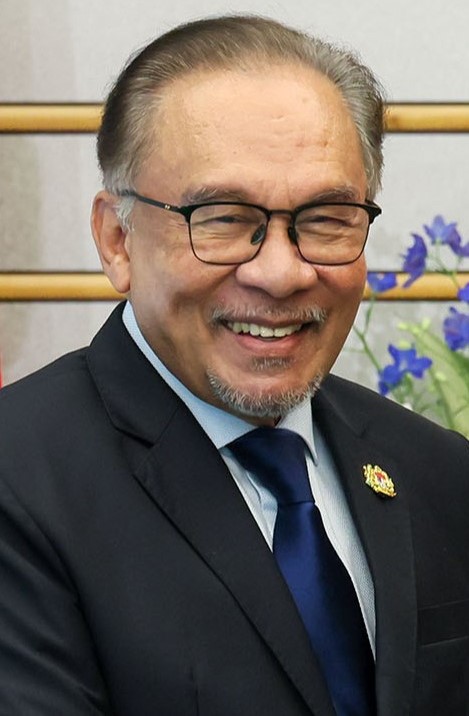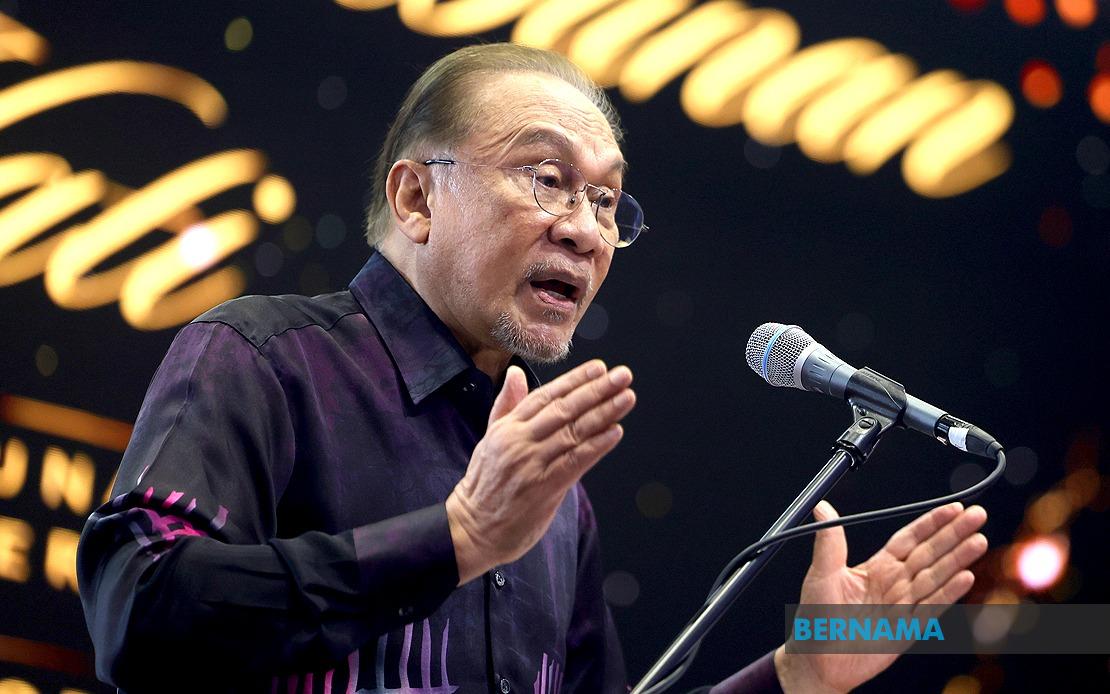
Prime Minister Datuk Seri Anwar Ibrahim delivered a forceful message on national cohesion in Seremban, calling on citizens across all communities to resist attempts by certain political figures to exploit religious and ethnic divisions. Speaking at a dinner hosted by Pertubuhan Lima Generasi (PLG) Malaysia, attended by over 1,000 members and Negeri Sembilan Menteri Besar Datuk Seri Aminuddin Harun, Anwar stressed that Malaysia's remarkable diversity could only serve as a national asset if underpinned by genuine respect and collaborative effort among its various communities.
The prime minister's remarks appear calibrated to address ongoing tensions within Malaysian politics, where rhetoric exploiting communal fears has periodically surfaced during sensitive periods. Anwar articulated concern about deliberate attempts to manufacture conflict between major ethnic groups, framing such divisiveness as fundamentally at odds with the nation's founding principles and contemporary interests. His language—highlighting Malays, Chinese, Indians, and indigenous communities such as Kadazans working together—emphasised that Malaysia's strength derives from practical, lived cooperation rather than abstract multiculturalism.
The timing of these comments reflects broader anxiety within government circles about the potential for racial and religious polarisation to undermine policy implementation and social stability. Malaysia has experienced periodic flare-ups of communal tension, often tied to specific political moments or policy debates. By positioning unity as a prerequisite for national progress, Anwar sought to establish an inclusive framework that transcends the zero-sum ethnic politics occasionally weaponised by opposition or fringe elements. This approach contrasts with rhetoric that frames resource allocation, political representation, or religious matters as inherently zero-sum competitions between communities.
Anwar's assertion that some leaders deliberately seek to create animosity between communities carries particular weight given Malaysia's historical experience with communal conflict. The 1969 riots remain a defining trauma in national memory, establishing an informal taboo against overt incitement along ethnic lines. However, contemporary political discourse sometimes navigates this boundary through coded language, selective historical narratives, or appeals to majoritarian sentiment that stop short of explicit calls for violence. By naming the phenomenon directly, Anwar positioned his government as the rational centre defending against extremists on both flanks.
The invocation of cooperation among diverse groups—presented as already accomplished fact rather than aspirational goal—serves an important rhetorical function in Malaysian politics. By suggesting that Malays, Chinese, Indians, and Kadazans are already united and functioning as a cohesive force, Anwar reframed unity from an ambitious project requiring vigilant protection into an existing reality that merely needs reinforcement. This language implicitly delegitimises those claiming fundamental incompatibility between communities or arguing that shared governance requires sacrifice of core interests.
The event's setting and composition deserve attention as well. PLG Malaysia represents an explicitly multi-community initiative, suggesting that civil society organisations focused on cross-ethnic engagement provide important counterweights to divisive rhetoric. The presence of the Negeri Sembilan Menteri Besar alongside the prime minister signalled unified messaging from federal and state leadership. For a state government to visibly align with this pro-unity stance carries practical significance, as state-level implementation of federal policy often hinges on buy-in from regional leadership.
For Malaysian readers and regional observers, Anwar's intervention highlights the ongoing contestation over national identity in a multiethnic democracy. Unlike some Southeast Asian neighbours, Malaysia has constitutionally embedded certain communal arrangements, creating permanent political salience for identity questions. However, this constitutional architecture—designed to protect communal interests—can paradoxically become a flashpoint if political actors interpret it as requiring zero-sum competition. Anwar's framing attempts to move beyond this trap by suggesting that constitutional protections and practical cooperation are mutually compatible rather than contradictory.
The broader implications for Malaysia's political trajectory merit consideration. Economic challenges, infrastructure development, education policy, and religious governance all become more difficult to address effectively if communities approach policy debates primarily through the lens of ethnic or religious advantage. Anwar's government requires sufficient social cohesion to implement reforms addressing inflation, employment, and public service delivery. Conversely, opposition parties or external actors seeking to destabilise the government have incentives to amplify communal anxieties and perceived threats.
For Southeast Asia more broadly, Malaysia's experience offers cautionary insights about the relationship between diversity, democracy, and deliberate polarisation. Several regional democracies face similar pressures from political actors willing to weaponise identity concerns for electoral advantage. How successfully governments can establish and maintain norms against such rhetoric while preserving genuine grievance redressal remains an open question. Anwar's approach—combining direct warnings against divisive rhetoric with assertions of existing cooperation—represents one strategic choice among several possibilities.
The sustainability of such messaging depends partly on whether Anwar's government can deliver tangible improvements in economic conditions, service delivery, and inclusive governance. If material conditions for ordinary Malaysians continue deteriorating or remain stagnant, appeals to unity lose persuasive force. Communities will retreat to identity-based political mobilisation as a defensive mechanism. Conversely, if the government successfully improves quality of life across communities, unity rhetoric gains practical grounding in citizens' daily experience. This dynamic—between material conditions and identity politics—will likely shape Malaysian political development over coming years.