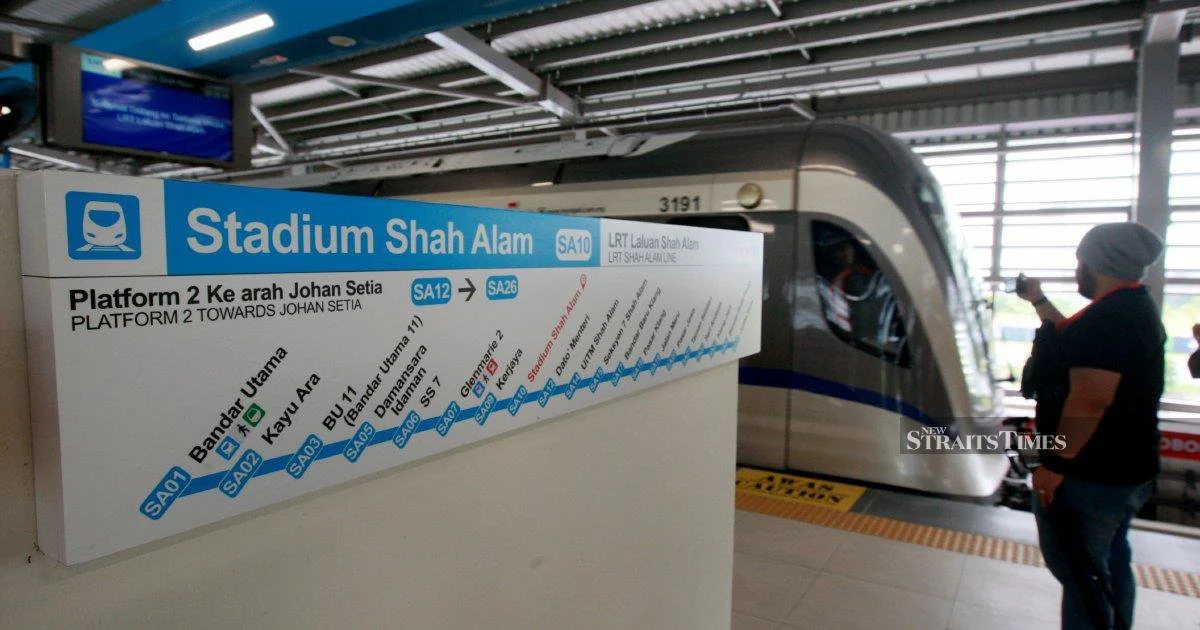
Prime Minister Datuk Seri Anwar Ibrahim is set to perform the official inauguration of the Light Rail Transit Line 3 (LRT3) Shah Alam extension on Sunday, marking a significant milestone for the country's public transportation infrastructure. The new line is scheduled to begin commercial operations on Monday, providing residents and commuters in the Shah Alam area with an enhanced connectivity option to the existing rapid transit network.
The LRT3 Shah Alam line represents a continuation of Malaysia's long-term commitment to expanding its metropolitan rail network, particularly in the Klang Valley region where transportation demand remains robust. This extension addresses critical mobility challenges faced by residents in Shah Alam and surrounding areas, offering a direct alternative to road-based commuting that has traditionally characterised the region.
The inauguration by Anwar underscores the government's focus on infrastructure development as a key policy pillar. Public transport expansion has emerged as a priority area under the current administration, with authorities viewing modern rail systems as essential to reducing traffic congestion, lowering transportation costs for ordinary citizens, and supporting broader economic activity across the metropolitan region.
The Shah Alam extension adds to Malaysia's growing rapid transit footprint, which already encompasses multiple LRT lines, monorail systems, and bus rapid transit networks across the Klang Valley. Each addition to this ecosystem contributes to a more integrated transport architecture, allowing passengers to navigate between different corridors with greater ease and efficiency than previously possible.
From a practical perspective, the opening of the LRT3 Shah Alam line will facilitate commute patterns across Selangor's industrial and commercial zones. Shah Alam functions as a major manufacturing and business hub, and enhanced rail connectivity can improve accessibility for workers, reduce vehicle reliance, and potentially support productivity gains by reducing commute times and associated stress on urban road networks.
The timing of the launch, with the official ceremony preceding the actual start of passenger services by one day, follows standard practice in Malaysia's public infrastructure rollouts. This approach allows authorities to conduct final safety checks, familiarise operational staff with the systems, and manage public expectations regarding service readiness.
For Malaysian readers and Southeast Asian observers, this development reflects broader regional trends toward expanded urban rail networks. Countries across the region are making substantial investments in mass rapid transit systems as cities grapple with congestion and environmental pressures. Malaysia's continued expansion of its LRT network demonstrates commitment to this trajectory, though questions about system integration, affordability, and capacity planning remain pertinent for policymakers and commuters alike.
The LRT3 Shah Alam initiative also carries implications for property values and urban development patterns in the vicinity of new stations. Experience from other Malaysian transport projects shows that proximity to transit hubs can stimulate residential and commercial development, potentially reshaping the demographic and economic character of surrounding areas over the medium to long term.
Operational sustainability represents another consideration for stakeholders. The success of the LRT3 Shah Alam line will depend not only on initial ridership volumes but on whether it can maintain consistent service quality and financial viability. Malaysia's experience with previous rail expansion projects suggests that achieving break-even operations and managing operating costs effectively remain ongoing challenges for the transit sector.
Looking forward, the inauguration on Sunday represents a tangible step toward the vision of a more comprehensive public transport network serving the greater Klang Valley. However, the true measure of success will emerge as passenger adoption evolves and the line's contribution to reducing traffic volumes and improving urban mobility becomes apparent through real-world usage patterns.
The event also provides an opportunity to reassess Malaysia's broader transport strategy and infrastructure priorities. As urbanisation accelerates and traffic pressures mount, decision-makers will need to balance investments across different modes of transport while ensuring that expansion projects reach populations beyond the most affluent urban corridors, addressing equity concerns within the transportation system.