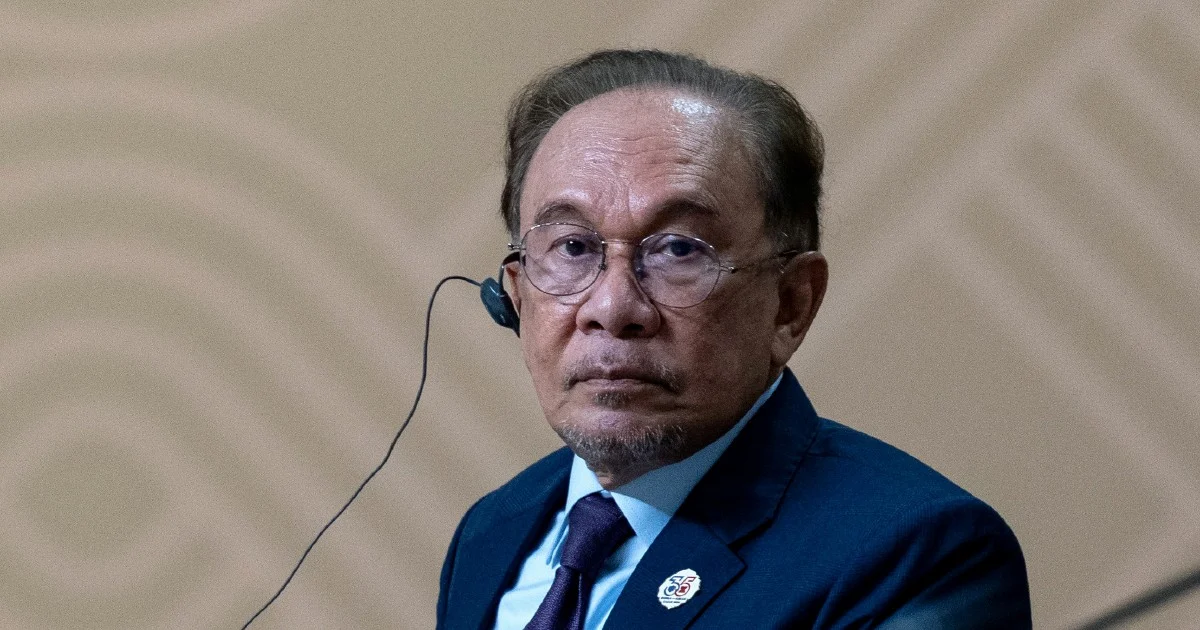
Malaysia's High Court in Kuala Lumpur has ruled in favour of Prime Minister Datuk Seri Anwar Ibrahim, allowing him to withdraw from his obligation to appear as a witness in a RM30 million civil lawsuit. The decision came after the court accepted his formal application to set aside a subpoena that had compelled him to testify in the proceedings, which centres on disputes involving businessman Vinod Sekhar.
The ruling represents a significant legal development in a complex civil dispute that had previously drawn the country's highest office into the courtroom. The case had threatened to create an unprecedented situation where a sitting Prime Minister would be called to give evidence under oath in a financial matter before the courts, a scenario that raises substantial questions about ministerial privilege, executive immunity, and the separation of powers within Malaysia's constitutional framework.
While details regarding the grounds upon which the High Court granted Anwar's application remain subject to the judge's reasoning, such decisions typically hinge on arguments centring on a person's official capacity, the nature of their involvement in the matter, and whether their testimony is genuinely essential to resolving the dispute. In cases involving sitting heads of government, courts frequently acknowledge the competing demands on their time and the potential constitutional implications of subjecting executive leadership to routine court proceedings.
This case underscores an ongoing tension in Malaysia's legal system between the principle that no one stands above the law and the practical reality that senior government officials operate under extraordinary time constraints and security considerations. The removal of a Prime Minister from ordinary civil proceedings, even in witness capacity, inevitably touches on broader questions about how much deference the judiciary should extend to the executive branch, particularly in matters that predate an official's assumption of high office.
Vinod Sekhar's claim, valued at RM30 million, appears to involve complex financial or contractual matters, though the specific allegations have not been detailed in public filings. Such sums typically suggest either a substantial business transaction gone awry, disputes over investment returns, or disagreements regarding contractual obligations. The involvement of a sitting Prime Minister as a potential witness indicates that Anwar likely had some connection to the underlying transaction or relationship, though the nature of that involvement differs materially from being the actual defendant in the case.
For Malaysian observers monitoring the intersection of law and politics, the decision provides some clarity on judicial boundaries. High Courts across the region have increasingly grappled with the question of whether public officials can be dragged into civil proceedings as witnesses when doing so would substantially interfere with their governmental duties. The ruling suggests Malaysia's judiciary recognises this constraint, even as it preserves the right to call witnesses in matters of genuine public consequence.
The outcome also has implications for Vinod Sekhar's legal position. Losing a sitting Prime Minister's testimony could substantially complicate his case, particularly if Anwar possessed material knowledge about the disputed transaction. Sekhar's legal team may now need to reconstruct events through alternative evidence, documentary records, or testimony from other parties with relevant knowledge. This often proves more challenging and time-consuming, potentially extending litigation timelines significantly.
From a governance perspective, the decision reflects a pragmatic approach to managing the relationship between constitutional officeholders and the ordinary civil justice system. Malaysia's Prime Minister carries responsibilities encompassing cabinet oversight, parliamentary leadership, and representation of the nation in international forums—obligations that cannot easily be suspended to accommodate courtroom attendance. The High Court's acceptance of this reality demonstrates judicial maturity in recognising institutional constraints.
However, critics of such rulings argue that permitting senior officials to avoid witness testimony sets a problematic precedent. If a Prime Minister can decline to testify in civil matters, questions inevitably arise about whether other high-ranking officials might invoke similar protections, potentially undermining the comprehensiveness of fact-finding in disputed cases. The challenge for courts lies in drawing principled distinctions between routine inconvenience and genuine institutional necessity.
The RM30 million dispute itself remains unresolved, and the case will presumably proceed without Anwar's direct testimony. This may encourage settlement negotiations, given the difficulty of building a strong evidentiary foundation without a key witness's evidence. Such dynamics occasionally prove beneficial in civil litigation, as parties confronted with weakened positions sometimes demonstrate greater willingness to reach reasonable compromise.
Moving forward, the decision provides useful precedent for how Malaysian courts approach witness subpoenas affecting high office. It signals that sitting Prime Ministers will not routinely be compelled to testify in civil matters, though the principle may not extend uniformly to criminal proceedings or cases where a Prime Minister is personally involved as a party rather than merely as a witness. This distinction preserves both governmental efficiency and core principles of judicial independence.