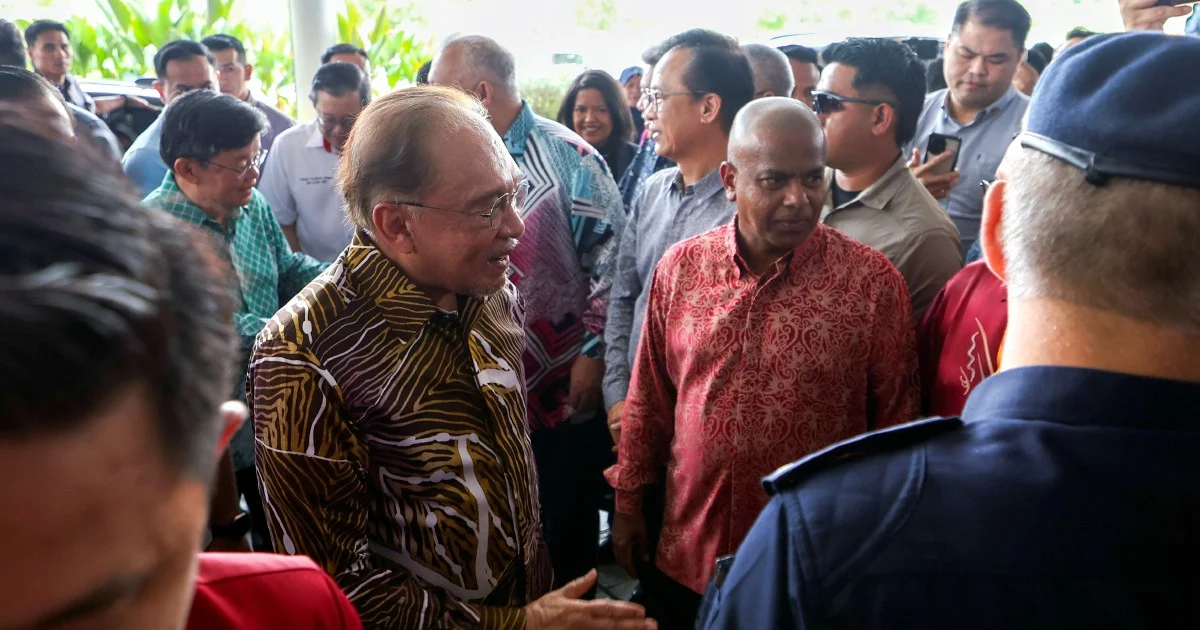
Prime Minister Datuk Seri Anwar Ibrahim has celebrated Petronas securing two major gas development projects in Turkmenistan, marking what he describes as a pivotal accomplishment for Malaysia's strategic energy independence and long-term fuel supply resilience. Speaking at an event in Permatang Pauh, the Prime Minister emphasized the significance of the arrangement in strengthening the nation's hydrocarbon portfolio and establishing stronger energy partnerships beyond Southeast Asia's traditional sphere.
The allocation of these substantial gas fields represents a major expansion opportunity for Petronas, Malaysia's state-owned energy champion, which has been pursuing aggressive international growth strategies to maintain relevance amid the global energy transition. For a company operating in an increasingly competitive and politically volatile global upstream sector, securing development rights to multiple production assets in Turkmenistan provides crucial diversification of revenue sources and operational presence. This geographic expansion beyond the company's traditional strongholds in Southeast Asia and the Middle East underscores management's determination to build a genuinely multinational energy corporation capable of serving diverse market demands.
Turkmenistan holds some of Central Asia's most substantial proven and prospective natural gas reserves, making it a strategically valuable region for energy producers seeking to expand operations. The Caspian Sea basin itself represents one of the world's most prolific energy zones, though political sensitivities and infrastructural challenges have historically complicated development activities. Petronas's successful bid demonstrates the company's technical capability and financial standing to operate in demanding geological and geopolitical environments where fewer competitors possess both the expertise and diplomatic relationships necessary to secure long-term concessions.
For Malaysia's broader economic strategy, this development carries implications extending well beyond the energy sector. Successful international investment by Malaysian corporations builds the nation's technological reputation, creates employment opportunities for specialized personnel, and generates substantial foreign exchange earnings through royalties and production revenues. The arrangement positions Malaysia as a significant player in Central Asian resource development, potentially opening doors for greater Malaysian commercial and diplomatic engagement throughout the region.
The timing of this accord reflects Petronas's ongoing transformation as it navigates the complex challenge of maintaining profitability from conventional oil and gas operations whilst simultaneously investing in renewable energy and carbon-reduction initiatives. By securing productive assets that will generate substantial revenue streams over decades-long production lifecycles, the company ensures financial capacity to fund its energy transition portfolio. This balance between traditional hydrocarbon development and clean energy investment represents the pragmatic reality confronting major oil and gas companies seeking to remain viable during the global shift toward decarbonization.
Energy security remains a paramount concern for policymakers throughout Southeast Asia, where growing populations and rapidly industrializing economies create insatiable demand for reliable, affordable power. Malaysia's own domestic energy requirements are expected to expand significantly as the nation pursues industrialization and increases electrification across rural areas. By securing additional upstream production capacity through Petronas's international ventures, Malaysia can theoretically moderate import dependence and potentially develop export capacity, strengthening the nation's energy independence relative to rival regional economies competing for scarce resources.
The geopolitical dimensions of this arrangement warrant careful consideration. Central Asia's energy resources have long been contested between competing regional and international powers, with Russia, China, and Western energy companies all pursuing influence over hydrocarbon development and export pathways. Petronas's successful entry into Turkmenistan's upstream sector represents Malaysia's assertion of independent energy diplomacy, establishing relationships based on mutual commercial benefit rather than subordinate positioning to larger powers. This approach aligns with Malaysia's broader foreign policy orientation toward non-alignment and balanced engagement across competing global powers.
The implementation of these gas field developments will require substantial capital investment, advanced extraction technology, and sustained operational expertise throughout extended project lifecycles. Petronas possesses proven capability in managing complex offshore and onshore production facilities, and the Turkmenistan assignment offers opportunity to apply this accumulated knowledge in new geological settings. Successful execution will generate valuable experience with Central Asian regulatory frameworks and business practices, capabilities that enhance Petronas's competitive positioning for future development opportunities throughout the region.
Industry observers recognize that energy companies operating across multiple continents require sophisticated risk management systems, cultural understanding, and adaptability to varying legal and political environments. Petronas's expansion into Turkmenistan demands precisely these competencies, pushing the organization toward greater operational maturity. The accumulated experience from managing diverse, geographically dispersed assets ultimately strengthens Malaysian technical capacity and positions the nation as a center of hydrocarbon expertise within the global energy industry.
This strategic arrangement also underscores Malaysia's capacity to establish mutually beneficial economic relationships with Central Asian nations, markets traditionally dominated by other regional powers. By deploying capital and technical expertise toward resource development that benefits Turkmenistan's economic development whilst generating returns for Malaysian stakeholders, the nation constructs foundations for broader engagement. Over time, successful energy partnerships frequently expand into other commercial sectors, potentially opening opportunities for Malaysian companies across manufacturing, finance, and services industries.
Looking forward, the success of Petronas's Turkmenistan operations will significantly influence the company's trajectory during an era of profound energy sector transformation. Large-scale conventional gas production from these fields could extend Petronas's relevance as a traditional hydrocarbon producer whilst the company simultaneously develops renewable energy capabilities. This dual approach acknowledges the persistent global demand for natural gas as a transition fuel during the decades-long shift away from carbon-intensive energy sources.
The Prime Minister's endorsement reflects understanding that Malaysia's long-term prosperity depends upon maintaining diversified economic strengths, including competitive advantage in natural resource development and energy production. As Southeast Asian nations increasingly assert independent foreign policy positions and economic strategies, securing critical energy supplies through national companies' international activities becomes a cornerstone of genuine autonomy. Petronas's Turkmenistan success therefore represents more than a commercial transaction—it demonstrates Malaysian capacity for strategic economic statecraft in an increasingly multipolar global order.

%22%2F%3E%3C%2Fpattern%3E%3C%2Fdefs%3E%3Crect%20width%3D%22100%25%22%20height%3D%22100%25%22%20fill%3D%22url(%23ph4thk3g)%22%2F%3E%3Crect%20width%3D%22100%25%22%20height%3D%22100%25%22%20fill%3D%22url(%23ph4thk3p)%22%2F%3E%3Ctext%20x%3D%2250%25%22%20y%3D%2250%25%22%20text-anchor%3D%22middle%22%20dominant-baseline%3D%22central%22%20fill%3D%22rgba(255%2C255%2C255%2C0.95)%22%20font-family%3D%22Georgia%2C%20'Times%20New%20Roman'%2C%20serif%22%20font-weight%3D%22700%22%20font-size%3D%22320%22%20letter-spacing%3D%22-0.02em%22%3EMMC%3C%2Ftext%3E%3C%2Fsvg%3E)