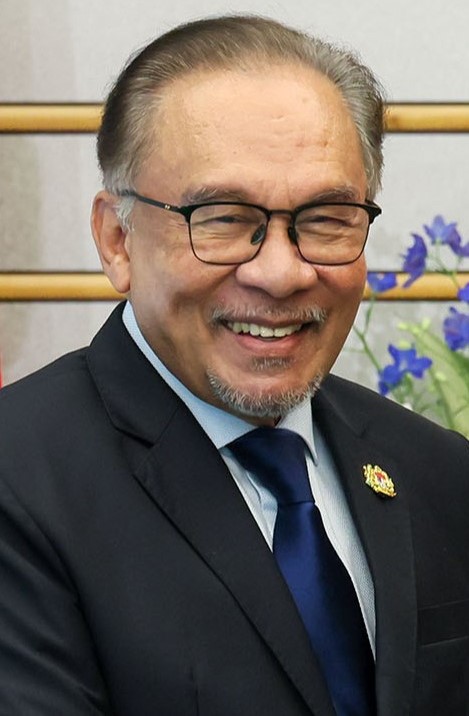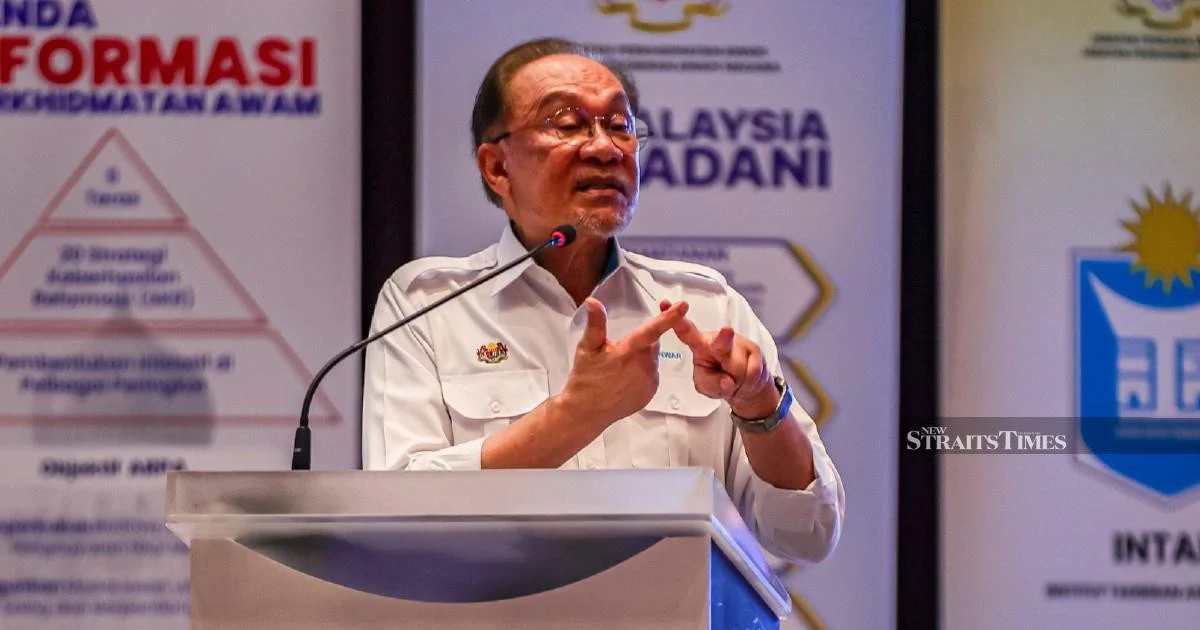
Prime Minister Datuk Seri Anwar Ibrahim moved to extinguish mounting tensions within Malaysia's political establishment on Friday, publicly defending Parti Amanah Negara (Amanah) president Datuk Seri Mohamad Sabu against suggestions that remarks delivered at a Pakatan Harapan (PH) campaign event had deliberately disparaged rival parties. Speaking in Alor Gajah, the premier sought to downplay the controversy surrounding the Tangkak candidate announcement, urging political actors across the spectrum to exercise restraint and focus on substantive policy discourse rather than inflammatory interpretations of public statements.
The dispute centres on comments made by Mohamad Sabu during the Friday event, which sources suggested may have contained satirical or critical references to opposition figures and movements. However, Anwar's intervention reframed the narrative, asserting that the Amanah leader's words carried no intentional mockery and therefore merited no further escalation. This posture reflects a broader effort by the prime minister to maintain coalition cohesion as Malaysia navigates an increasingly polarized political environment, where minor rhetorical missteps can rapidly metastasize into full-blown factional disputes.
The timing of the controversy is particularly delicate, coming amid ongoing discussions about the composition and direction of the ruling Pakatan Harapan alliance. Amanah, while a formal component of PH, occupies a somewhat intermediary position within the broader coalition framework, and disputes involving its leadership can carry disproportionate weight given questions about party dynamics and internal PH relationships. Anwar's swift and unambiguous public endorsement of Mohamad Sabu signals an intention to prevent any perception of disunity from undermining the coalition's electoral prospects or governance credibility.
The prime minister's intervention also carries tactical significance for the incumbent administration's relationship with the parliamentary opposition. Any perception that government figures are engaged in mutual recriminations could be weaponized by rival parties seeking to portray the ruling coalition as fractious and ineffective. By framing Mohamad Sabu's comments charitably and discouraging further controversy, Anwar has attempted to foreclose opportunities for opposition groups to amplify divisions and cast doubt on PH's capacity to govern.
Context matters considerably here. Pakatan Harapan has worked assiduously since the 2022 general election to consolidate its position as the dominant political force in Malaysia, despite inheriting considerable governance challenges and managing multiple coalition partners with sometimes competing interests. The Tangkak candidate announcement represented an opportunity to demonstrate unity and forward momentum as the coalition prepares for future electoral contests. A drawn-out dispute over perceived slights between coalition members would have undermined these objectives and provided ammunition to critics questioning PH's internal coherence.
Anwar's statement also reflects Malaysian political culture's sensitivity to rhetorical escalation and symbolic transgressions. In a multiethnic, multireligious democracy where historical grievances and contemporary political tensions frequently intersect, public statements from senior leaders are parsed with exceptional care. What one observer might dismiss as harmless banter can, in the Malaysian political context, be perceived as challenging or disrespectful, particularly when delivered by representatives of specific parties or ethnic communities to audiences that may interpret messages through sectarian lenses.
The broader implications for Southeast Asian politics are noteworthy. Malaysia remains a bellwether for coalition governance in the region, and the management of intra-alliance tensions within ruling governments has proven critical to political stability across multiple democracies in Southeast Asia. How Anwar navigates these interpersonal and institutional relationships will influence not only Malaysia's immediate political trajectory but potentially serve as a model—positive or cautionary—for other regional governments managing similar pressures.
Moving forward, the incident underscores the delicate equilibrium required to maintain multiparty coalition governments. Amanah members and supporters may view Anwar's defence as appropriate leadership, while opposition figures may interpret the prime minister's rapid containment of the dispute as evidence of preferential treatment within ruling circles. The premier's challenge lies in sustaining this balance while ensuring that substantive political discourse—encompassing economic policy, public services delivery, and institutional reform—remains the focal point of public and parliamentary attention.
Anwar's call for calm represents an attempt to reset the conversation and redirect political energy toward constructive engagement. Whether such appeals prove durable will depend substantially on the behaviour of other coalition actors and the broader opposition's willingness to allow the matter to recede from public attention. The incident, though apparently minor, illustrates the persistent fragility of coalition governance in Malaysian politics and the outsized importance of preventive leadership in forestalling escalation.