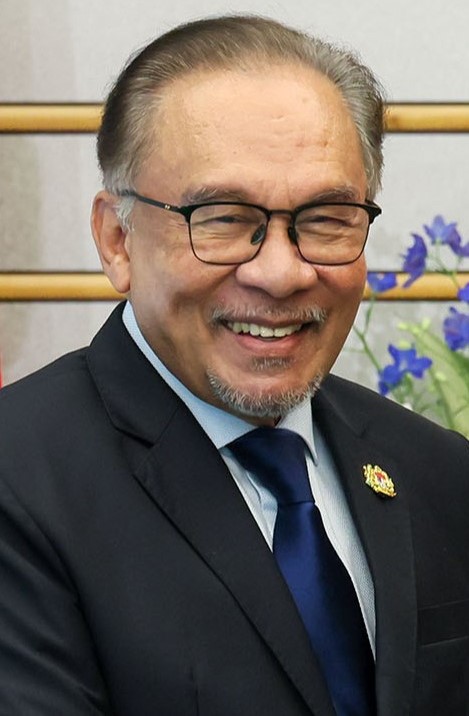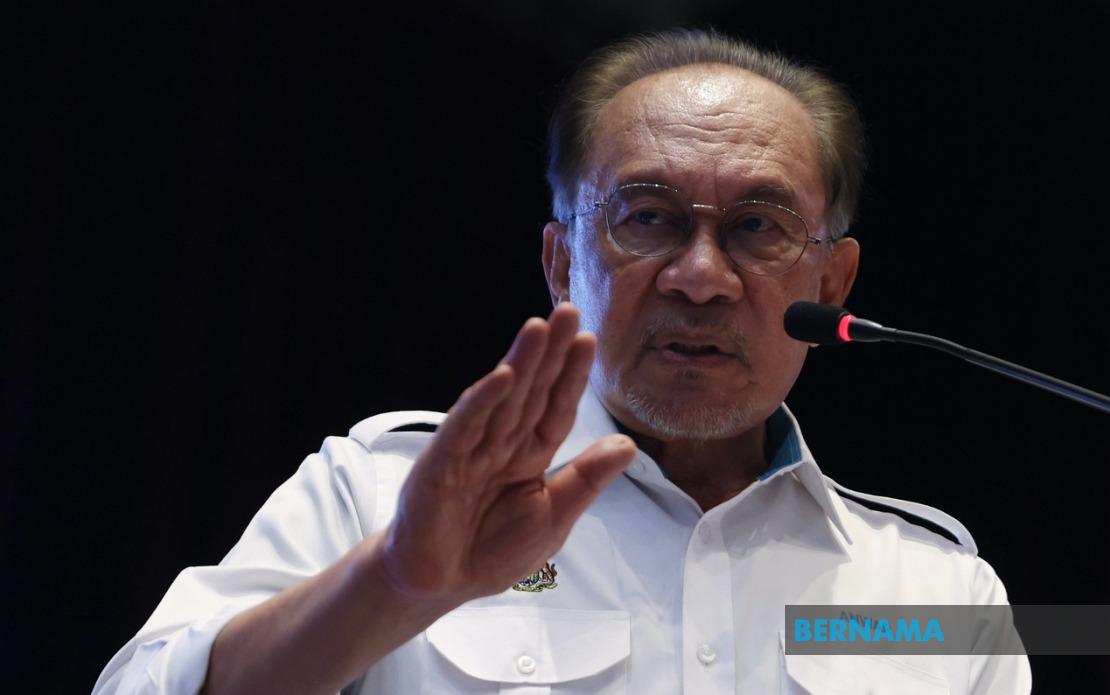
Prime Minister Datuk Seri Anwar Ibrahim has issued a pointed warning to all political parties to refrain from enlisting Malaysia's royal institutions in their electoral competition, underscoring the need for maturity in how politicians conduct disagreements as campaigning intensifies ahead of elections.
Speaking at an engagement session with civil servants in Alor Gajah on June 24, Anwar emphasised that political differences must be resolved through proper channels and adult discourse rather than by compromising institutions that Malaysians hold in fundamental regard. His remarks represent a significant intervention on an issue that touches on one of Malaysia's most sensitive constitutional matters—the separation between electoral politics and the constitutional role of the Malay Rulers.
The Prime Minister's intervention came in response to statements made by Amanah president Datuk Seri Mohamad Sabu during a Pakatan Harapan candidate announcement event in Johor earlier that week. While Anwar did not detail the specific nature of those remarks, multiple observers had questioned whether Mohamad Sabu's comments contained implicit criticism directed at the royal institution, highlighting a recurring concern about rhetorical boundaries in Malaysian politics.
Anwar's characterisation of the Malay Rulers' institution as "sacred" reflects the constitutional and cultural weight these institutions carry in the Malaysian system. Unlike many parliamentary democracies, Malaysia's constitutional monarchy affords the Rulers a distinctive role in national life, particularly in matters concerning Islam, Malay-Muslim affairs, and the preservation of special rights enshrined in Article 153 of the Federal Constitution. This constitutional positioning makes the Rulers institutionally distinct from conventional political actors, and Anwar's intervention underscores that this distinction must be respected during electoral cycles.
The timing of this admonition is significant. With electoral campaigning now in full swing, political parties across the spectrum are mobilising supporters and testing messaging strategies. The temptation to invoke symbols of national identity—including royal patronage or implied royal concerns—can be potent in Malaysian politics, where discussions about constitutional monarchy, Islamic governance, and Malay-Muslim interests frequently intersect. Anwar's statement serves as a circuit-breaker, establishing a clear norm that parties should not attempt to instrumentalise the Rulers or their perceived preferences to gain political advantage.
The gathering itself, held at the Public Works Department's Centre of Excellence for Engineering and Technology (CREaTE), brought together a cross-section of government leadership alongside Melaka Chief Minister Datuk Seri Ab Rauf Yusoh and Deputy Higher Education Minister Adam Adli Abd Halim. The presence of Chief Secretary to the Government Tan Sri Shamsul Azri Abu Bakar and other senior civil service figures suggests the event was designed to reinforce the professional, non-partisan character of Malaysia's administrative apparatus during the electoral period—a parallel concern to Anwar's remarks about keeping partisan politics separate from revered institutions.
For Malaysian readers and Southeast Asian observers, Anwar's intervention carries implications beyond mere political etiquette. Malaysia's constitutional system depends on broad acceptance of institutions that transcend partisan competition. When political actors suggest, even obliquely, that royal institutions harbour preferences for particular parties or policies, they risk eroding the consensus that allows these institutions to function effectively in a diverse, multi-ethnic democracy. The warning is thus as much about institutional preservation as it is about electoral propriety.
The specific focus on Mohamad Sabu's remarks also reflects internal coalition dynamics within Pakatan Harapan. Amanah, as a primarily Malay-Muslim party, operates in a political space where messaging around Islam, constitutional arrangements, and the Rulers' role naturally carries heightened significance. Anwar's public correction, rather than a private remonstration, sends a signal that even coalition partners must adhere to boundaries he considers fundamental to democratic health.
Historically, Malaysian electoral campaigns have occasionally strained these boundaries. References to royal concerns—whether genuine or fabricated—can mobilise certain voter segments or signal ideological positions on constitutionalism and Islamic governance. By invoking his authority as Prime Minister to establish this norm publicly, Anwar is attempting to prevent such dynamics from developing during the current campaign cycle. The strength of such an intervention depends partly on whether other parties observe similar discipline.
The intervention also reflects a broader maturation in how Anwar, despite his long career in Malaysian politics, approaches the Prime Minister's office. His emphasis on civil service engagement and systemic propriety during this event suggests he views the election period not merely as a tactical moment but as an opportunity to reinforce the institutional foundations on which Malaysia's plural democracy rests. In that framing, protecting the royal institutions from political exploitation becomes a shared responsibility rather than a sectional concern.
Moving forward, the effectiveness of Anwar's admonition will depend on whether political parties across the spectrum—whether in government or opposition—voluntarily exercise restraint. Malaysia's electoral outcomes in recent years have demonstrated that voters respond to substantive policy debates, economic performance, and governance competence. Political parties that focus messaging on these grounds, rather than attempting to mobilise sentiment around constitutional symbols, may ultimately find themselves on firmer electoral and institutional footing.