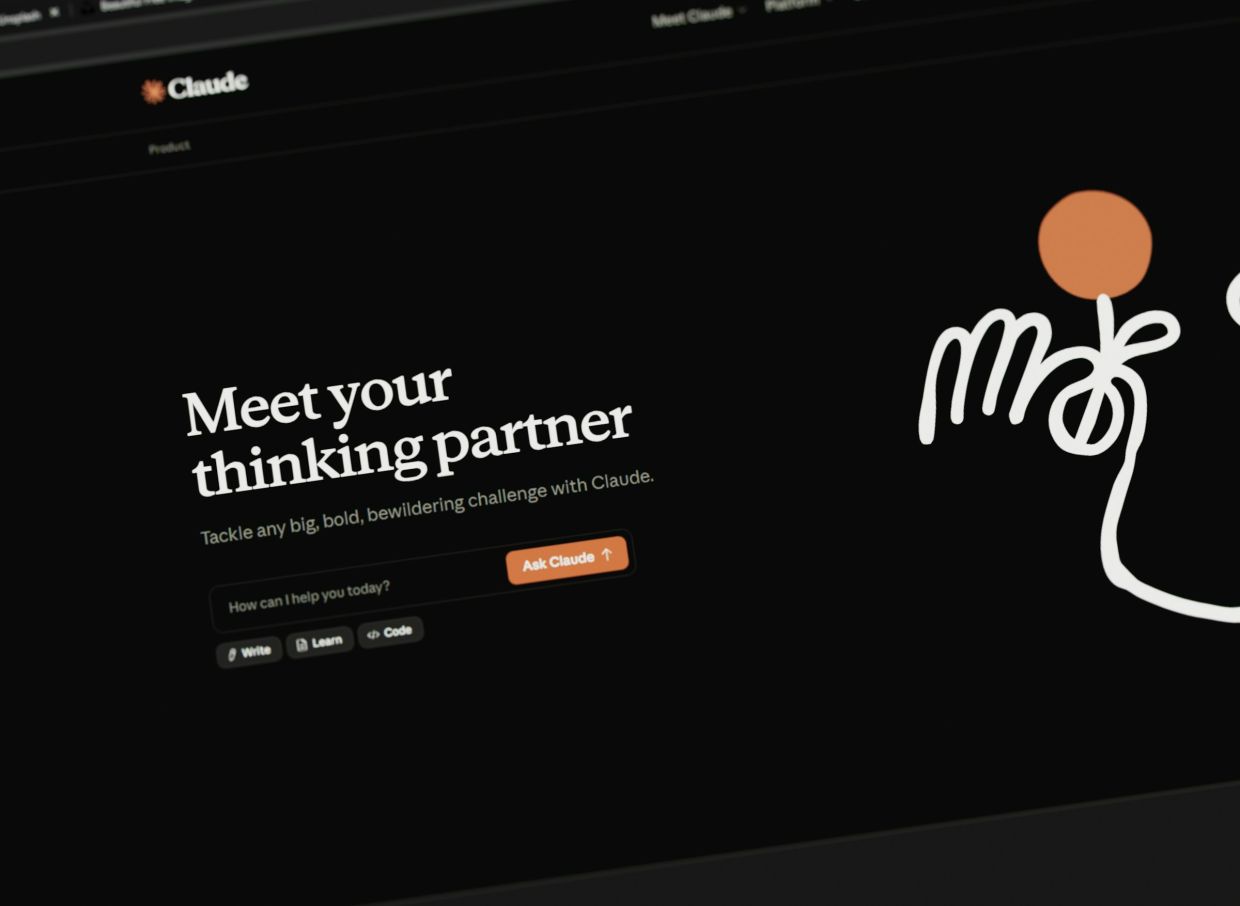
Anthropic PBC is substantially expanding its presence within Slack through Claude Tag, a newly launched feature unveiled on June 23 that fundamentally changes how the AI assistant operates within the workplace communication platform. Rather than remaining a passive tool that users must explicitly summon, Claude can now proactively monitor Slack channels and engage with team members across conversations on behalf of individual users. This represents a meaningful shift toward embedding artificial intelligence deeper into the daily workflows of organizations already reliant on Slack for internal communications.
The capabilities embedded within Claude Tag reflect the increasing sophistication of large language models in professional environments. Users can configure the system with specific parameters to identify posts or discussions that warrant immediate attention, triggering automated alerts when relevant content appears. Beyond passive monitoring, Claude can inject commentary directly into ongoing conversations when appropriate, contributing substantive input without requiring manual invocation. The system also possesses the ability to identify and resolve coding challenges, offering technical assistance that could meaningfully reduce developer friction during collaborative debugging sessions.
Anthropc's strategic positioning reflects the intensifying competition between major AI development firms vying for dominance in the enterprise software market. Both Anthropic and OpenAI have invested substantial resources throughout the past eighteen months in engineering specialized tools designed to automate diverse professional functions spanning financial analysis, healthcare applications, and software development. This competitive dynamic serves a dual purpose: expanding the addressable market for AI-driven business solutions whilst simultaneously building investor confidence in valuations that have reached astronomical levels. Anthropic's current valuation of US$965 billion (RM4 trillion) illustrates the extraordinary capital concentration within the AI sector, with the company reportedly advancing toward an initial public offering that would mark a watershed moment for the industry.
The technical architecture underpinning Claude Tag requires sophisticated integration with existing organizational systems. Users must connect the system to various data sources and applications, including corporate calendars, email systems, and other productivity tools, to unlock its full potential for autonomous task execution. This infrastructure requirement demands careful configuration but enables Claude to access contextual information necessary for informed decision-making. Cat Wu, who heads product development for Claude Code and Cowork at Anthropic, emphasized the transformative impact internally, noting that approximately 65 percent of code produced by Anthropic's own product team now originates from an internal version of Claude Tag, demonstrating the developers' confidence in their creation.
The rollout timeline reveals complexities within the geopolitical landscape surrounding advanced artificial intelligence. Anthropic disabled user access to its most sophisticated models—designated as Fable 5 and Mythos 5—less than two weeks before the Claude Tag announcement, responding to executive orders from the Trump administration restricting foreign national access to cutting-edge AI technology. This restriction created a significant constraint on Claude Tag's initial deployment strategy. Wu acknowledged that Fable 5 had been identified as the optimal model for delivering full Claude Tag functionality, particularly for sophisticated coding assignments and autonomous decision-making regarding appropriate conversation participation. The unavailability of this preferred architecture forced Anthropic to utilize Opus 4.8, released in May, alongside the downgraded Fable model, representing a technical compromise that Wu characterized as demonstrating superior capability relative to Opus 4.8 alone, though presumably inferior to the restricted Fable 5.
Claud's existing presence within Slack, though substantially less sophisticated, provides a foundation for understanding the incremental advancement Claude Tag represents. The previous implementation functioned primarily as an on-demand consultation tool, requiring explicit user commands to activate. Claude Tag fundamentally reimagines this relationship by introducing proactive agent behavior, enabling Claude to scan conversations independently, identify contextually relevant information, and contribute autonomously according to user-established parameters. This architectural shift mirrors broader industry trends toward agentic AI systems capable of executing multi-step tasks with minimal human intervention, a capability that carries profound implications for workforce productivity and organizational structure.
For Malaysian and Southeast Asian business organizations, Claude Tag introduces both significant opportunity and operational consideration. Regional companies increasingly embedded within digital-first operating models may discover that sophisticated AI integration within existing communication platforms accelerates project delivery and reduces time-to-resolution for technical challenges. The system's capacity to monitor discussions and surface priority information could prove particularly valuable in geographically distributed organizations spanning multiple time zones, where real-time human attention becomes logistically challenging. However, organizations must grapple with data governance questions, particularly regarding Claude's access to proprietary communications, calendar information, and email content—considerations that demand careful evaluation against regulatory frameworks governing data protection and corporate privacy.
The rollout strategy targets Anthropic's enterprise and team subscription tier users, deliberately excluding free-tier customers from accessing Claude Tag. This segmentation reflects Anthropic's business model prioritization, concentrating advanced capabilities among paying organizational customers. Enterprise adoption carries strategic importance for Anthropic's valuation narrative and IPO preparation, as demonstrating substantial revenue concentration among large organizations substantially reduces perceived investment risk. The transition from the existing Claude Slack application to Claude Tag constitutes a full feature replacement rather than an additive enhancement, suggesting Anthropic's confidence that the new system delivers superior value justifying migration costs.
The competitive implications extend beyond Slack integration into broader enterprise AI strategy. OpenAI's parallel efforts to develop specialized professional tools establish a template that other AI firms must acknowledge. Both companies recognize that generic chatbot capabilities, however impressive in isolation, prove insufficient for commanding significant business customer investment. Instead, deep integration with established workflow platforms—Slack, Microsoft Teams, Gmail, and comparable systems—creates switching costs and organizational dependency that translate into defensible market position and recurring revenue streams. For Malaysian technology companies considering similar integration strategies, the Anthropic and OpenAI approach offers instructive case studies in vertical integration strategy.
The geopolitical dimension surrounding AI model restrictions deserves particular attention for regional stakeholders. The Trump administration's constraints on foreign access to advanced models like Fable 5 signal an emerging normalization of technology restricted use policies likely to proliferate across additional jurisdictions. Organizations and governments throughout Southeast Asia should anticipate increased friction regarding access to frontier AI capabilities, potentially necessitating domestic AI development or negotiated bilateral agreements. Anthropic's forced constraint on Claude Tag's optimal capabilities, though presented as a temporary limitation, may portend recurring disruptions in the AI deployment roadmaps that multinational organizations and regional players alike must navigate.
The internal usage statistics Wu disclosed—that 65 percent of Anthropic's own product team's code now emerges from Claude Tag—warrant serious consideration regarding productivity implications and workforce transformation. This figure suggests AI-assisted development has achieved substantial maturity and adoption even within organizations developing the technology. While not necessarily indicating complete automation of engineering functions, the statistic indicates that human engineers increasingly collaborate with AI systems that substantially augment their productive capacity. Regional software development companies competing internationally must recognize this productivity differential and evaluate their own AI adoption strategies accordingly, recognizing that competitors utilizing advanced agentic AI systems like Claude Tag may significantly accelerate feature delivery and reduce development costs.