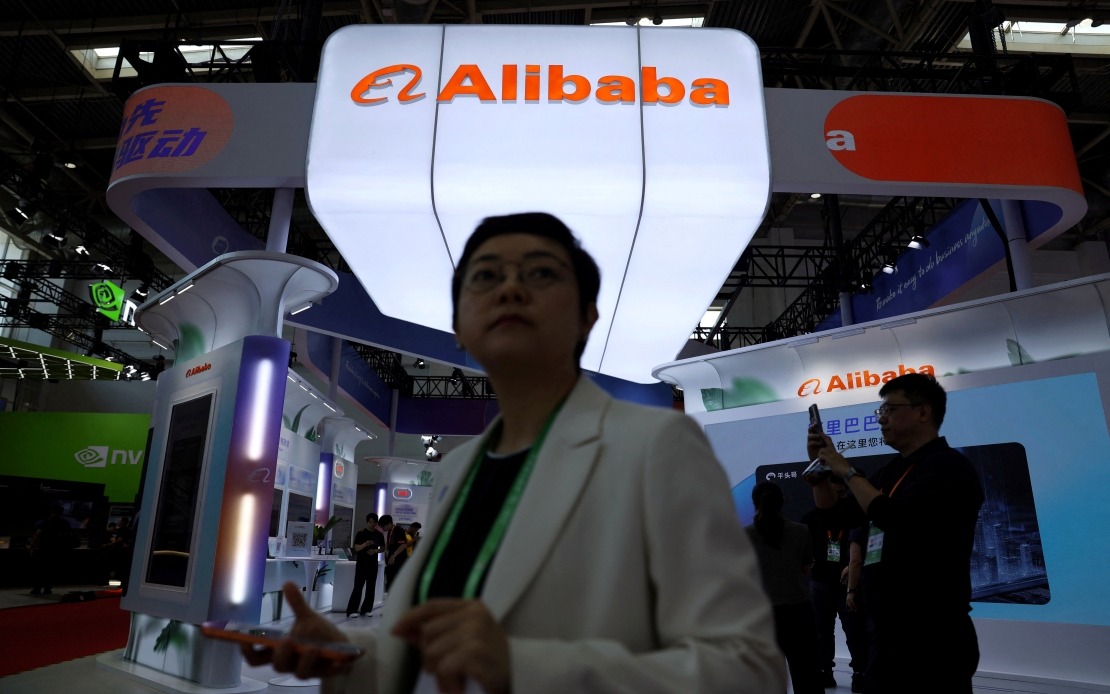
Chinese e-commerce and technology behemoth Alibaba has initiated legal proceedings against the United States Department of Defense, challenging its recent classification as a company linked to China's military-industrial apparatus. The lawsuit, filed in federal court and disclosed on Tuesday, represents a significant escalation in Alibaba's pushback against Washington's increasingly stringent approach to Chinese technology firms deemed to pose national security risks.
The Pentagon's May designation of Alibaba alongside 187 other entities—including tech rival Tencent and automotive manufacturer BYD—marked a dramatic expansion of the department's military company list. This classification carries substantial consequences for affected businesses, restricting their access to American investors, technology suppliers, and capital markets. For Alibaba, which operates as one of Asia's most influential digital platforms, the military designation threatens relationships with institutional investors and complicates its strategic positioning in global commerce.
Alibaba's legal challenge contests the Pentagon's determination on both substantive and procedural grounds. The company argues in court documents that the military designation lacks evidentiary support, contending that it operates no military divisions, manufactures no defence equipment, and maintains no structural ties to China's armed forces. The company emphasises that its board of directors includes no individuals with military backgrounds or affiliations, positioning itself as a purely commercial enterprise governed by independent leadership rather than state or military mandate.
Central to Alibaba's defence is the assertion that its operational portfolio—spanning retail platforms, logistics networks, cloud computing, and enterprise software solutions—serves exclusively civilian and commercial objectives. The company maintains comprehensive contractual provisions and compliance frameworks that explicitly restrict military applications of its services and technologies. These internal controls, Alibaba contends, demonstrate conclusively that the organisation has neither the intent nor the capability to serve military purposes.
The lawsuit further highlights that Alibaba possesses no military certifications, licences, or authorisations from any government body. This claim distinguishes the company's profile from entities with verifiable defence contracts or state-sanctioned military production responsibilities. By emphasising the absence of formal military credentials, Alibaba seeks to undermine the Pentagon's underlying rationale for the designation.
For Malaysian and Southeast Asian observers, Alibaba's legal challenge carries significant implications. The company operates substantial operations throughout the region, including in Malaysia, where it provides logistics, payment processing, and e-commerce infrastructure services. A sustained military designation could jeopardise these regional operations by limiting financing options, complicating trade relationships, and creating regulatory uncertainty. Regional governments and businesses reliant on Alibaba's platforms would face disruption if the classification substantially constrains the company's global operations.
The Pentagon's May 2024 announcement placing 188 companies on its military-linked entities list reflected intensifying US-China technological competition and mounting American security concerns about Chinese corporate governance. The decision to include civilian technology companies alongside traditional defence contractors signalled an expansive interpretation of what constitutes military affiliation, potentially capturing commercial enterprises with minimal or non-existent defence involvement. This broader categorisation approach has drawn criticism from legal experts and business analysts who question whether the classifications rest on sufficiently rigorous evidentiary standards.
Alibaba's litigation strategy mirrors broader legal challenges mounted by other designated Chinese firms seeking to overturn or narrow the scope of military company designations. These cases collectively raise important questions about due process, the burden of proof applicable to such designations, and the standards governing when commercial enterprises can be classified as military entities. The outcome of Alibaba's lawsuit could establish precedent affecting how the Pentagon applies military company designations to technology firms operating across civilian and potentially defence-adjacent sectors.
The dispute also illuminates deeper tensions regarding extraterritorial American economic regulation and its effects on international commerce. Chinese companies designated as military entities effectively face exclusion from dollar-denominated financing and transactions, creating practical barriers that extend far beyond official government procurement restrictions. This mechanism allows American officials to constrain Chinese corporate operations globally without formal legislation or transparent decision-making processes.
From a broader geopolitical perspective, Alibaba's challenge reflects the company's effort to maintain legitimacy and operational capacity within the American economic system despite mounting US-China tensions. The litigation signals that even China's largest technology companies believe legal advocacy within American courts offers viable pathways to challenge executive determinations. However, the company simultaneously faces pressure from Beijing, which carefully monitors how Chinese corporations engage with American institutions.
The case unfolds as American policy toward Chinese technology firms continues crystallising around national security frameworks. Regardless of litigation outcomes, the designation underscores how comprehensively US regulatory architecture has adapted to treat technology competition as a security issue. For Malaysian policymakers and businesses, Alibaba's experience demonstrates the vulnerabilities facing Chinese technology companies operating globally and the strategic importance of understanding American security classifications when engaging in technology partnerships or capital flows.