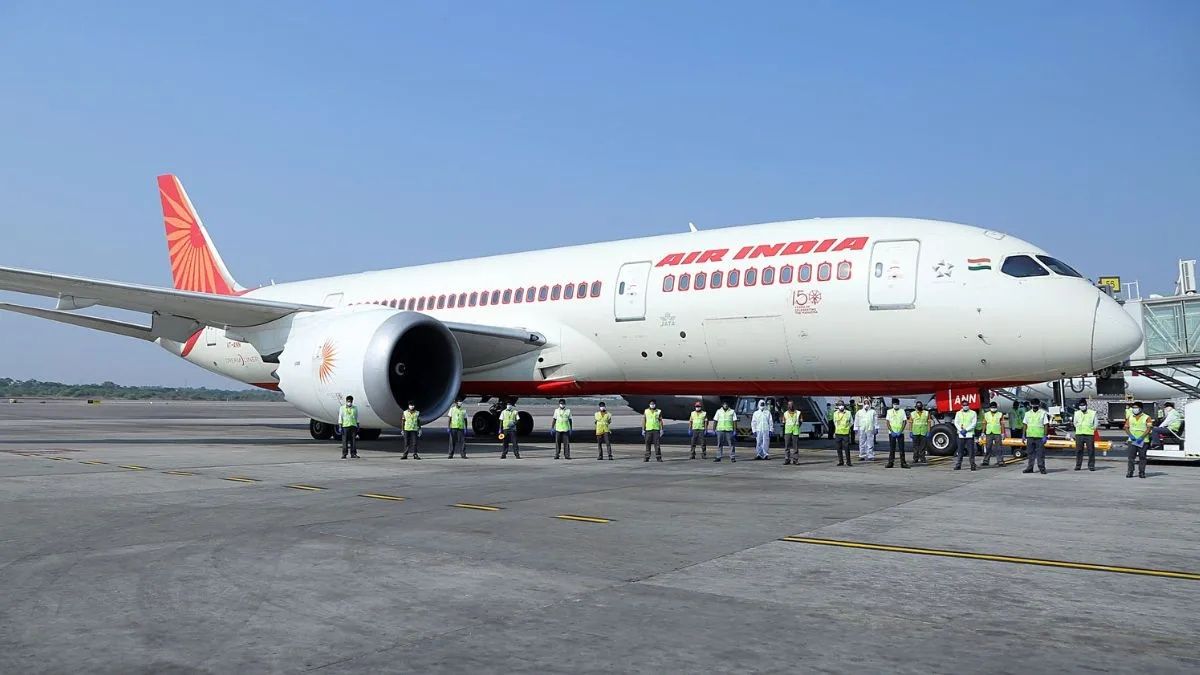
An Air India passenger aircraft briefly ventured into Pakistani airspace on the night of June 22 after encountering a technical failure in its navigation equipment, marking another rare but concerning incident along South Asia's heavily monitored Indo-Pakistani border. Flight AI-463, operating an Airbus A321, departed Delhi's Indira Gandhi International Airport at 9:18pm bound for Amritsar in Punjab. Shortly after takeoff, a malfunction in the aircraft's onboard navigation system caused the flight path to deviate westward, crossing the International Border without authorisation. The incident went undetected by Indian authorities initially but was quickly identified by Pakistani air traffic control, whose controllers immediately coordinated with the flight crew to signal the breach.
The pilots, upon receiving the alert from Pakistani ATC, took prompt corrective action and steered the aircraft back across the border into Indian airspace. Officials emphasised that the deviation was brief and that safety protocols functioned as designed, with no threat to the aircraft or passengers throughout the unintended excursion. The specific nature of the navigation system failure remains unclear, with neither Air India nor India's aviation regulator, the Directorate General of Civil Aviation (DGCA), having issued detailed technical statements about the malfunction. Aviation authorities have launched a routine investigation to establish the precise circumstances that led to the route deviation and to determine whether systemic or aircraft-specific factors were responsible.
The challenges for Flight AI-463 did not cease once it re-entered Indian territory. As the aircraft approached Sri Guru Ram Dass Jee International Airport in Amritsar around 10:30pm, the terminal was grappling with significant air traffic congestion. Unable to secure an immediate landing slot due to operational constraints and heavy activity in the local airspace, controllers instructed the flight crew to return to Delhi. This decision added substantial complexity to an already troubled journey, requiring the aircraft to reverse course and fly back to the capital rather than proceed directly to its intended destination.
The return to Delhi for technical inspection proved necessary both for safety verification and to address the navigation malfunction that had precipitated the border crossing. Once the aircraft completed the required checks and received necessary operational clearances, the flight departed Delhi again for Amritsar. It finally touched down safely at approximately 2:20am on Tuesday morning, nearly four hours behind its originally scheduled arrival time. Passengers endured a protracted journey marked by unexpected diversions and delays, though they ultimately reached their destination without incident.
This occurrence underscores the persistent operational risks that commercial aviation faces in the subcontinent, where international boundaries intersect with major flight corridors and where technical malfunctions can quickly escalate into diplomatic incidents. The Indo-Pakistani border remains one of the world's most sensitive and heavily monitored demarcation lines, with military and civilian radar systems tracking aircraft movements with precision. Navigation system failures, while rare in modern aviation, carry particular weight in this geopolitical context, as unintended airspace violations can trigger security responses and international tensions regardless of cause.
The incident mirrors a similar occurrence just weeks earlier, when a Pakistan International Airlines flight briefly strayed into Indian airspace due to adverse weather conditions. That incident was similarly resolved through professional coordination between air traffic controllers on both sides of the border, with the aircraft guided back to its designated route. Such incidents, though uncommon given the volume of air traffic in the region, demonstrate that robust communication channels and established protocols between Indian and Pakistani aviation authorities remain essential safeguards, even amid broader geopolitical tensions.
For Malaysian and Southeast Asian aviation stakeholders, this incident carries instructive lessons about navigation system reliability and the importance of redundant safety systems in modern aircraft. The Airbus A321, a widely used narrowbody jet across Asian airlines, had its navigation systems fail in a manner that caused significant directional deviation—a scenario that points to the critical need for rigorous maintenance schedules and preventive diagnostics. Airlines operating across the region should examine their own navigation system oversight procedures to ensure early detection of potential malfunctions before they result in operational anomalies or airspace violations.
The episode also highlights how air traffic management challenges compound during peak hours. The congestion at Amritsar airport that prevented immediate landing suggests capacity constraints that many regional hubs across South Asia face, particularly during evening and night operations. As air traffic volumes continue growing in countries like India, Pakistan, and throughout Southeast Asia, managing peak-hour congestion while maintaining safety protocols becomes increasingly complex. Airports must balance the desire to accommodate growing passenger demand with operational safety requirements, a balancing act that can sometimes necessitate diversions and delays as occurred in this case.
From a regulatory perspective, the DGCA's ongoing investigation will be closely watched by civil aviation authorities across India and potentially by international bodies, given the cross-border nature of the incident. The investigation should clarify not only the technical cause of the navigation failure but also whether crew responses were optimal and whether any gaps exist in detection or alert systems. Published findings could influence maintenance requirements and procedural updates across the Indian airline industry and potentially inform regional aviation safety standards.
The safe resolution of this incident—achieved through professional airmanship, timely alerts from foreign air traffic control, and established coordination protocols—demonstrates that the aviation system, despite occasional technical failures, contains multiple layers of safeguards. However, it also underscores the need for continuous vigilance and improvement, particularly in border regions where stakes are inherently higher and where technical failures intersect with sensitive geopolitical considerations. As aviation continues expanding across Asia, maintaining and strengthening these safety mechanisms remains paramount.